Psychogeography
20th of June 2019
See also: www.pedroguimaraes.net/main/projects/bluetown/
In terms of psychogeography, do you think it’s possible to produce an objective depiction of a place or will the outcome always be influenced by the artist? Does this even matter?
Feel free to answer this with reference to the artists discussed in this section – or any other’s you’ve come across.
Bluetown is Pedro Guimaraes project which is a “dream of London about itself, a celebration of the beauty of its own alienation and loneliness” (Guimaraes). Guimaraes imposed an image of the Queen on a map of London, and choice certain locations to visit and photograph. He wanted to travel their journey which was inspired and planned by the ‘symbol of englishness’. The images provide a views which are common in London, but are often overlooked. We see it so often that we forgot or miss what is around us. What I find interesting is how he published this series. It takes the form of a newspaper, which can be brought from his website.
Artists
Jodie Taylor was a student at OCA. For her final year project, she explored childhood memories. Taylor visited locations of her childhood and photographed them. She used a 35mm which she printed out as 6×4” and arranged them in a old family album. She didn’t edit any imperfections, I think this was wise as it echoes the time. The viewer can interpret the images and relate to their own childhood. Personally I don’t feel it reflects my childhood as such, so maybe an location or a generational association.
Francis Alys was born in 1959, he created a series which centred around his walks around London. Seven Walks 2004-2005 was created over six years, Alys managed to created a series which documents London’s customs. It provides a historical, and a social document. It gives an almost anthropological outlook.
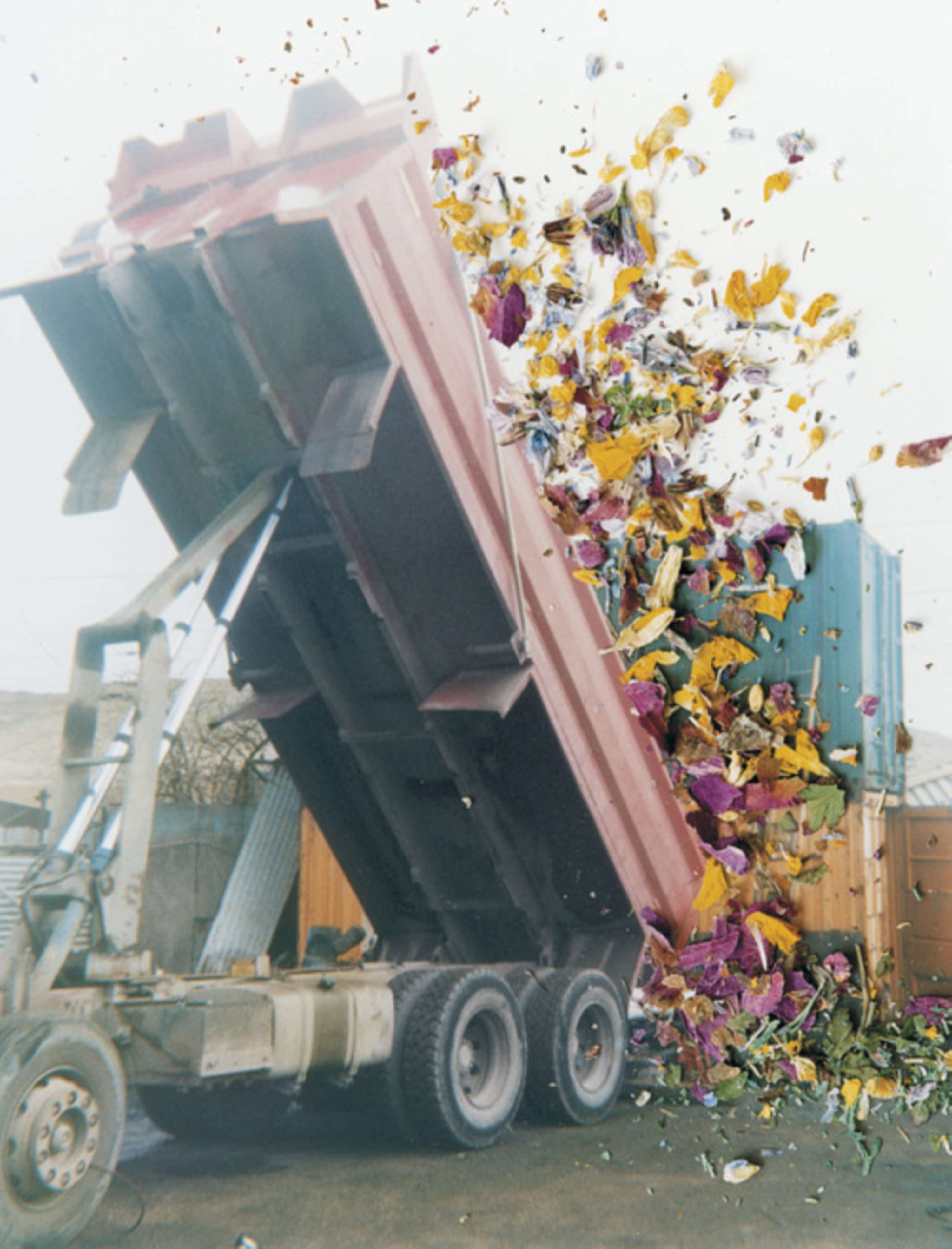
Stephen Gill explored Hackney, by collecting flowers, shrubs and berries from its streets, he took his own older images of Hackney, and positioned the objects on top. He then rephotographed the images. The way he has positioned the objects, really compliments the images. It created an extra dimension to the image, and creates depth. He stated that, “Hackney is constantly changing, as is photography” (Gill, cited in Contreras). One image I like is the dumper truck (see fig. 1), it shows flower pouring out of the back as it is lifted. It gives a alternative vibrant view. The original photograph is not of brilliant quality, and the focus is drawn to the flowers, so that doesn’t really effect the overall finished image, but the difference between the layer is obvious, whether this is Gills intention or not, I am not sure.
Mark Power is a British photographer, born in 1959. He has travelled to America for several projects. Good Morning, America: AZ/UT/NV, examines places that have been effected by climate change. Page, Arizona, shows a golf course is particularly meaningful (see fig. 2).
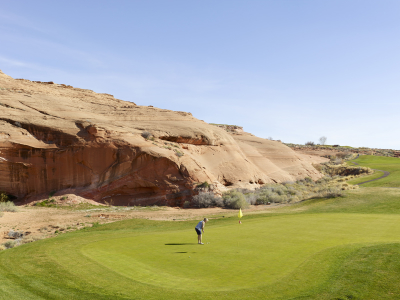
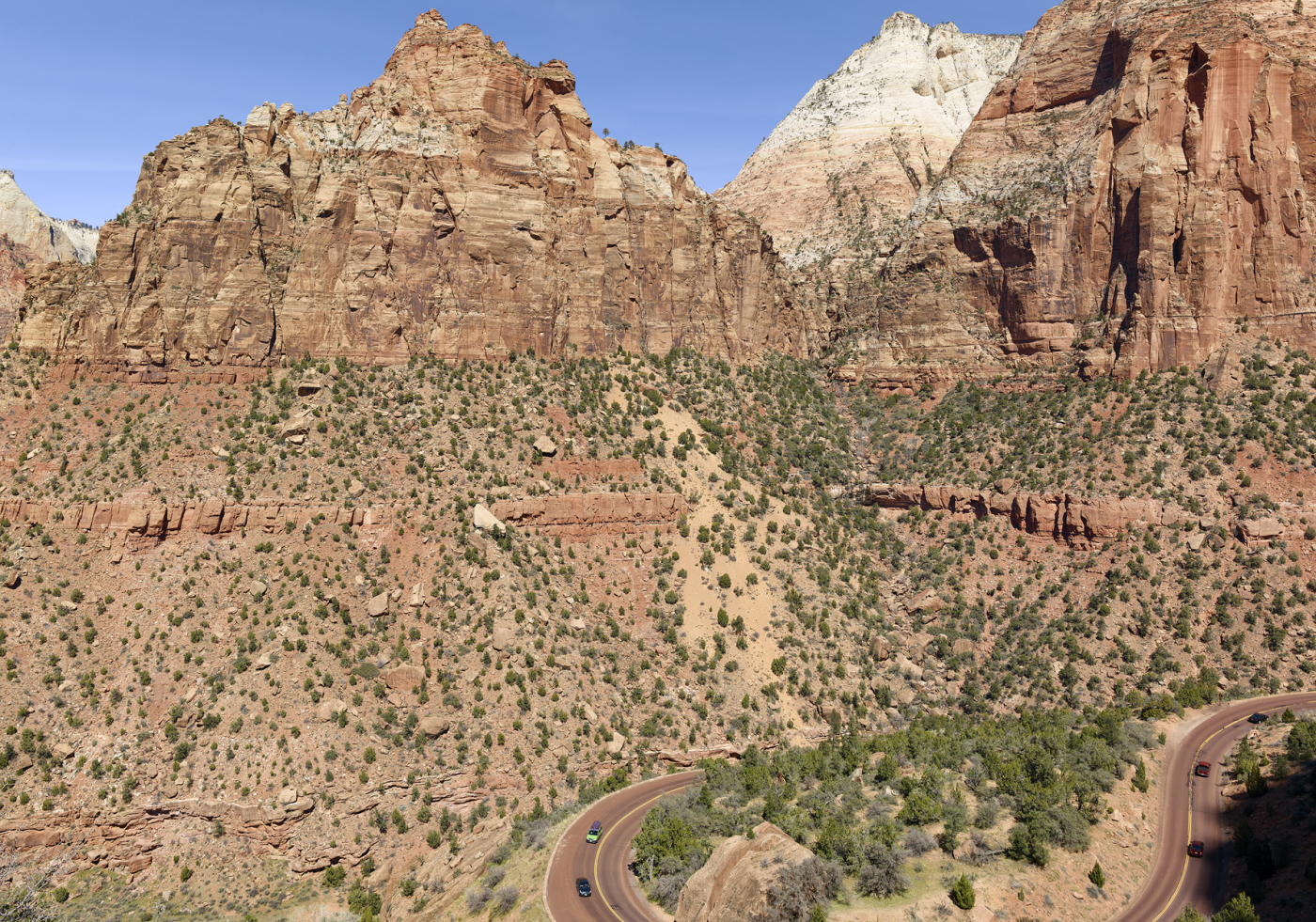
The lush green course is surround by dry arid dessert. There is a person playing golf, oblivious to the resources that went into creating and maintaining that course. Another image from, called Zion National Park, Utah, shows an untouched mountainous dry wasteland, untouched except for a road running around the mountains cutting straight through the scene (see fig. 3).
With psychogeography, I believe yes you can take an objective view. All artists will have a goal or a plan when approaching a project. Their aim is important. It influences their methods and view of the place. I don’t think it does matter as such, as a lot of art is about the artists aim and the viewers interpretation.
Psychogeography will play a big role in my Body of Work project, as it involves at its basis following a pilgrimage.
Bibliography
Alys, F. (2005). Seven Walks. London: Artangel.
Contreras, N. Interview with Stephen Gill. At: https://www.the-dots.com/projects/interview/with/Stephen-Gill-176363/ (Accessed on 12th of June 2019).
Dixon, M. (2015). Hackney Flowers. At: martindixon.org.uk/writingaboutphotography/hackney-flowers/ (Accessed on 12th of June 2019).
Gill, S. About. T: https://www.stephengill.co.uk/portfolio/about/ (Accessed on 12th of June 2019).
Guimaraes, P. Bluetown. At: pedroguimaraes.net/studio/index.php?/albums/bluetown-1/ (Accessed on 12th of June 2019).
OCA. (2013), Photography and Nostalgia. At: https://www.weareoca.com/subject/photography/photography-and-nostalgia/ (Accessed on 12th of June 2019).
Power, M. About. At: https://www.markpower.co.uk/Biography/ (Accessed on 12th of June 2019).
Power, M. (2017). (Dead Cat, Western Family). Orderville, Utah. At: https://www.markpower.co.uk/Photographic-projects/America-azutnv-photograph/?id=19/ (Accessed on 12th of June 2019).
Power, M. (2017). Good Morning, America: AZ/UT/NV. At: https://www.markpower.co.uk/projects/America-azutnv/ (Accessed on 12th of June 2019).
Tate. Francis Alys. At: https://www.tate.org.uk/art/artists/Francis-Alys-4427/ (Accessed on 12th of June 2019).
Tate. (2005). Francis Alys: A personal repertoire of Possible Behaviours whilst walking the streets in London Town.
Figures
Fig. 1. Gill, S. (2005-2007). Hackney Flowers. [Photograph – Online]. At: https://the-dots.com/projects/interview-with-Stephen-Gill-176363/ (Accessed on 12th of June 2019).
Fig. 2. Power, M. (2017). Page, Arizona. [Photograph – Online]. At: https://www.markpower.co.uk/Photographic-projects/America-azutnv-photographs/?id=16/ (Accessed on 12th of June 2019).
Fig. 3. Power, M. (2017). Zion National Park, Utah. [Photograph – Online]. At: https://www.markpower.co.uk/Photographic-projects/America-azutnv-Photographs/?id=21/ (Accessed on 12th of June 2019).

 Georgina's Body of Work