Collage Research
I decided to do some research into collages and how it can fit with my body of work. The first thing I found was historically, collage was seen as a pursuit for women. The was because it was a craft often done at home, it was seen in the same league as mosaic, quilting and needlepoint. This could be a good fit with my body of work as I am looking at highlighting the inequality in the art so by using a method associated with women would contrast the inequality. Collage became popular in surrealist art, as it was “a form of inspired correction, a displacement of the banal by the fertile intervention of chance or coincidence” (Agari quoted in Thorpe). It was during the 1970s when artists were addressing issues surrounding race, gay rights and feminism, that collage began to take a central role in art. Many feminist artists used this due to its roots as a female pursuit. The bringing to light of these issues needed a new method of portrayal in order to highlight and fight them, many artists turned to collages, as by cutting and rearranging the images it creates new images, new perception, and new identities. Collages have the ability to pull apart and restructure an image, it offers a new view on a subject. They are used to challenged the order and expectations that have become ingrained in our societies. To Penny Slinger, “collage is not just a technique, it represents an approach to reality” (Slinger quoted in Thorpe). Many feminist artists using this technique look at the female body and how they are seen or perceived. They also contrast the view of women against men, women are often forgotten whereas men are ‘heroes’. In an interview, Zhanna Kadyrova stated that “the discrepancies between images of men and women struck me for every three images of women, there were a hundred images of men. I then noticed how their roles are depicted. Men are shown shaking hands, women are shown in adverts, in the cultural sphere, or with a baby and that’s all’ (Kadyrova quoted in Svitlytska). Collages has the ability to re-shape an image and form a new narrative. It’s historically perception as a female pursuit makes it a perfect platform for my work. It has been interesting looking into the history and how other artists have approached this method, it has been inspirational and has helped me form a few ideas.
Bibliography
Cross Art. Feminage: The Logic of Feminist Collage. At: croissant.com.au/99-2012-exhibitions-projects/169-feminage-the-logic-of-feminist-collage (Accessed on 20th of November 2019).
Svitlytska, O (2015) Can Feminist art free women from patriarchy in Eastern Europe? At: https://www.opendemocracy.net/en/odr/can-feminist-art-free-women-from-patriarchy-in-eastern-europe/ (Accessed on 20th of November 2019).
Thorpe, G. Cut and Paste: 400 Years of Collage at Scottish National Gallery of Modern Art, Edinburgh. At: https://www.thefourdrinier.com/cut-and-paste-400-years-of-collage (Accessed 20th of November 2019).
Collage Artists
I have also looked into artists who have used collages in their artworks. Here are the links to their dedicated pages:
My Collage Experiments
Following my recent conversation with my tutor, it was suggested that I spend some time trying some collage work. I decided to keep it simple initially to try it out. I choose one location to concentrate on and spent time looking at the images. I did some research into collage work and then narrowed down my images. I tried several approaches, the first being quite simple. I have had to take a photograph to show my experiments, as they won’t fir in the scanner very well. If I do use collage for my body of work. I will either send the actual collage in or re-photograph it.
I started by cutting the bars out here and then glued the bars on top of the main image.
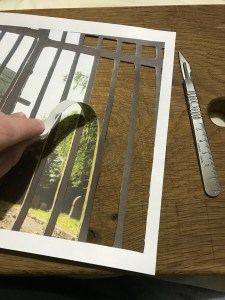
I tried two different background images. It is simple yet represents how women are excluded and not allowed behind these ‘bars’.
Here is the first:
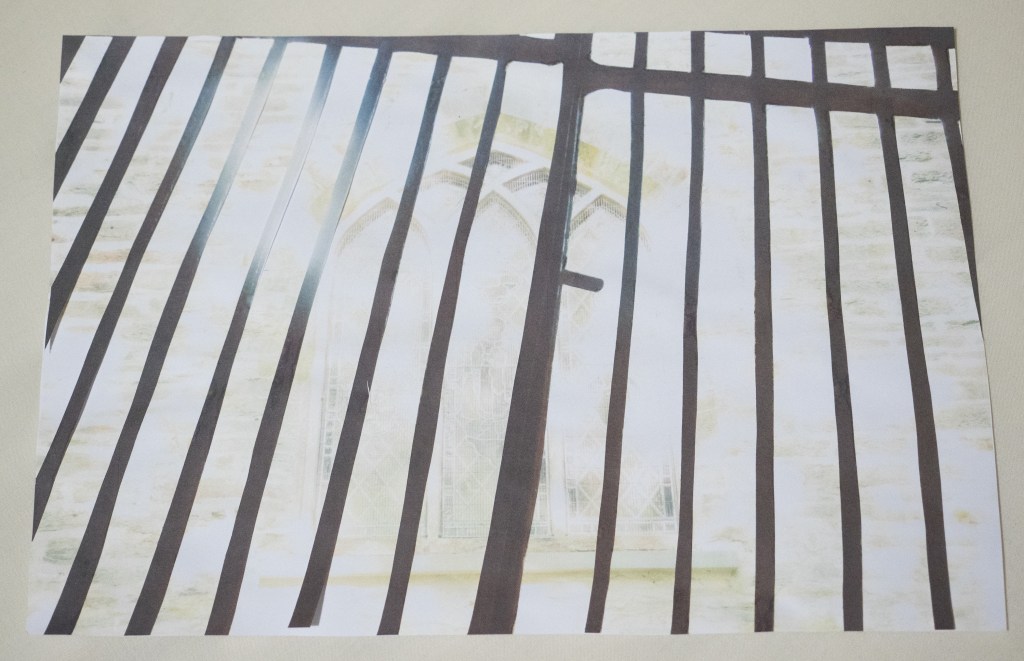
Here is the second:
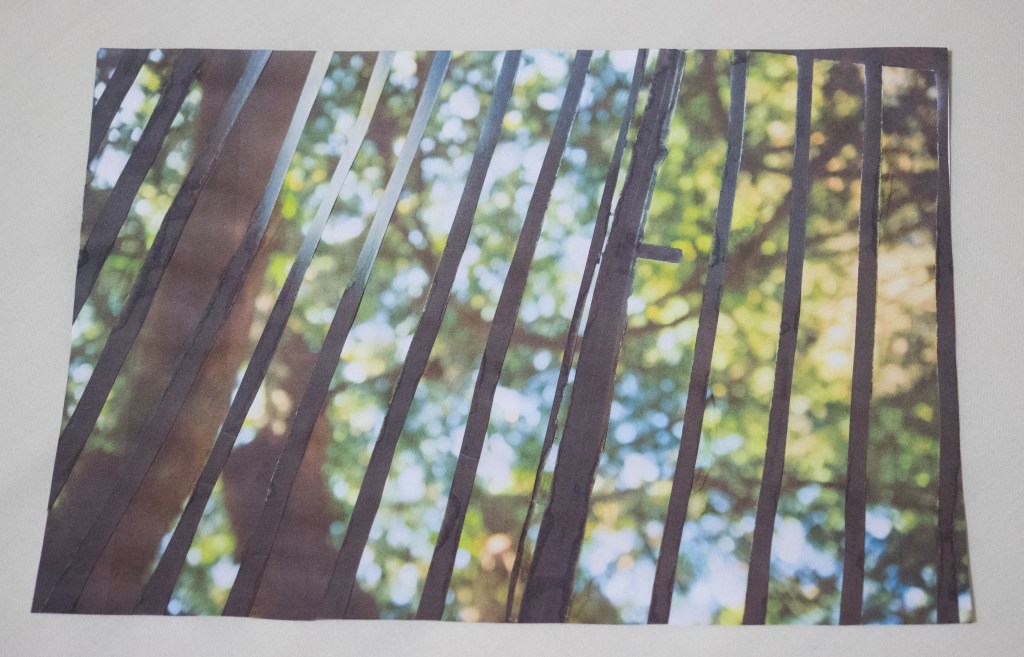
I like the first image as it is quite simple but I believe the bars portray how women are barred or excluded. But also the wall shows how solid and impenetrable this is, there is also no doors in the image, hinting how women are seeing things from the outside and not allowed in.
I decided to add images of the leaves and trees for extra dimension, to me they also add another element of showing the inequality and oppression but also bring a feminine aspect to it. I could probably reduce the size of these, so they fit better:
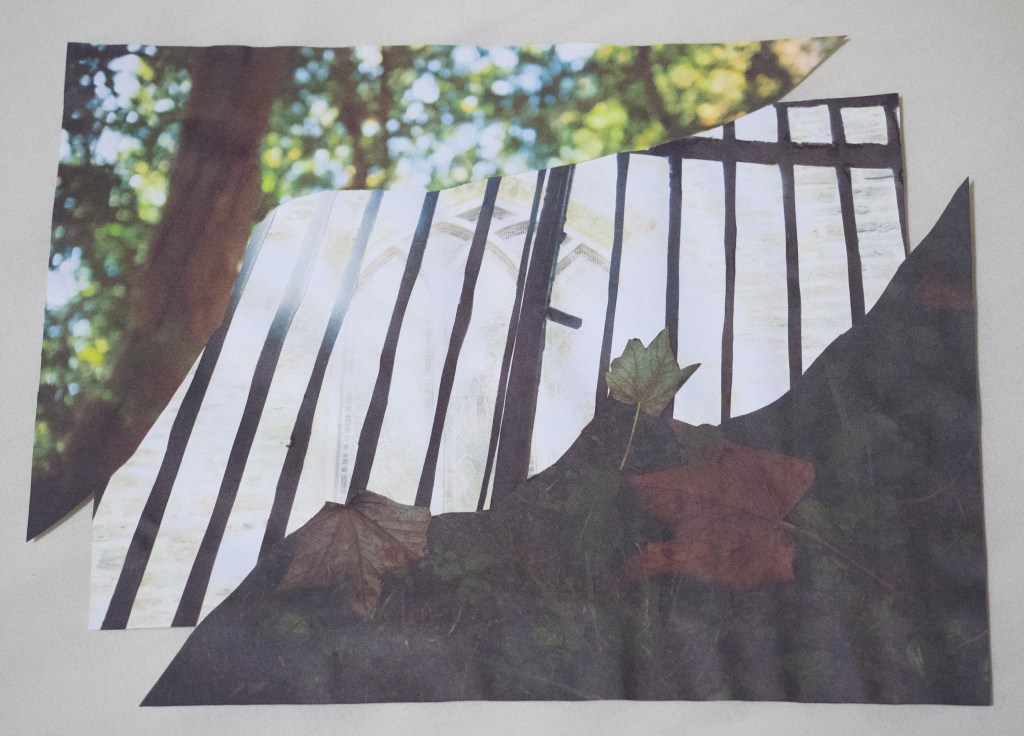
I took another approach which involved cutting out specific parts of the images to make a completely new image. I used a similar approach to Hannah Hoch. I choose my main image as the background and then printed out others in various sizes to work with.
I started by cutting the images out:
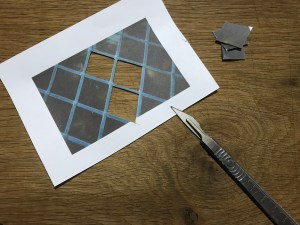
I arranged them and kept moving them around until I was happy, I then glued them down:
Here is the finished image:
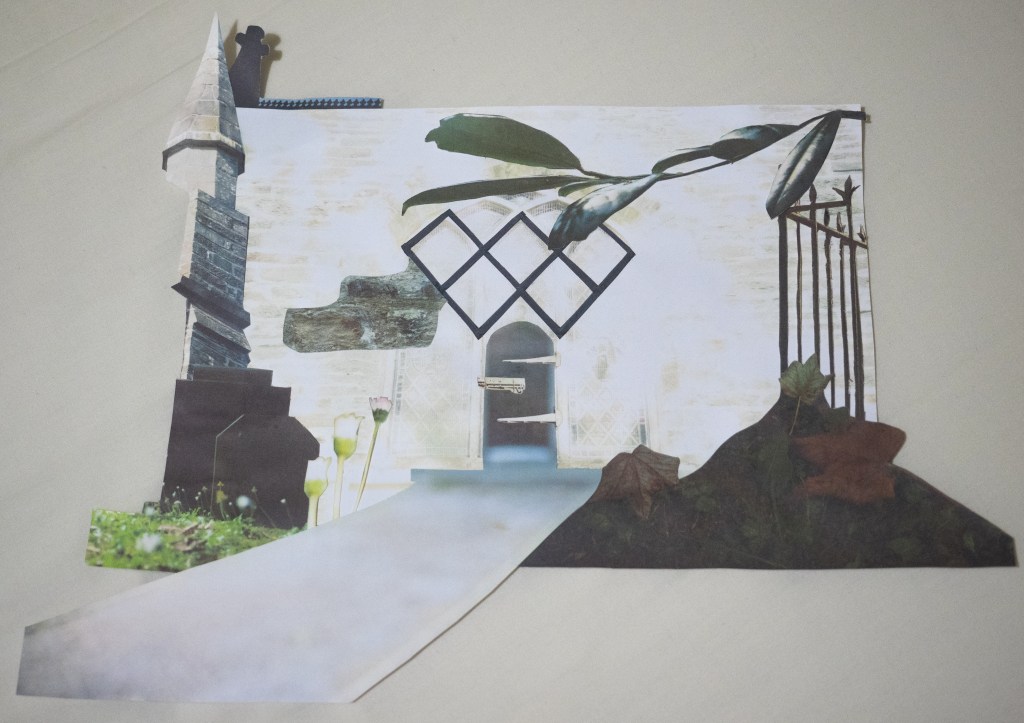
I like the path leading up to the door which is ‘locked’. The base image of the wall, shows also how impenetrable it is. I tried to keep the leaves and trees are outside the bars; as to me the foliage and flowers are a feminine aspect and as such aren’t ‘allowed’ behind the bars or behind the walls, to represent their exclusion. The images of the leaves and the branches to me feel almost dark and oppressive.
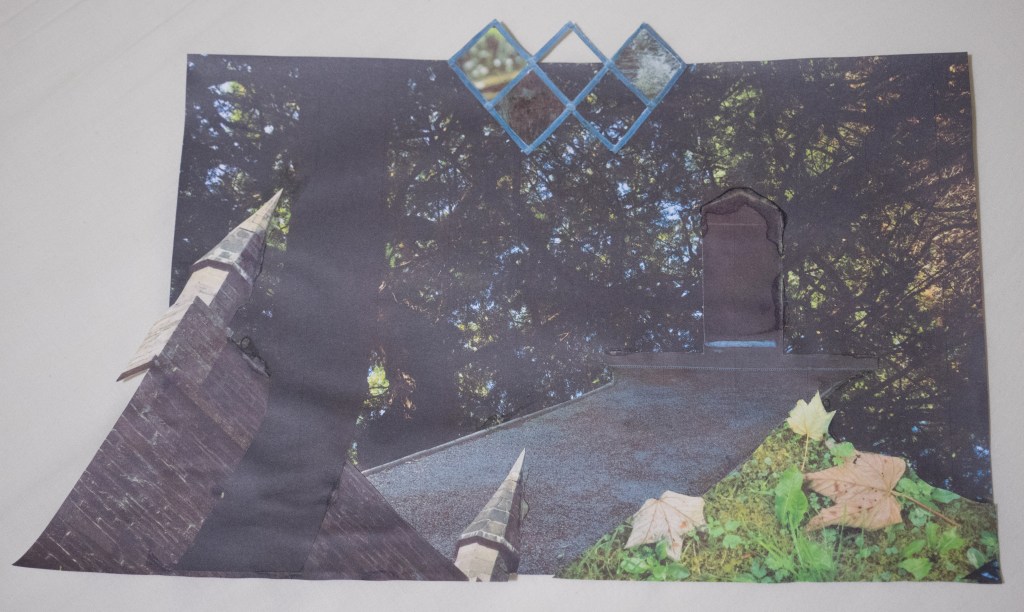
I created the next image using the leftover cutouts, but I feel it can hold its own. It features a path with a door that you can’t get through, symbolising the exclusion. But it could also represent the journey or pilgrimage that this is. This image also reminds me to be more careful with the glue, as you can see on the door how I got it on the picture side. Here is it:
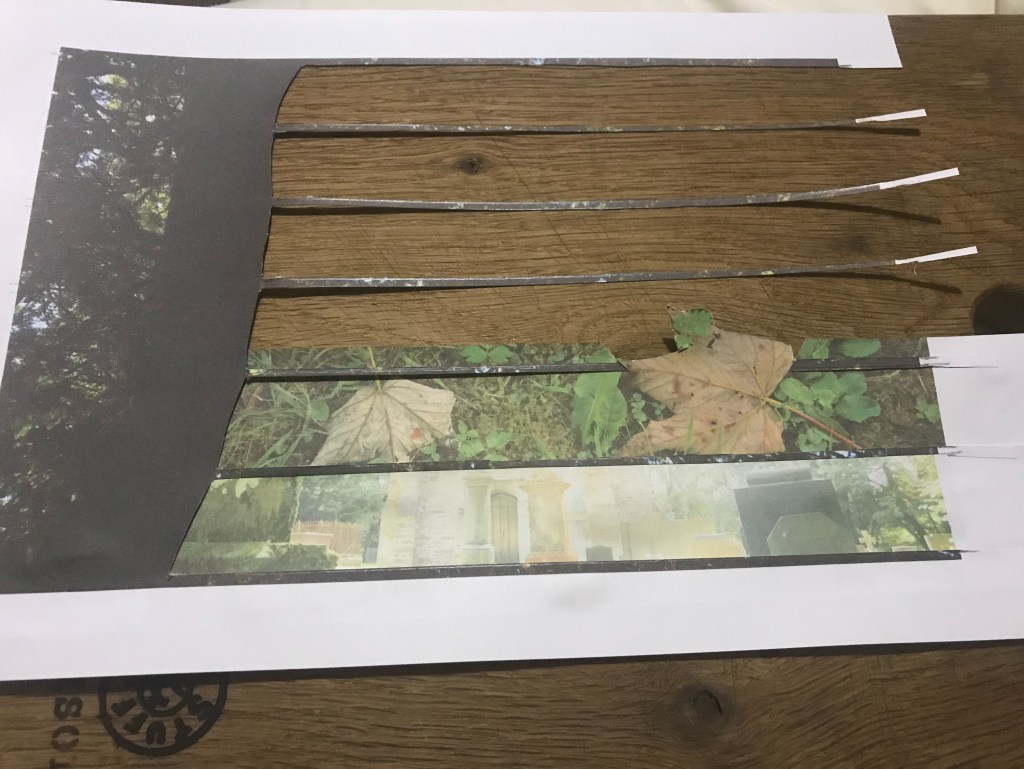
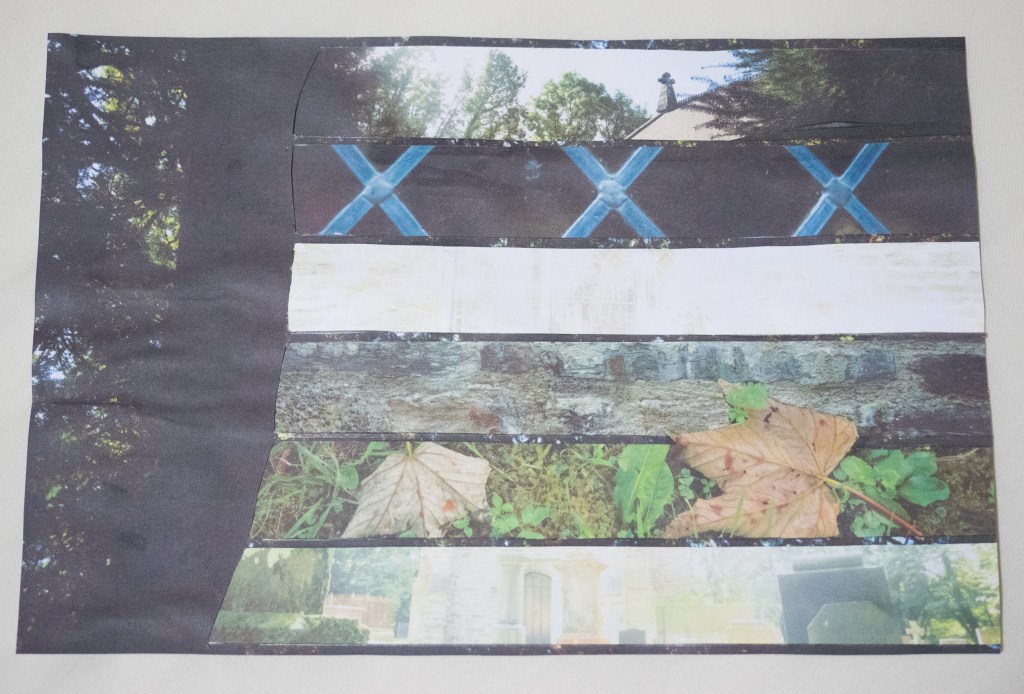
The next image was the last one I made. The idea for It came suddenly and i just went with it. I actually really like the result. The had the main image of the trees, which I then cut horizontal segments and choose images to show through. I like how you get snippets through the lines; this way it still contains important aspects. Aesthetically I like the design. I did think how I could incorporate somehow showing the locations through maps maybe. With this image one of the segments could be a snippet of a map. Here is the image:
I also tried a digital montage, I drew inspiration from David Hockney. I tried arranging the images so they were wonky and overlapping and also with them straight and in line with each other. I decided to replace a few images to bring in various images. Here are what I came up with.
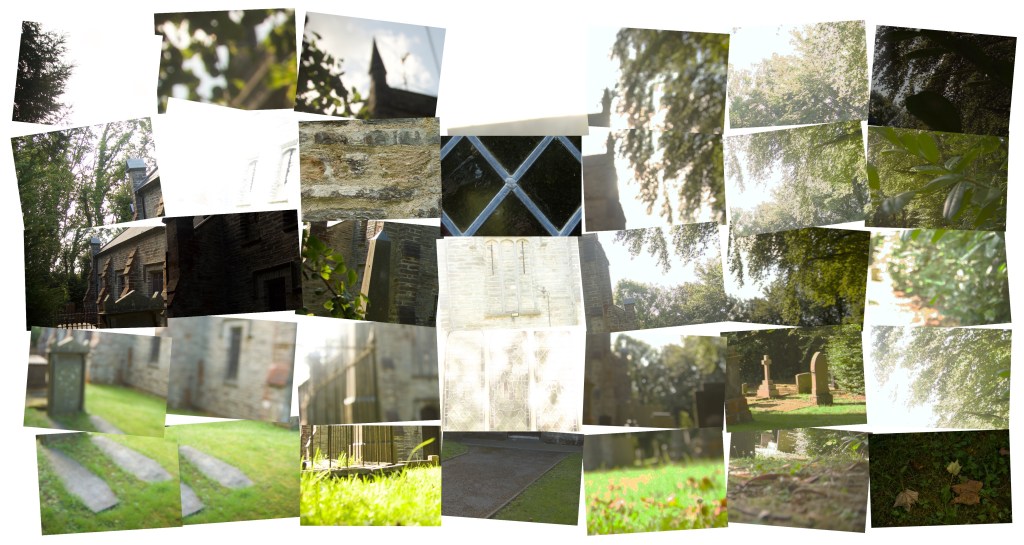
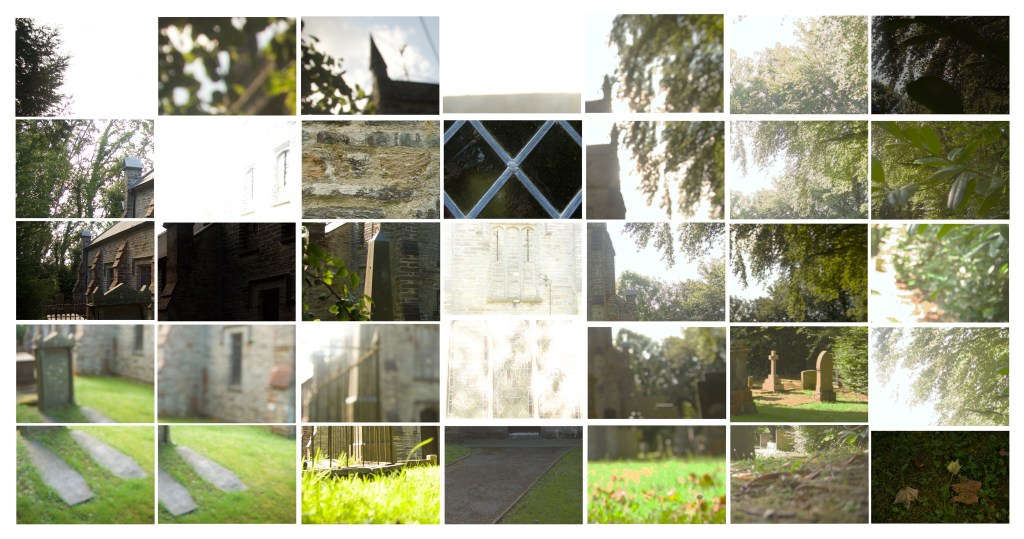
I like the result of the digital montage. Personally I prefer the one with the images arrange straight and in-line. I just feel it is easier to look at and make out. I am not 100% sure on replacing a few images, I am not sure if it looks right, perhaps keeping it with the correct images would be better. This image I choose was quite complex, a simpler one would probably have been more effective.
Here is a simpler image, with it arranged wonky and straight:
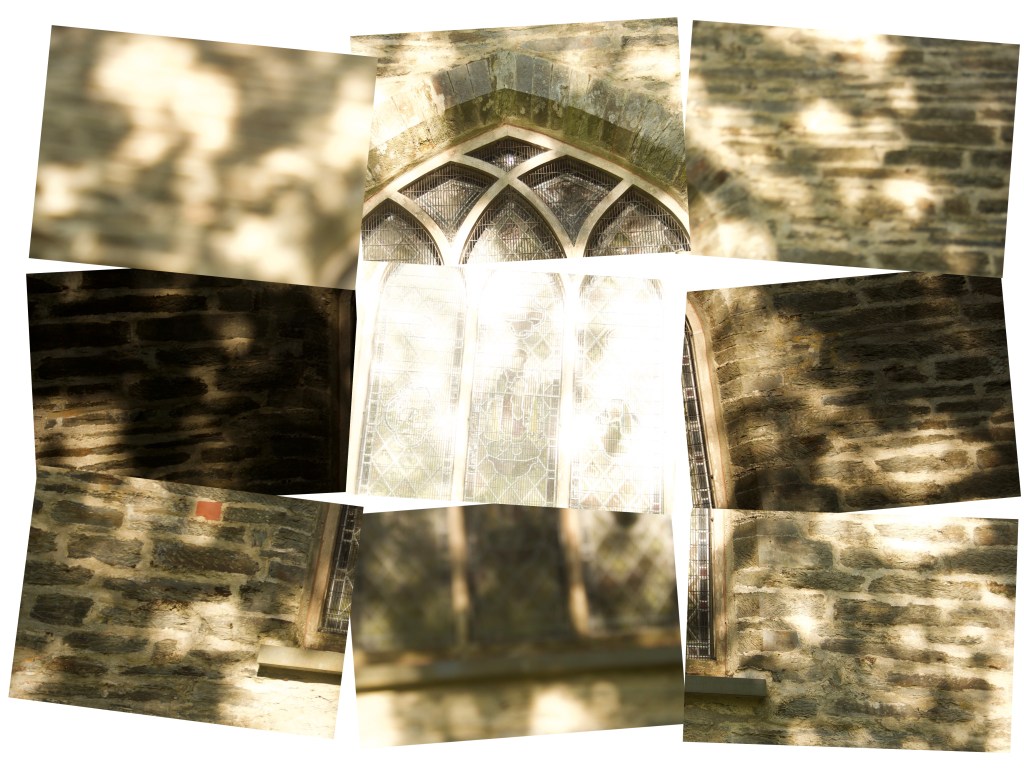
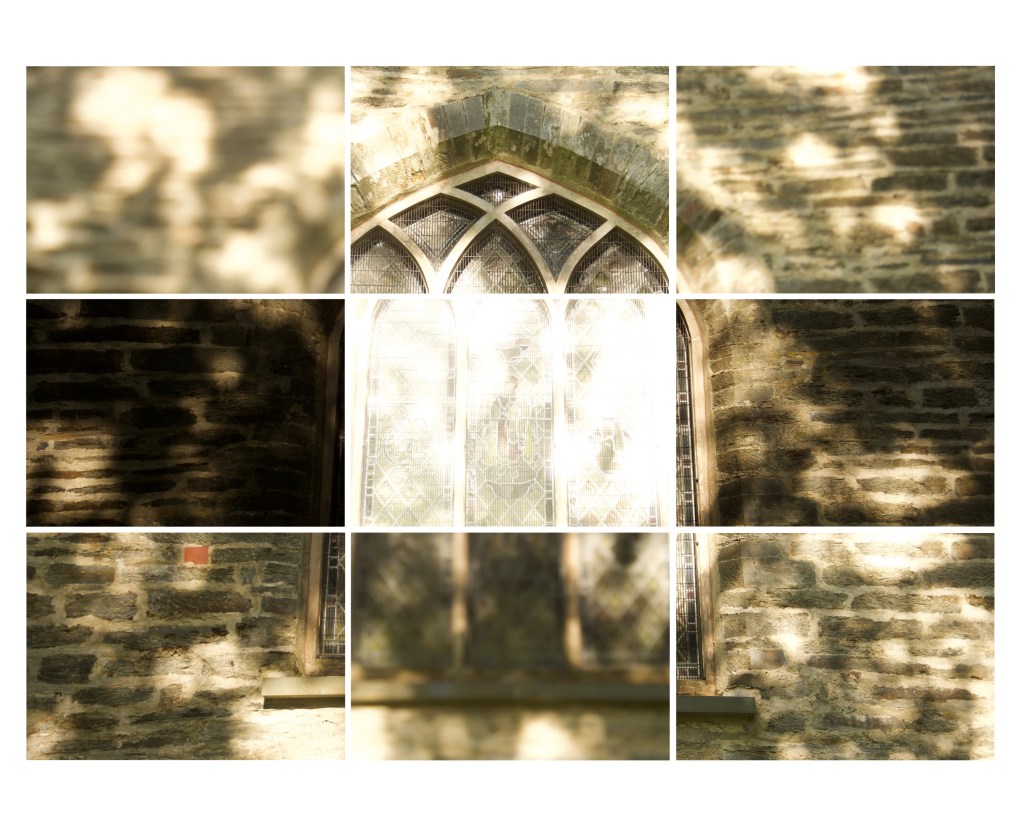
I like the simplicity of the image with just the bars, as it does show a deeper meaning but so does the detailed collage image. I liked making this image, it was quite fun moving things around and I found it quite therapeutic. I really did enjoy this process and think it would be appropriate for my work. But I also found the digital collage fun and interesting to view. I do think a simpler image is better. I can visit my locations and do re-shoots if necessary. I also need to be careful assembling the image as the glue can get on the actual picture and ruin it. Another thing which I hope will improve with practise is the actual cutting the images out. The images aren’t the problem, the knife is. They are very sharp, which I found out the hard way!
I have been thinking also how to move forward. Once I decided on a collage format, I will try and keep this consistency throughout my series. As my work is in the psychogeography genre, I was thinking of incorporating the places locations in somehow. This could be in the form of text, for example the handwritten coordinates. Another idea would be to use maps, this could form the background base image on which the final collages sit. It could also provided a link between the images as you can follow and see the journey unfold. I was also thinking about the foliage and flowers representing a female aspect. Instead of cutting out the images and putting the in the collage, I could include the actual leaves and flowers from the actual sites. This would bring the female aspect but also creates a strong link to the sites, the images would be quite unique, as the flora and fauna would vary. I could position them on top of the collage and then re-photograph or scan it. These are just a few ideas about moving forward, somethings to explore.

 Georgina's Body of Work
5 thoughts on “Collage”