UNESCO (2015) A guide for gender equality in teacher education policy and practices. France: UNESCO, pp. 1-112.
UNESCO released a guide for teachers to promote gender inequality in their institutions. This guide has helped my third chapter of my essay for Contextual Studies when I look at pedagogy.
The guide raises point such as that gender roles Are a learnt behaviour which can be fixed by education and training. The guide looks at the differences in cultures and within different cultures. Cultures and institutions are moulded by the people in charge.
To help the problem, support is needed. For teachers and for pupils, this way it can help the way teachers approach their students and in turn will help the pupils classroom experience. The problem with a curriculum is that it allows leeway for teachers to bring their own views, prejudices and views, this can have a negative effect on the pupils. Pedagogy will help these issues. Teachers should use gender neutral methods and directives.
This guides also looks at a study conducted by Grace and Gravestock in 2009. This study looked at gender biases in classrooms. For example male students were given longer to answer a question and teachers would often interrupt female students.
Gender stereotyping comes into play. Men are seen as active, strong and often rational, this is in contrast to women who are seen as passive, weak and emotional. This studies hopes that teachers will be aware of these issues and try and combat them. They need to stop using judgement in their language and manner. They need to have a fair approach to everyone. “Gender equality needs to become a reality in every learning environment” (UNESCO).
Nochlin, L (1973) ‘Why have there been no great women artists?’ In: Hess, T. B & E. C. Baker (ed.) Art and Sexual Politics. UK: MacMillan, pp. 1-39.
This work by Linda Nochlin has been very useful in my Contextual Studies essay. In my second and third chapter I look at the inequality between male and female artists. It has proved to be a valuable resource.
Nochlin discusses woman’s position as the “acknowledged outsider” in art with John Stuart Mill stating that we tend to accept what is seen as natural, “everything which is usual appears natural, the subjection of women to men being a universal custom, any departure from it quire naturally appears unnatural” (Mill Quoted in Nochlin, 1973). This is a good point which can help explain why inequality has taken such a hold, but it is seen as a natural division. “Those who have privileges inevitably hold on to them, and hold tight, no matter how marginal the advantage involved, until compelled to bow to superior power of one sort or another” (Nochlin, 1973). This statement is key, as it can help understand why men in power deny that there is an inequality, as they want to hold onto their advantage. They will fight to keep their influence and power.
Nochlin believes experience will lead to the production of different art by men and women. There has also been a misunderstanding of what femininity is. She also states that women are worked against from when they are born (Nochlin, 1973). This makes sense, as much of the inequality we see is deeply engrained in society so would affect women from birth.
Mulvey, L (2007) ‘Visual pleasure and narrative cinema’ In: Evans, J and S. Hall (ed.) Visual Culture: A Reader. UK: Sage Publications Ltd, pp. 381-389.
Laura Mulvey looks at the male gaze and how dangerous it can be. The male gaze originates from cinema. Mulvey discus scopophilla which denotes the pleasure in looking. She looks at Freud’ work in this field. It is seen as ownership, where one believes the other belongs to them as an object. It is part of the ego and can develop further. Mulvey believes that the cinema provides a perfect place for the pleasure of looking. Jacques Lacan looks At how children see their own images in a mirror, and believes this is an aspect of the ego (Mulvey. 2007).
There are two types of pleasure found in looking. The pleasure found in using a person as an object through visual means is the first. The second is found in narcissism and the ego, this is where someone identifies with the image they see. Visual pleasure in found between the active male and the passive female. The male gaze is able to embedded their fantasy to the woman. Men have the power here (Mulvey, 2007).
For my contextual studies essay, this is a valuable sources. At some points I found it a struggle to make sense but I persevered with it. Mulvey pinpoints the gaze in cinema. It would be interesting to see how this translates into other areas. This is something I could develop for my Contextual Studies work, as Mulvey’s work is very relevant to my field but I could extend this though into other areas, for example the male gaze in landscape photography (Mulvey, 2007).
I have been thinking of a title for this project. The pilgrimage itself goes under difference names, but a local name for it is ‘In the Shadow of the Preselis’. I debated whether to call my project this but I wanted something that referred to what I was looking at, so I have decided to call it ‘In the Shadow of Men’. This refers back to the fact that I am looking at gender inequality in landscape photography but it also raises the inequality in religion, and the fact that women are in the shadows of the men in the Bible.
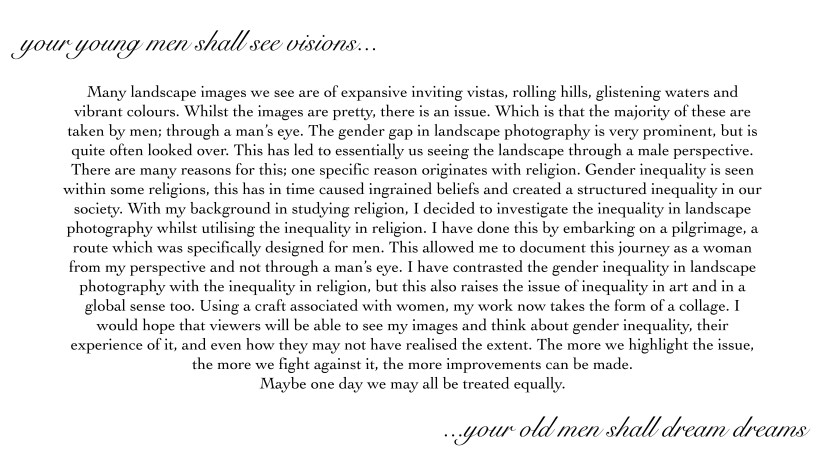
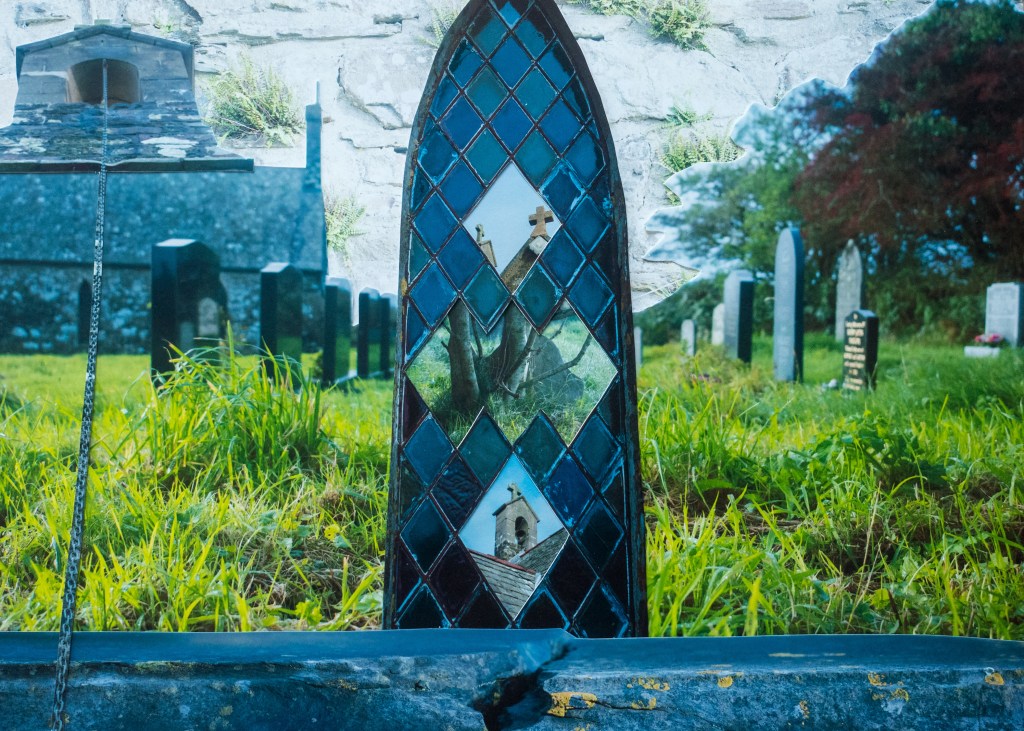
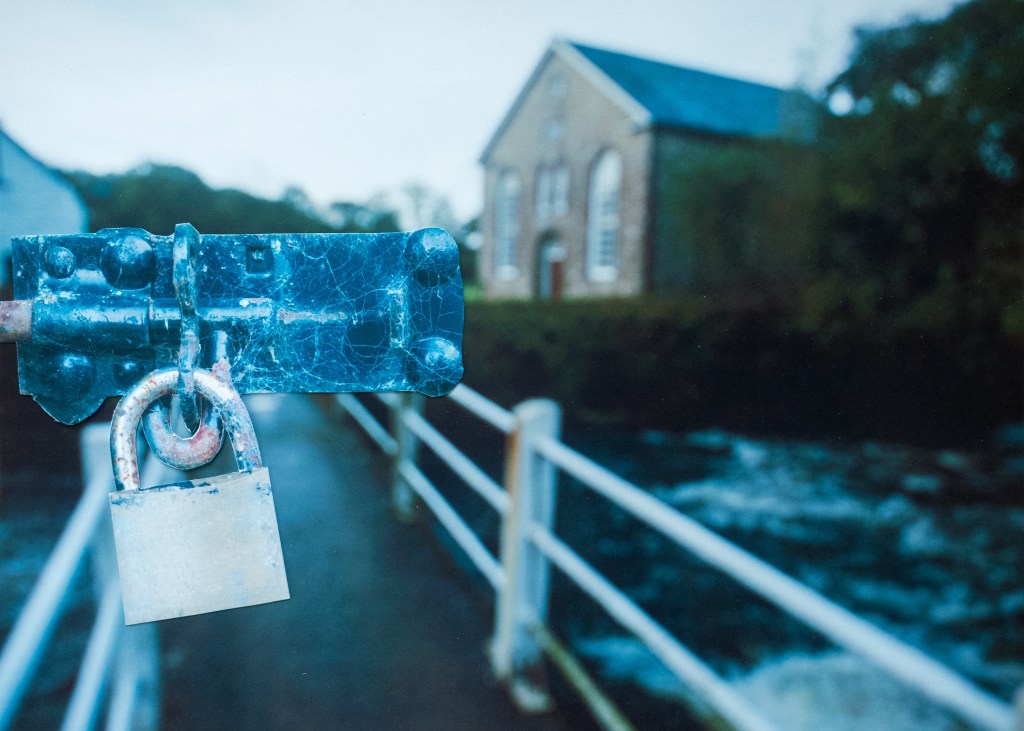
Many landscape images we see are of expansive inviting vistas, rolling hills, glistening waters and vibrant colours. Whilst the images are pretty, there is an issue. Which is that the majority of these are taken by men; through a man’s eye. The gender gap in landscape photography is very prominent, but is quite often looked over. This has led to essentially us seeing the landscape through a male perspective. There are many reasons for this; one specific reason originates with religion. Gender inequality is seen within some religions, this has in time caused ingrained beliefs and created a structured inequality in our society. With my background in studying religion, I decided to investigate the inequality in landscape photography whilst utilising the inequality in religion. I have done this by embarking on a pilgrimage, a route which was specifically designed for men. This allowed me to document this journey as a woman from my perspective and not through a man’s eye. I have contrasted the gender inequality in landscape photography with the inequality in religion, but this also raises the issue of inequality in art and in a global sense too. Using a craft associated with women, my work now takes the form of a collage. I would hope that viewers will be able to see my images and think about gender inequality, their experience of it, and even how they may not have realised the extent. The more we highlight the issue, the more we fight against it, the more improvements can be made. Maybe one day we may all be treated equally.
…your old men shall dream dreams
10th of August 2020
Here is my second draft of my introduction, following my tutor’s feedback:
your young men shall see visions…
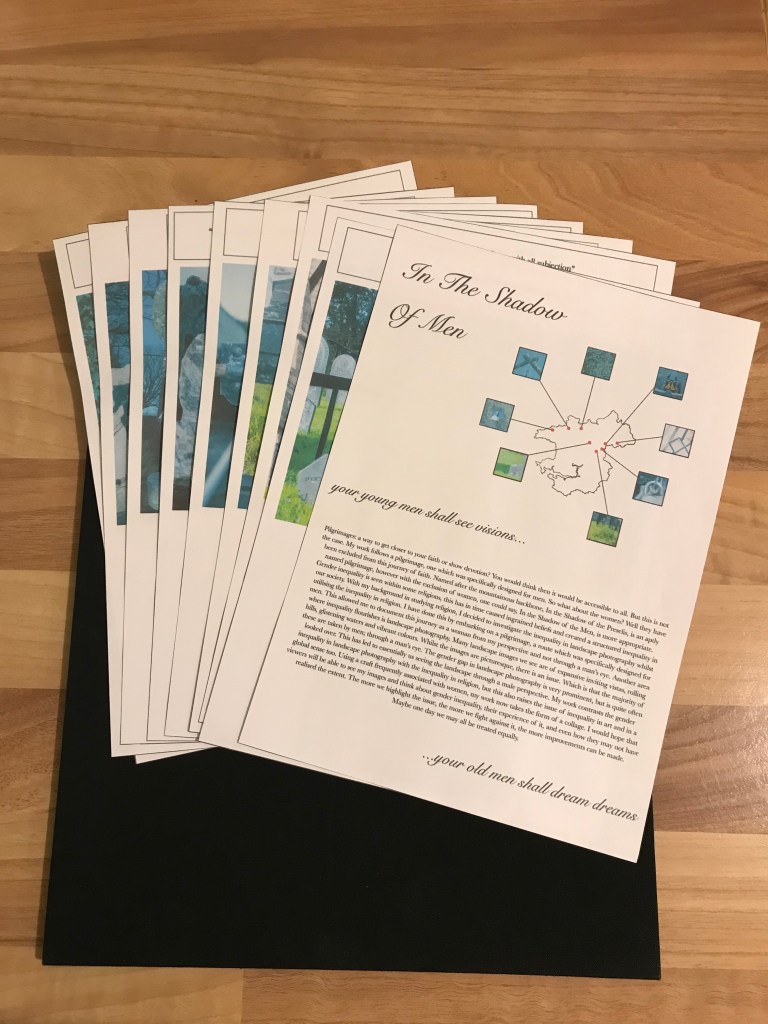
Pilgrimages: a way to get closer to your faith or show devotion? You would think then it would be accessible to all. But this is not the case. My work follows a pilgrimage, one which was specifically designed for men. So what about the women? Well they have been excluded from this journey of faith. Named after the mountainous backbone, In the Shadow of the Preselis, is an aptly named pilgrimage, however with the exclusion of women, one could say, In the Shadow of the Men, is more appropriate. Gender inequality is seen within some religions, this has in time caused ingrained beliefs and created a structured inequality in our society. With my background in studying religion, I decided to investigate the inequality in landscape photography whilst utilising the inequality in religion. I have done this by embarking on a pilgrimage, a route which was specifically designed for men. This allowed me to document this journey as a woman from my perspective and not through a man’s eye. Another area where inequality flourishes is landscape photography. Many landscape images we see are of expansive inviting vistas, rolling hills, glistening waters and vibrant colours. Whilst the images are picturesque, there is an issue. Which is that the majority of these are taken by men; through a man’s eye. The gender gap in landscape photography is very prominent, but is quite often looked over. This has led to essentially us seeing the landscape through a male perspective. My work contrasts the gender inequality in landscape photography with the inequality in religion, but this also raises the issue of inequality in art and in a global sense too. Using a craft frequently associated with women, my work now takes the form of a collage. I would hope that viewers will be able to see my images and think about gender inequality, their experience of it, and even how they may not have realised the extent. The more we highlight the issue, the more we fight against it, the more improvements can be made. Maybe one day we may all be treated equally.
Ever since I was a child I have always enjoyed photographing landscapes. It had never really occurred to me that there was an obvious divide between the genders here. But when I started to do some research it was obvious. The majority of photographers in this genre are men. I began thinking of ways I could represent, highlight and fight this inequality. With my previous studies being in religion, I decided I would follow a pilgrimage which was designed for men. This would be my landscape images. It also occurred to me that this would also be looking at the inequality within religion and also in a global sense. This pilgrimage became my own journey. A journey of realisation and discovery.
I started my work by intending to follow the pilgrimage and using this as a backbone for my exploration of the gender inequality in landscape photography. I really didn’t know how I was going to do it. But I did want to explore this topic, as I found it is something people either don’t realise or don’t talk about. I started by looking at landscape pictures and the common themes in them. I then decided that I wanted the opposite of the norm, I wanted images that were not perfect, to symbolise the discontent. So my work included blurry, over-exposed and under-exposed. My work has evolved to make a collage from each location. I have kept the basis which is exploring inequality in landscape photography, but also with references to the inequality in religion and in a global sense.
I started my research by looking into gender inequality and the inequality in landscape photography and how artists tackle this issue. I have also looked into pilgrimages. I have tried to find artists who have followed a journey or pilgrimage, but also those who are looking into psychogeography. To aid in my decision about my techniques, I looked into artists who use collage. I looked into how artist use text and how they sequencing their images. As I was researching various different topics and techniques, I had a lot of research. Catherine Opie was one artist who influenced how I photographed my locations. Several male landscape photographers have helped me see how they see the world. Mary Beth Edelson used religion to address gender inequality in the arts, her work has been influential. These are to name a few.
As my work has evolved, I feel my work explores gender inequality but not just in landscape photography, but in a global and religious sense. I followed this pilgrimage which was designated and followed by men, in order to complete my own journey as a woman following in their footsteps. Something which would have been frowned upon in their time. I believe it also raises questions regarding patriarchy and inequality. I am following a man’s journey, but my images now reflect my journey, as a woman.
I do not feel that my images will only resonate with one particular audience. I believe my images are suitable for all, as this is an issue that effects everybody. Despite this inequality being against women and men are favoured, it would require both sexes to raise awareness and to fight it. I hope when the viewer looks at my image, they can bring their own experience or thoughts of gender inequality and religion. I would like my images to get the viewers to think about the gender inequality, not only in this specific journey but also in a global sense. It could perhaps lead to their own journey of discovery surrounding inequality. I would like people to see my images and really think why have I followed a journey that was designed for men. Why as a women, photographing in the landscape genre is this a rarity? Why aren’t the images perfect? What new image does the collage make? Why does these images show oppressive and restricted tendencies? Most importantly, how does the images make the viewer feel? Are they aware of gender inequality and how deeply it is rooted? Do they care?
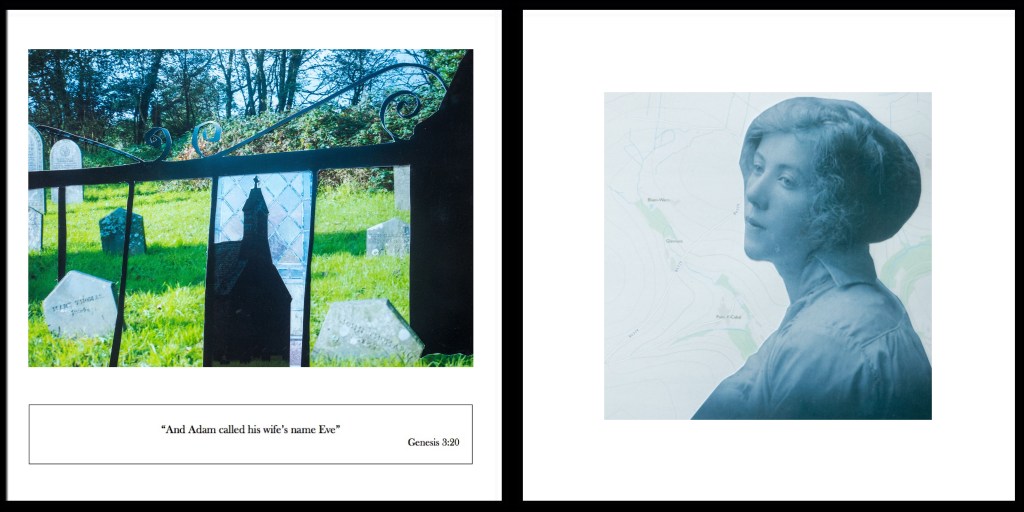
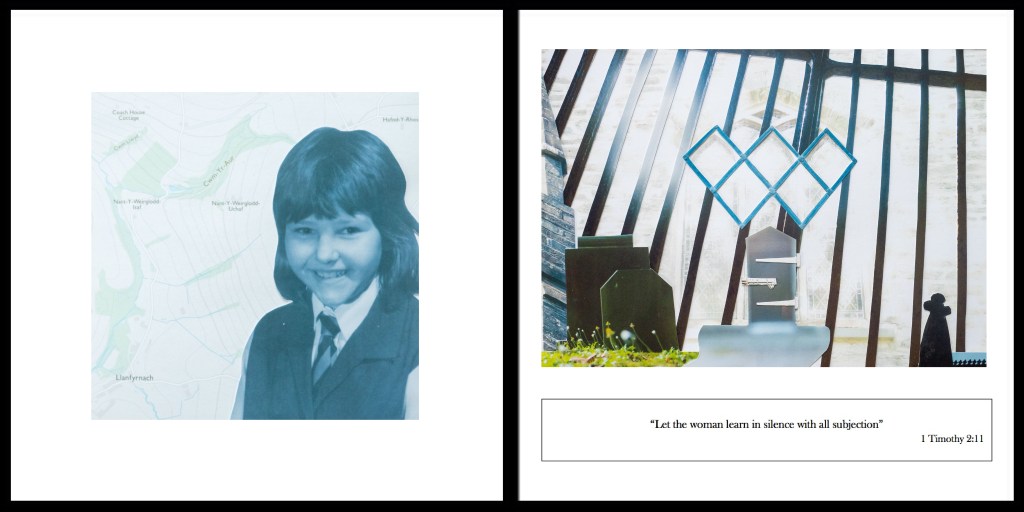
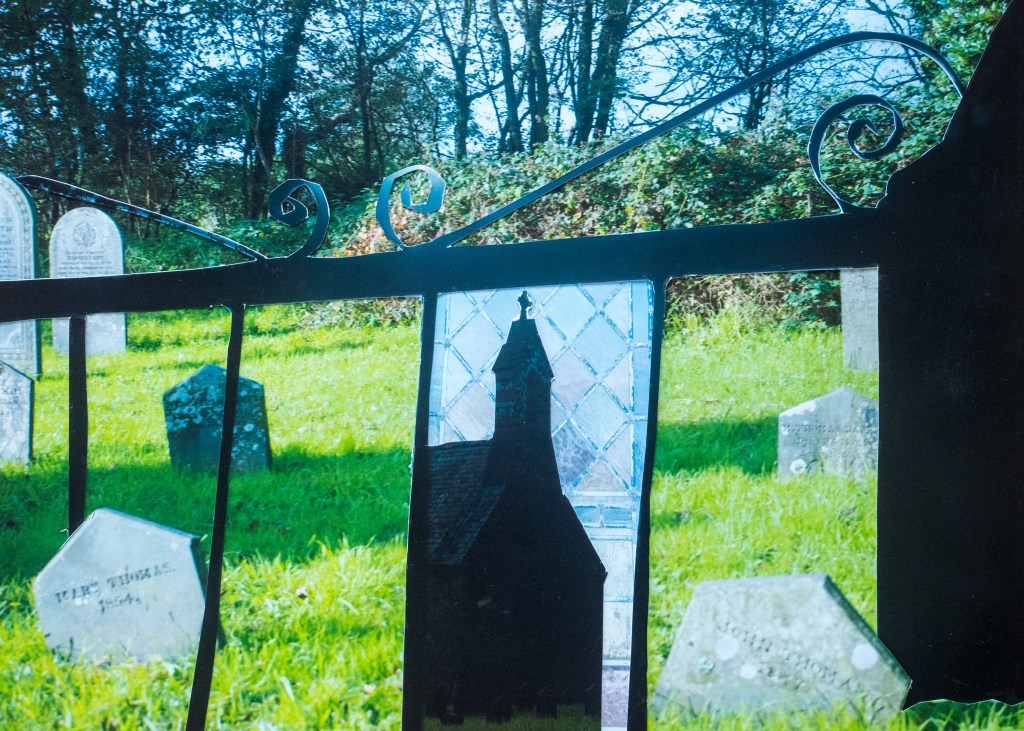
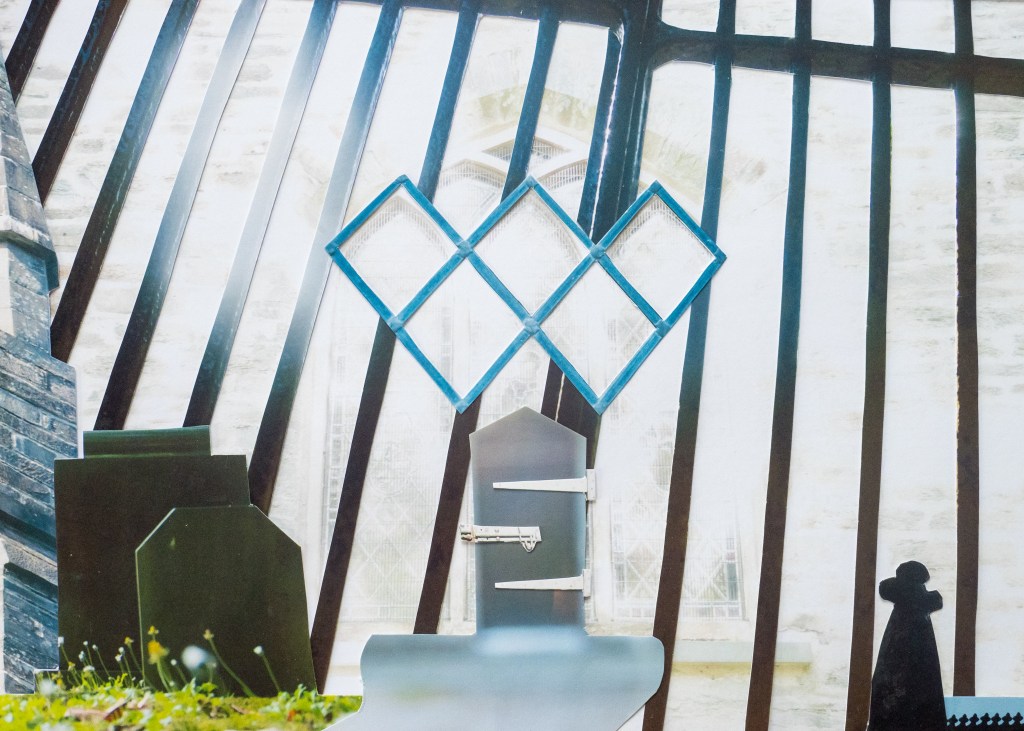
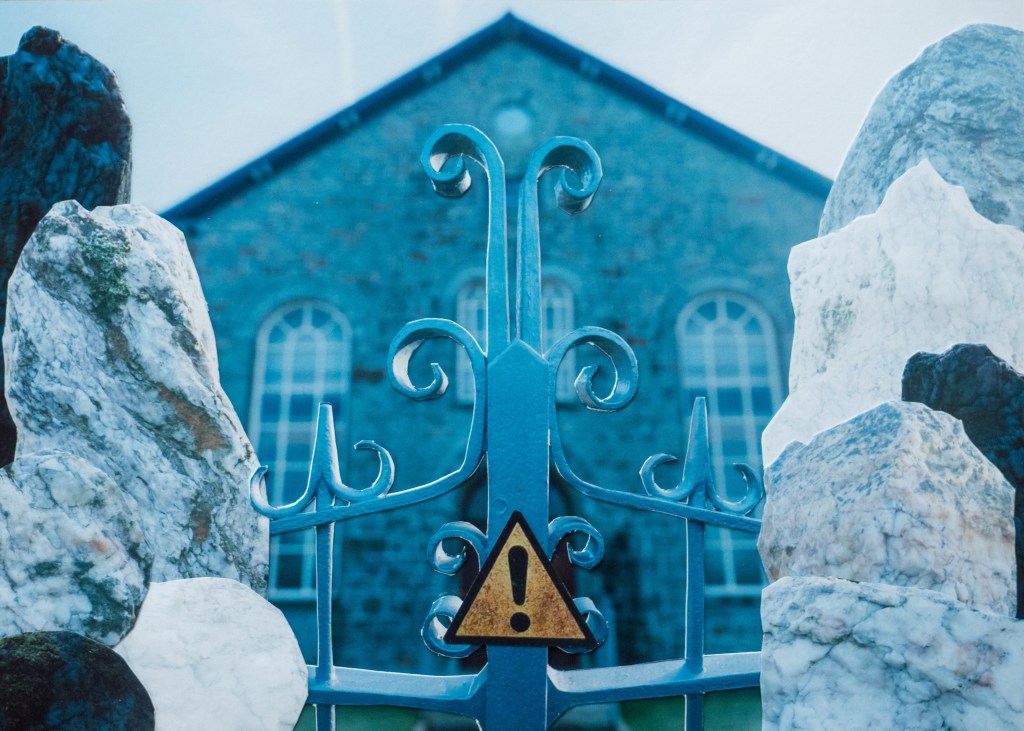
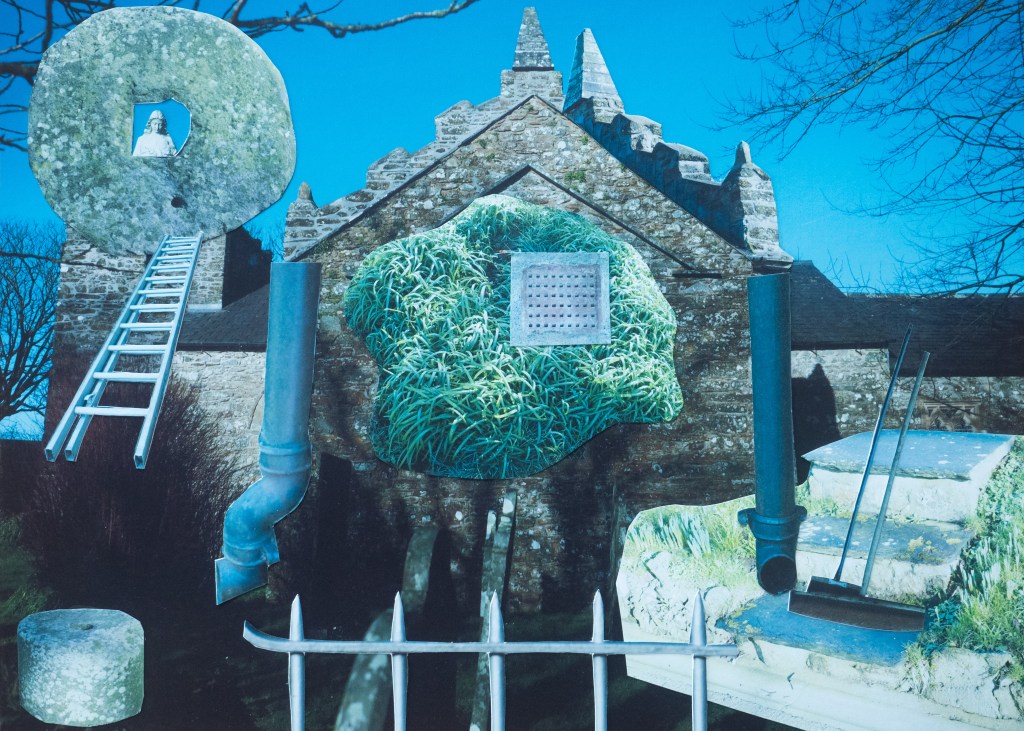
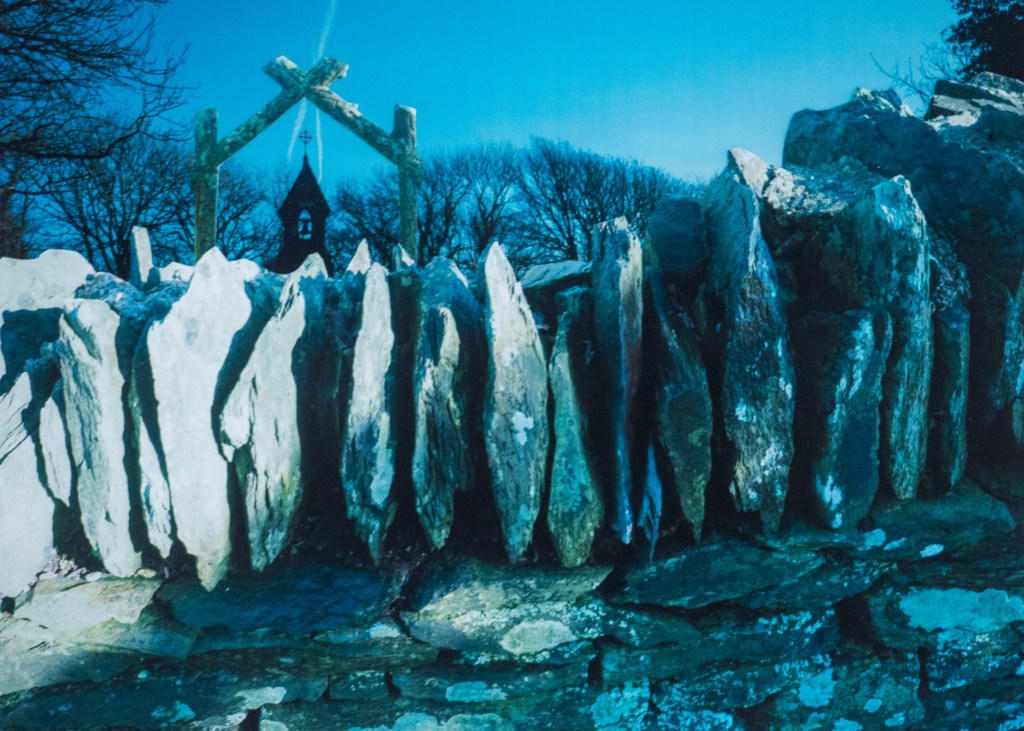
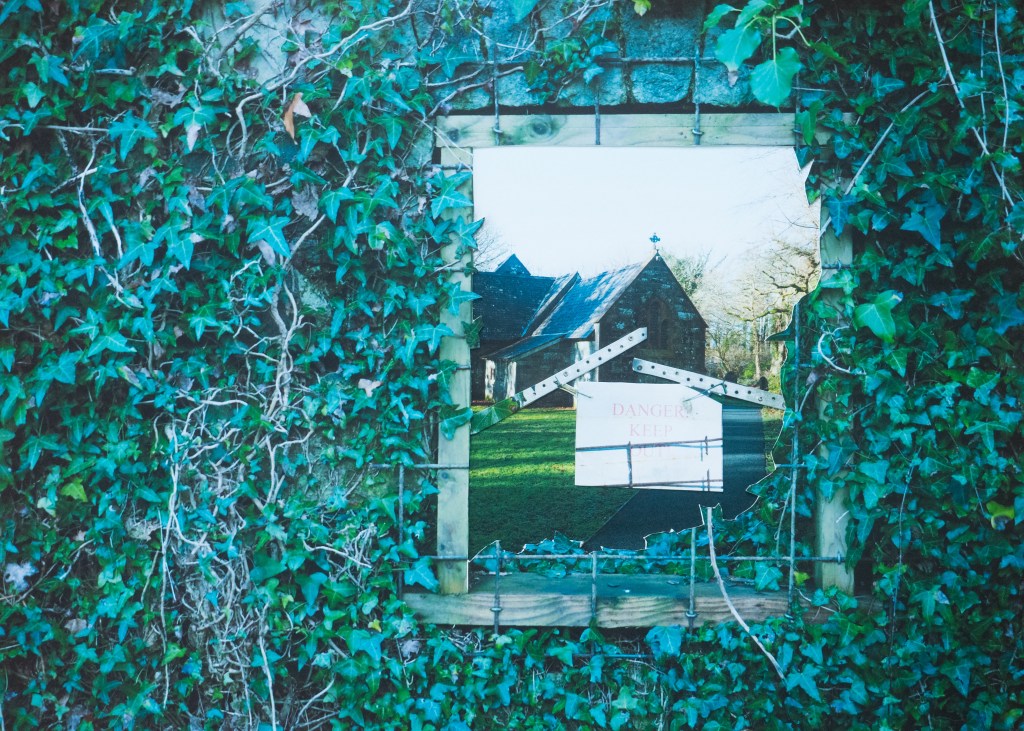
I want to use images that weren’t perfect, so as to distance my work from the ‘perfect’ landscape images you see, as I hope this shows that there is something wrong, something is not perfect. You can still make the images out but they do not possess the clarity. Hinting at the state of the world with gender equality, everything may seem ok on the surface but it truly isn’t. My technique of following a pilgrimage designed for men is an important aspect as I am following it as a women, something that wouldn’t have been accepted back in the original pilgrims time. I am following in their footsteps, seeing the same landmarks, but experiencing it completely differently. I have learnt that various techniques of art throughout history have been associated with women, these have been valuable to my methodology. Hence when assembling my images, I decided to make a collage. This technique is associated with women, so I believe it is very apt for my work. I ended up taking hundreds of images at each location. I obviously had to be brutal in the editing process. I went through the images quickly initially and took out the ones that I didn’t think would fit. At this point I still had quite a few pictures. I tried to get a feel for the location, and think of an idea for how I would arrange the collage. I then cut out the other images. It was a long process but I felt more connected to the final images I have chosen. I was able to make a new image from the others I took. The different aspects came together to make a new meaningful image. This could be in contrast to how people change their reality to make out gender inequality doesn’t exist, mainly because it doesn’t effect them. I have created a new image, symbolising the inequality not only in landscape photography nor in religion, but in a global sense. I think my technique has enhanced the final outcome. By using collage, I have been able to create a new image. I also took images that were not perfect. They were out of focus, over-exposed and under-exposed. I did this as I wanted to show the uneven ground in landscape photography and symbolise the different views and discontent. I like this effect as it can get the viewer to think. They can question why these images are not perfect, hopefully they can see something is wrong, it is not a perfect world view.
I did make some mistakes along the journey. One mistake I made early on was not to progress my ideas fully. I was stuck at just compiling the images, and not pushing my ideas. I also had low points, for example when I had issues arise in my personal life, it just halted my progress and changed my state of mind; I just didn’t know what to do, but I was determined to carry on. My high point was actually making the collages. It was fun and engaging. I loved the fact that I was actually creating something with my own hands. I really grew to love this technique. I think this work has influenced me, and I think it has made me think of other challenges, other areas people don’t talk about but are obviously there. In essence, I liked the challenge of challenging issues. This is something I would like to try in the future. I enjoyed this topic and found that my personal voice started to show through. I like the fact the I am looking at issues and bringing them to light and addressing them. I also like creating a collage of my work. I like the effect it produces and I like using this technique. I would definitely use this in the future. I like addressing issues and exploring using this method. I will take away the fact that there are issues in the world and art can be a useful tool to bring them to the light and to address them. I have also learn to experiment more, as I found this has gotten me closer to the my work.
I have been thinking about how I will present my work, one idea is presenting as an exhibition at a venue. I have been thinking about where I could present it. In keeping with the religious theme, an exhibition at a local church might be apt. The only issue is as I am addressing inequality in religion, they may not be happy with it in their church. The same could be said for the last stop on the pilgrimage, St. David’s Cathedral. Maybe a local gallery would be suitable or possibly publishing it in a book. For an exhibition, I will need to contact possible venues to see if it would be possible to exhibit with them. Another idea would be for a book publication, I will need to decide on a format and what I will include. I will look into different publishers and self-publishing. I think self-publishing may be the best route.
Assignment Notes
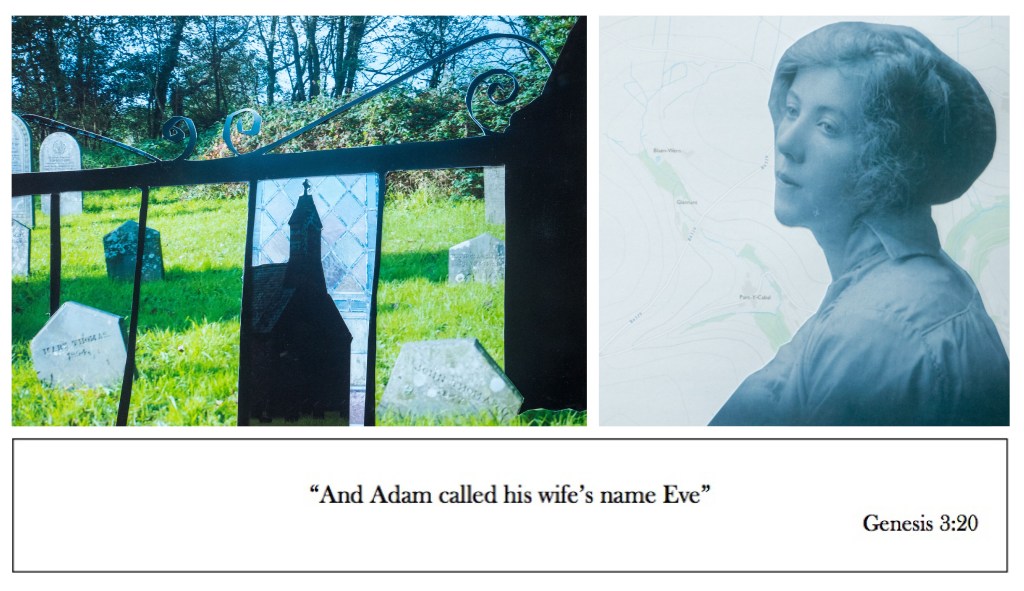
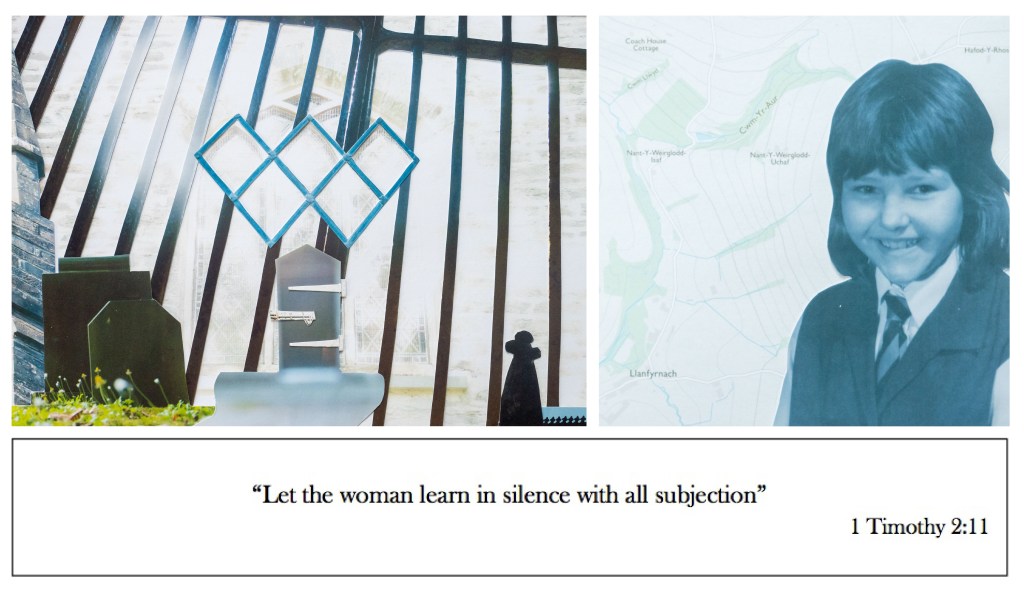
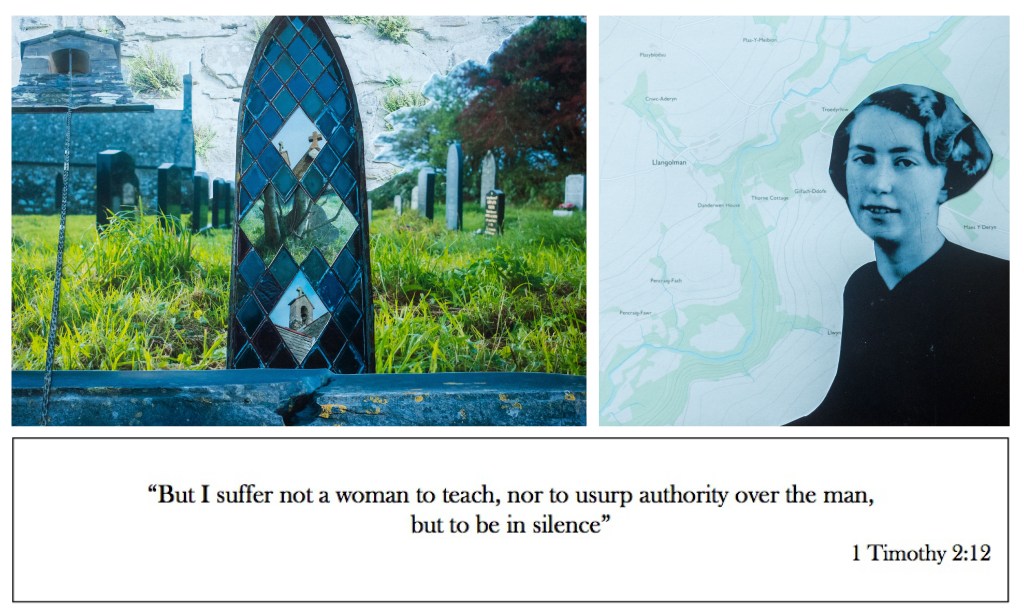
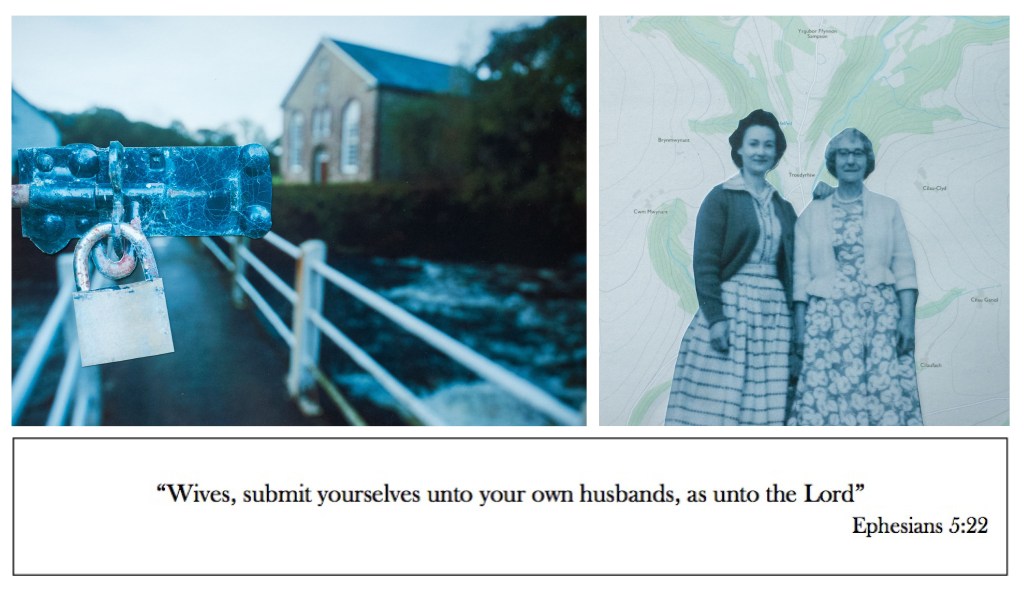
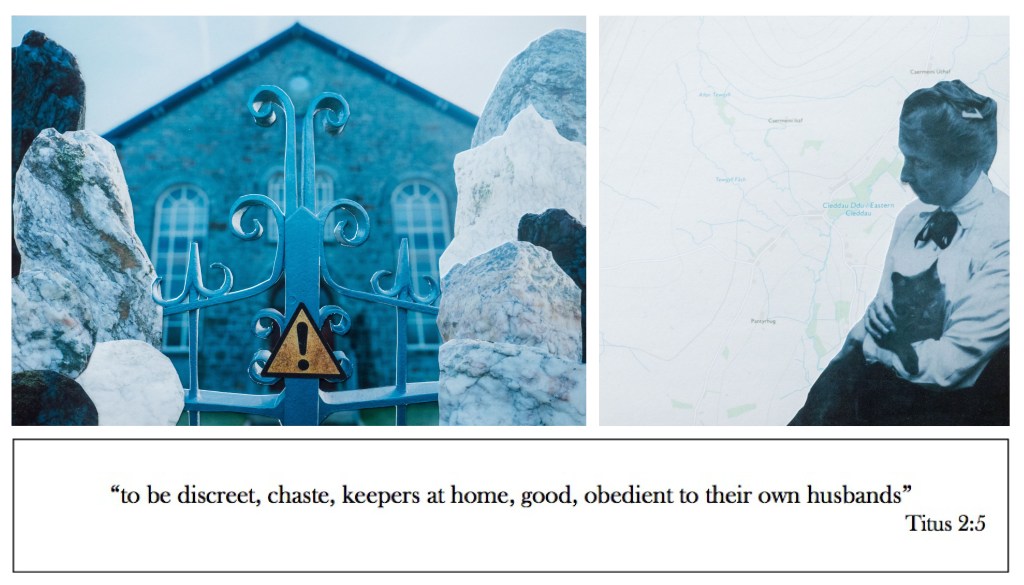
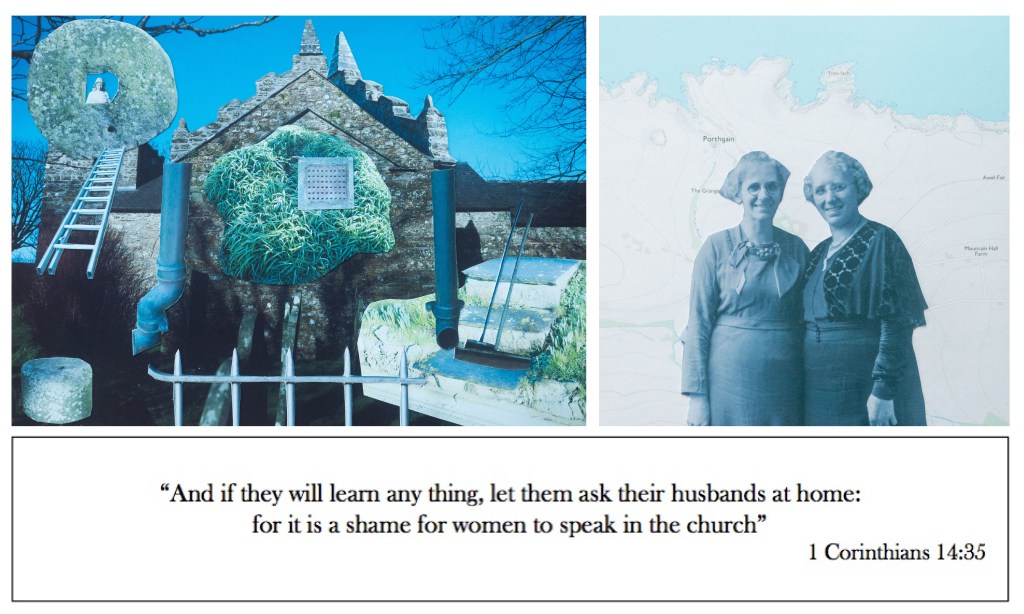
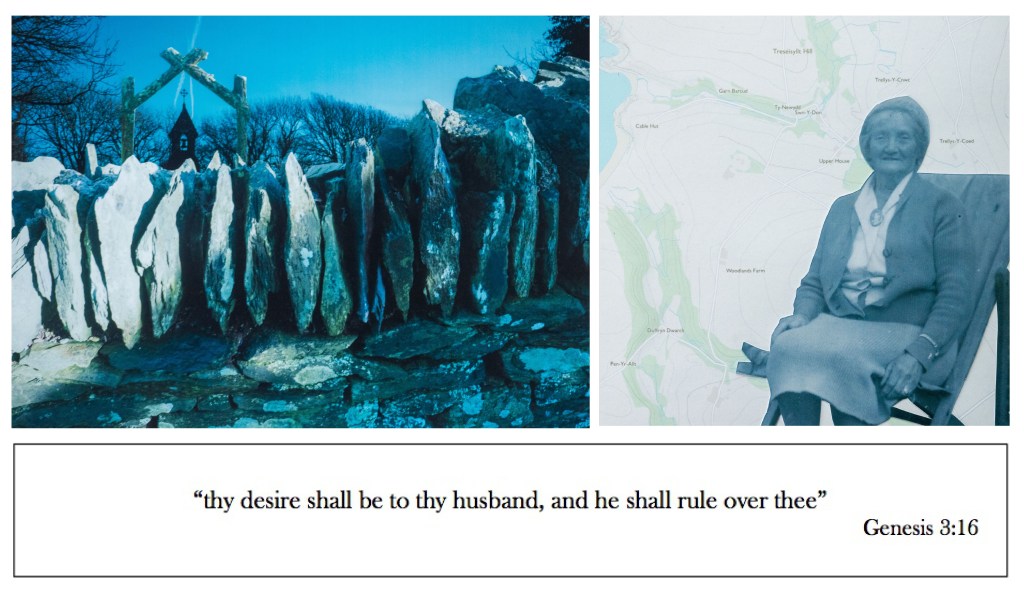
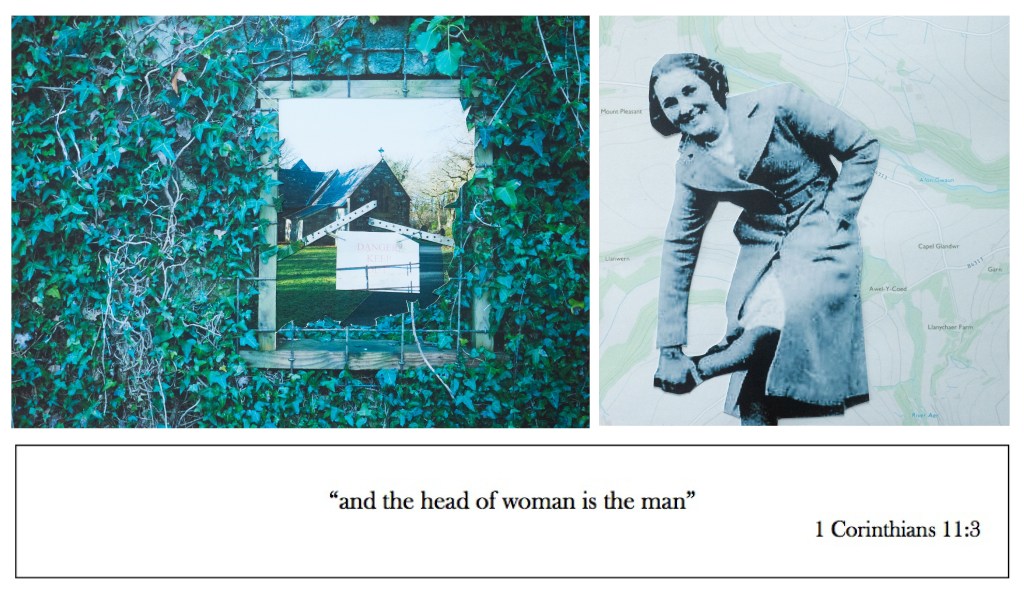
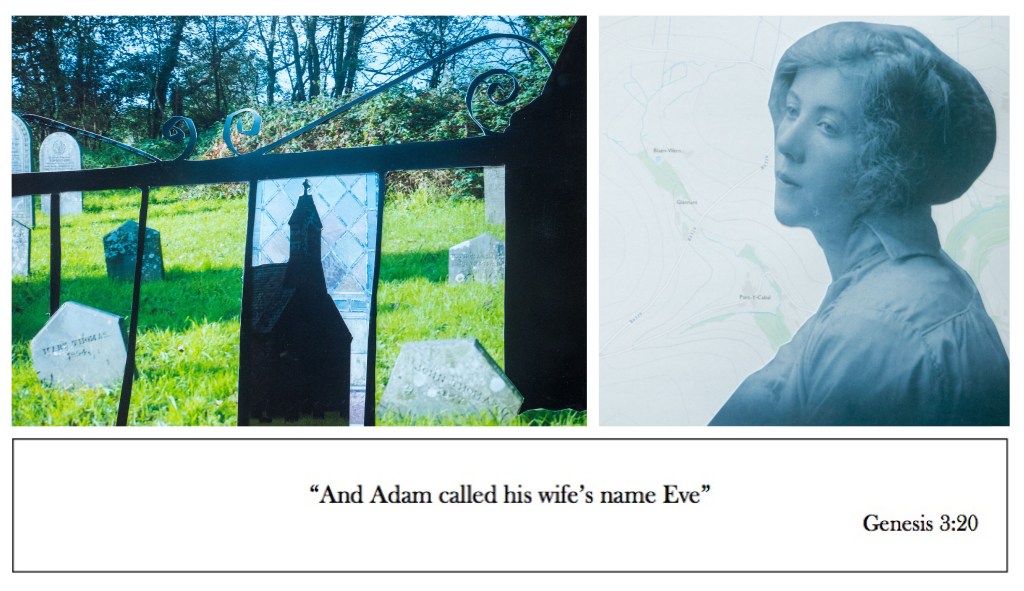
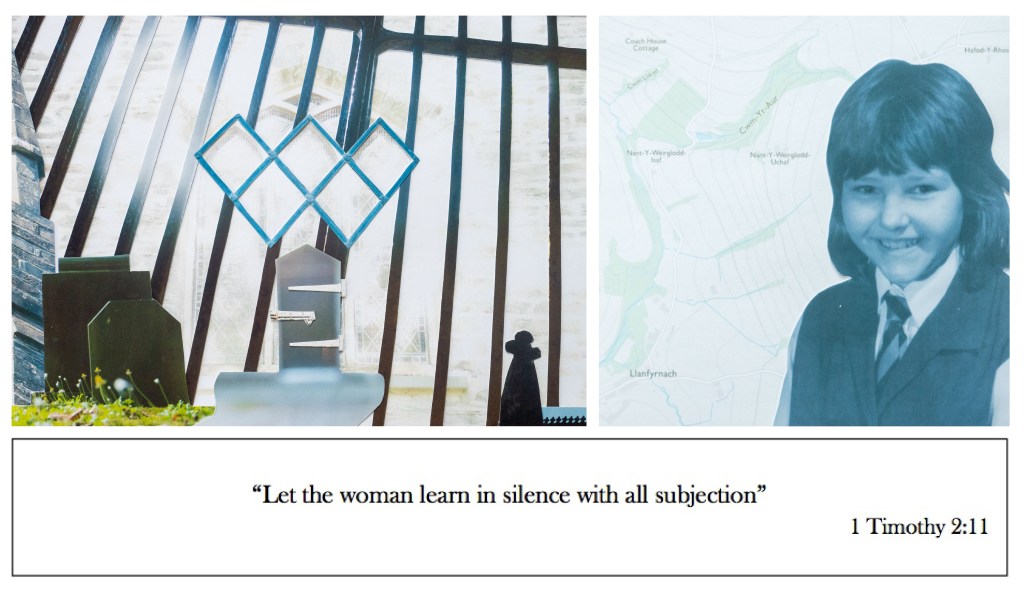
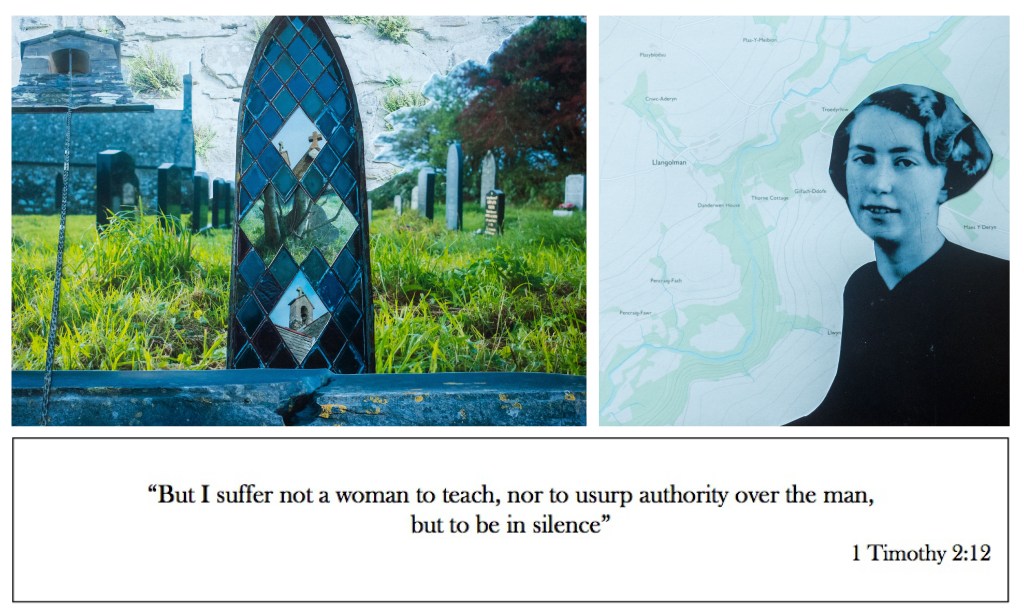
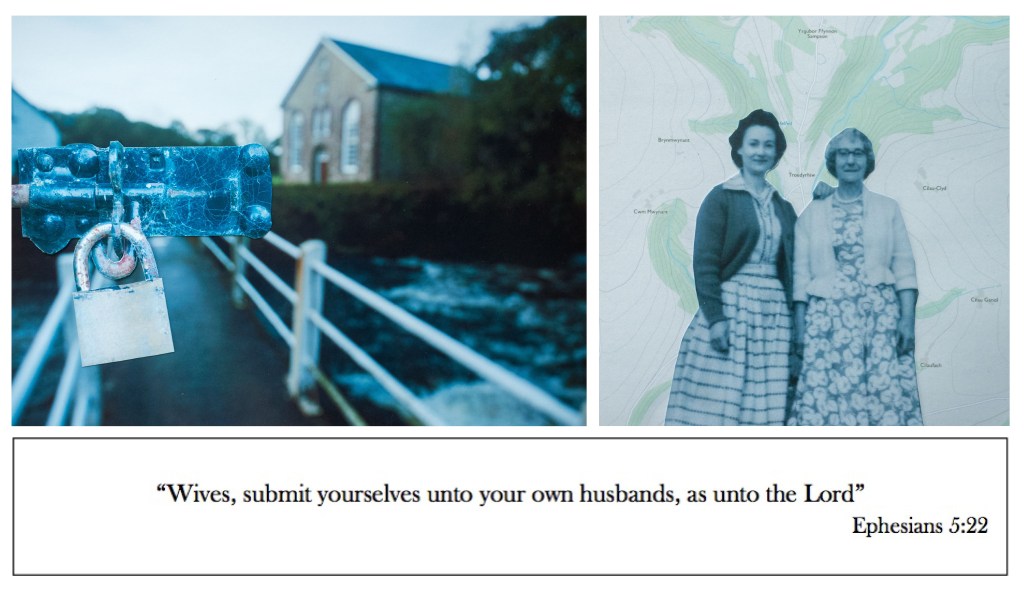
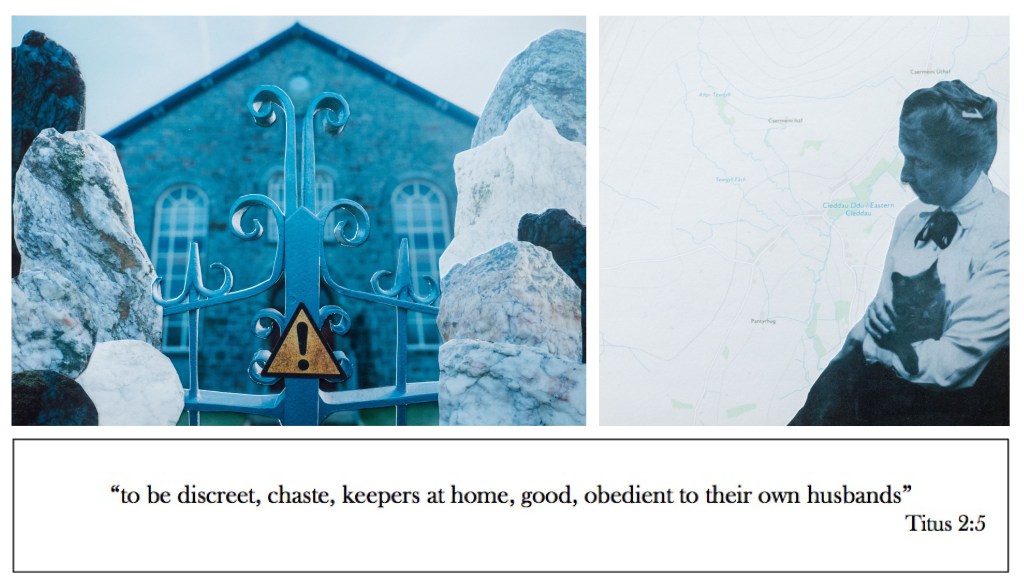
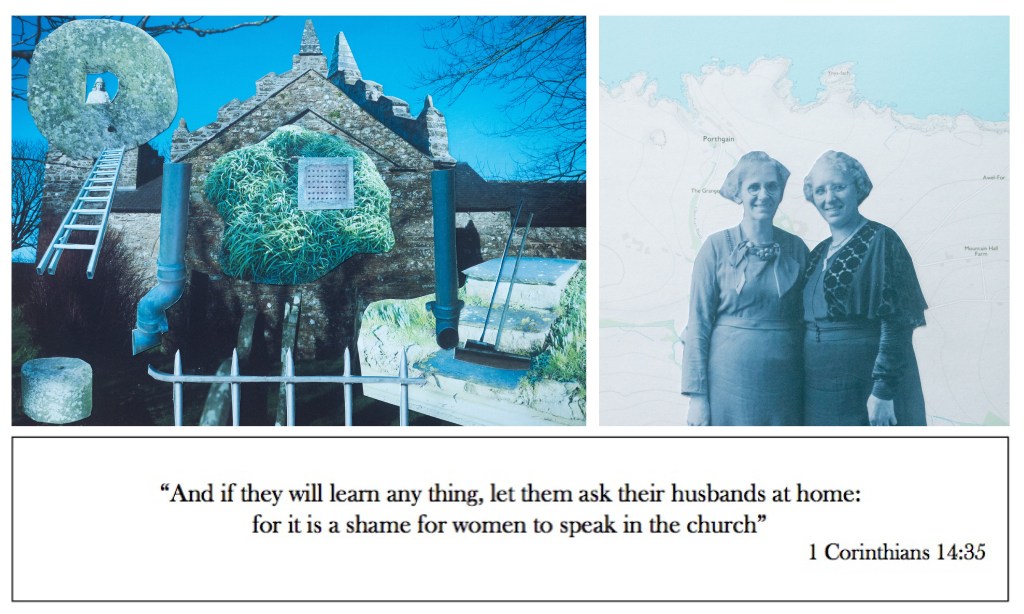
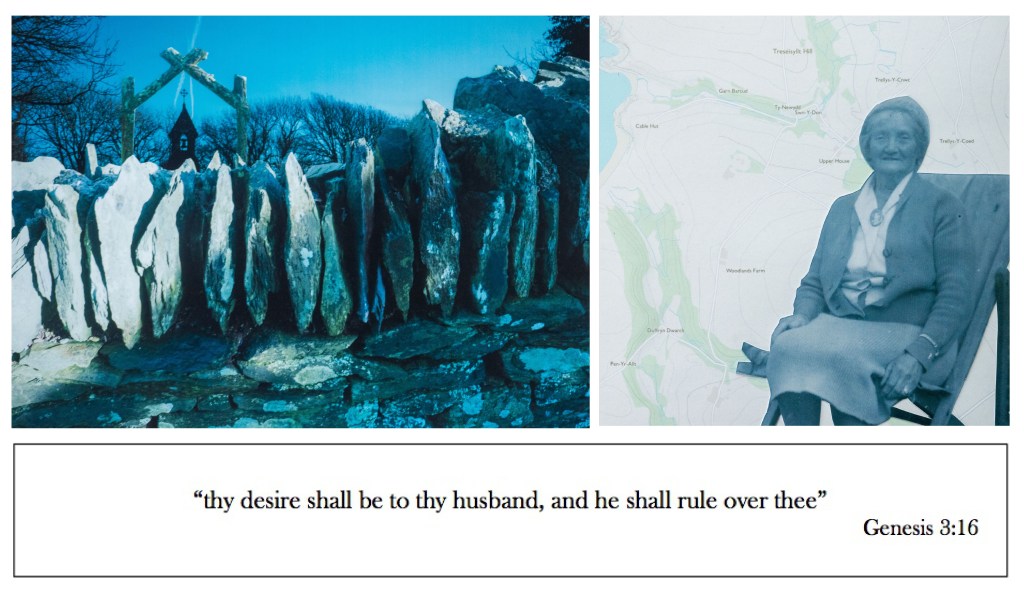
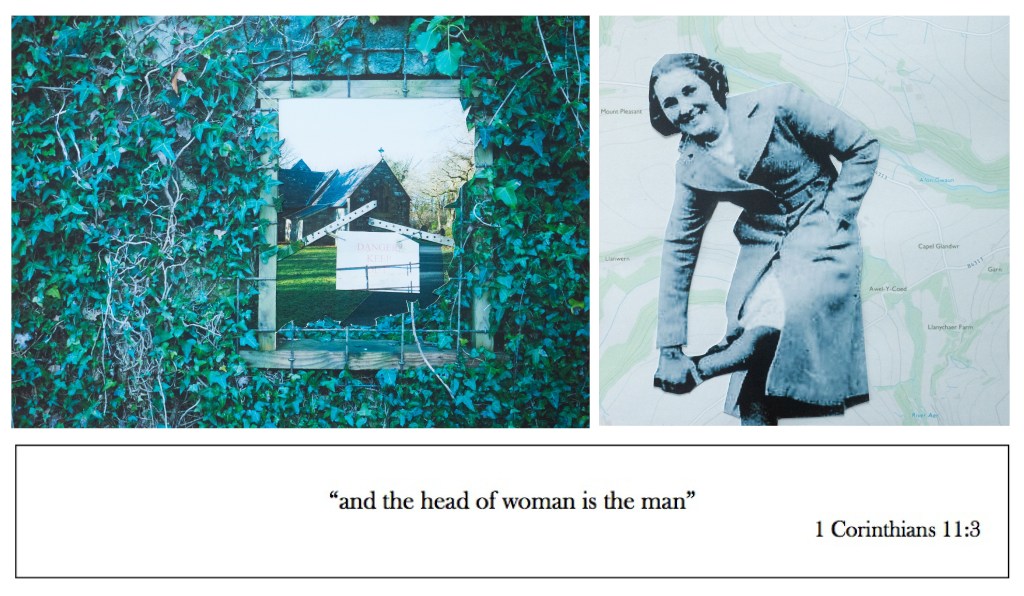
After my last tutor feedback, I have changed a few things. I have kept the images roughly the same as I felt it works for what I want to achieve. I like the effect my collages have and I think the text and side image bring the whole work together. I re-printed and re-did the collages for a better finish. This time I used a thicker matte photo paper and fixed the issues with my printer. These helped produce a better image. I cut them out, and was careful with the cutting so the lines are hopefully better.
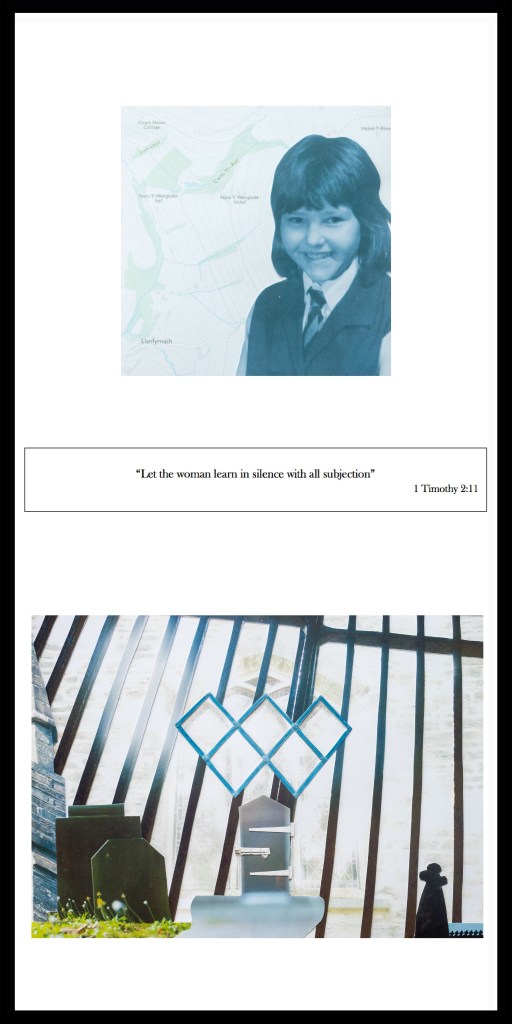
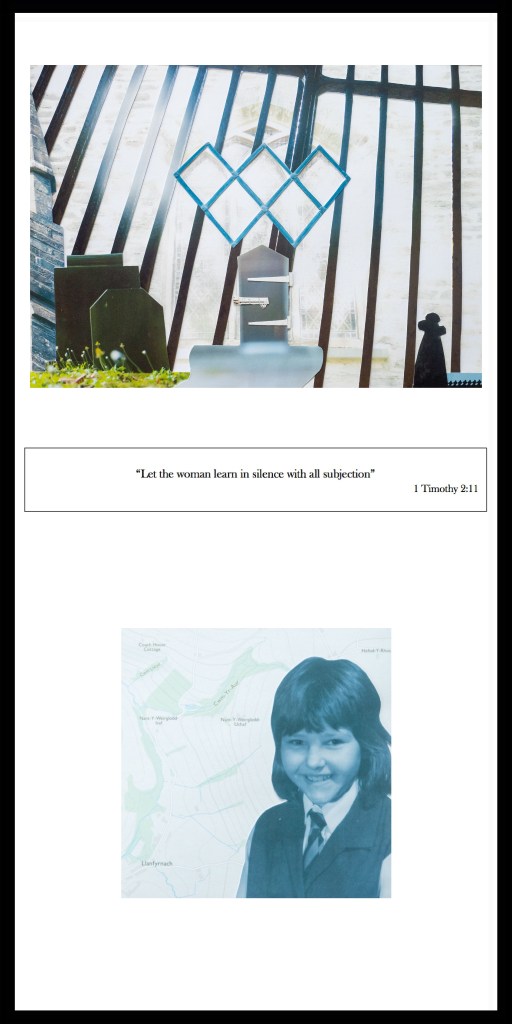
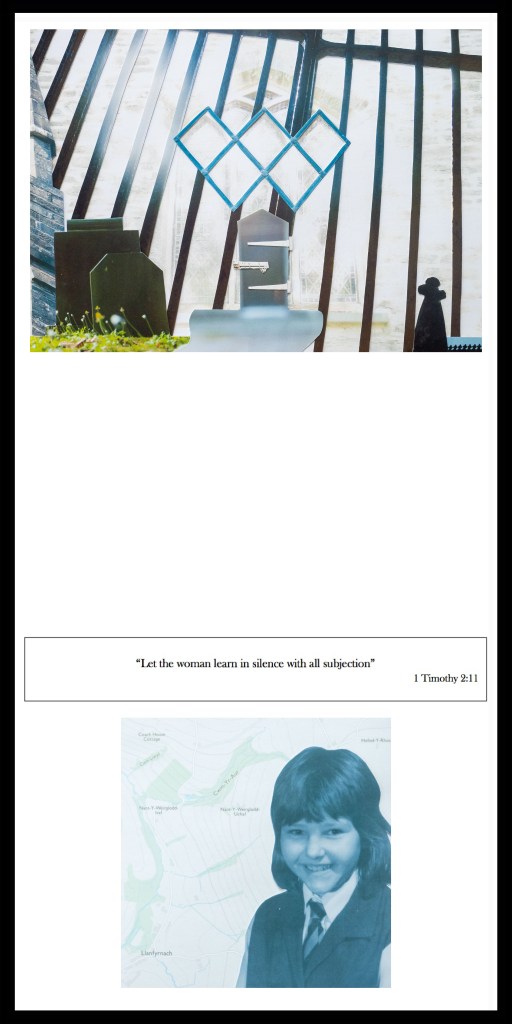
I have kept the actual text the same but have changed the font for a clear one. I want this one to emulate the text from the Bible, so i tried to use a font that was closet to that in the Bible. I also made it bigger so it is easy to read and one of the main point on the image. Here is an example of the text:
Here is a link to how I made the accompanying map image:
I have looked into ways of presenting for publication. I thought of a book format, a digital exhibition, a physical exhibition and presented as a newspaper, or church newsletter. I think a book or newspaper publication would be better for my work. An exhibition may work but it just doesn’t feel like it would fit my work. I have tired these out.
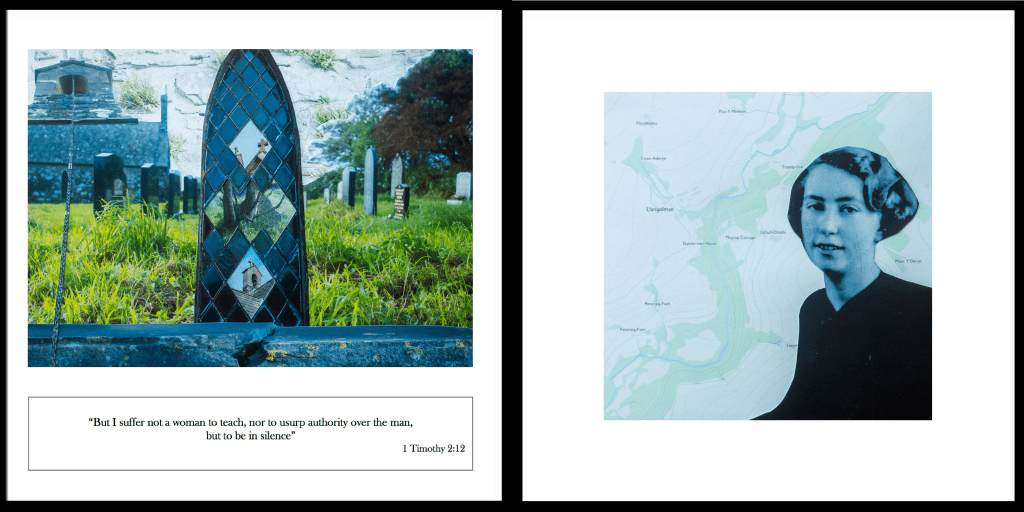
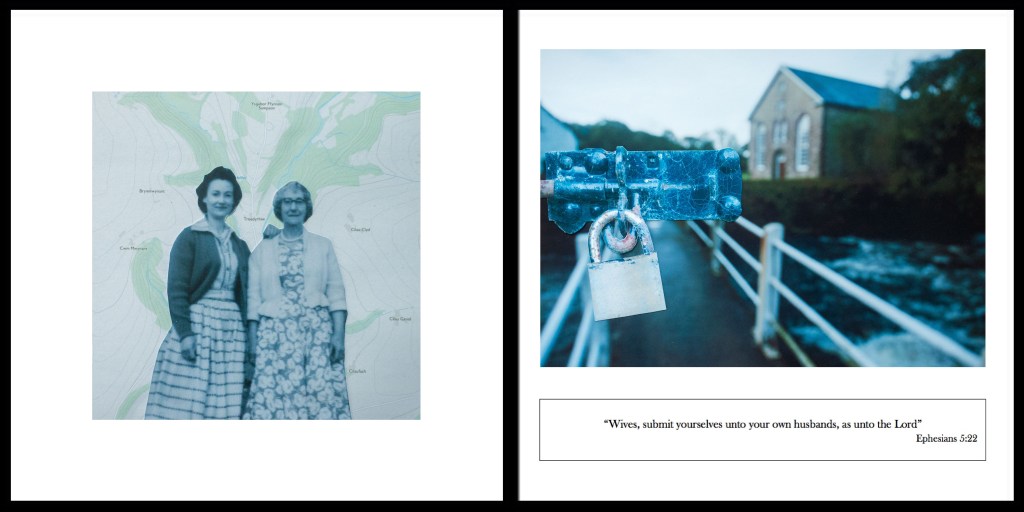
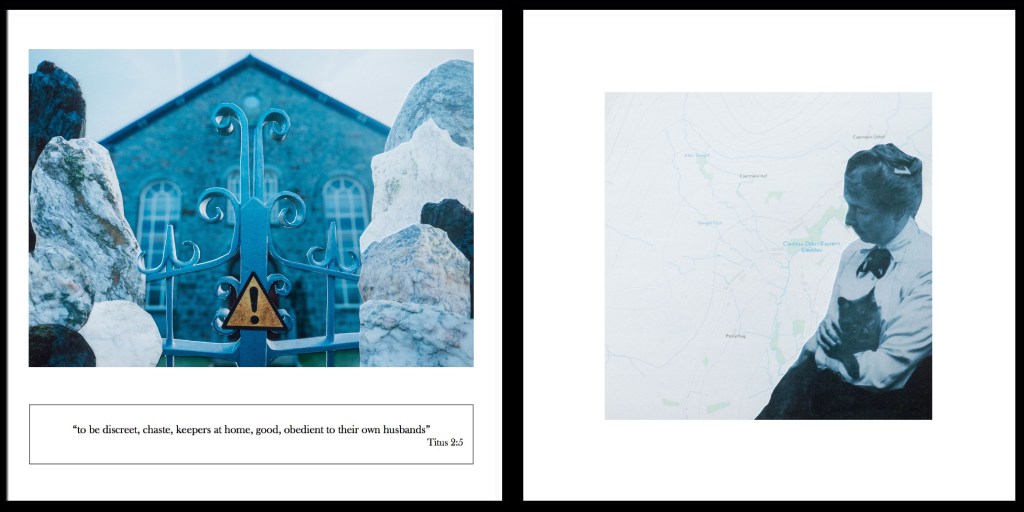
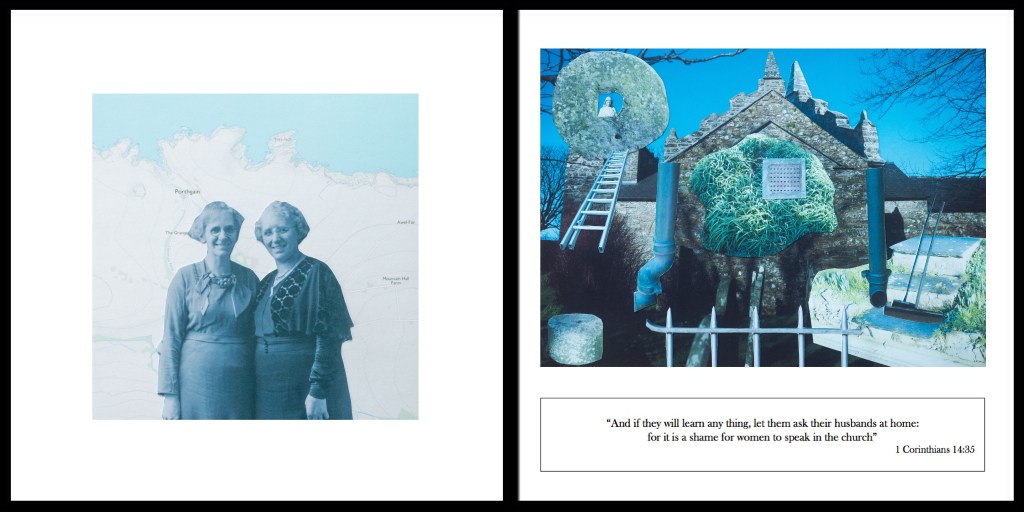
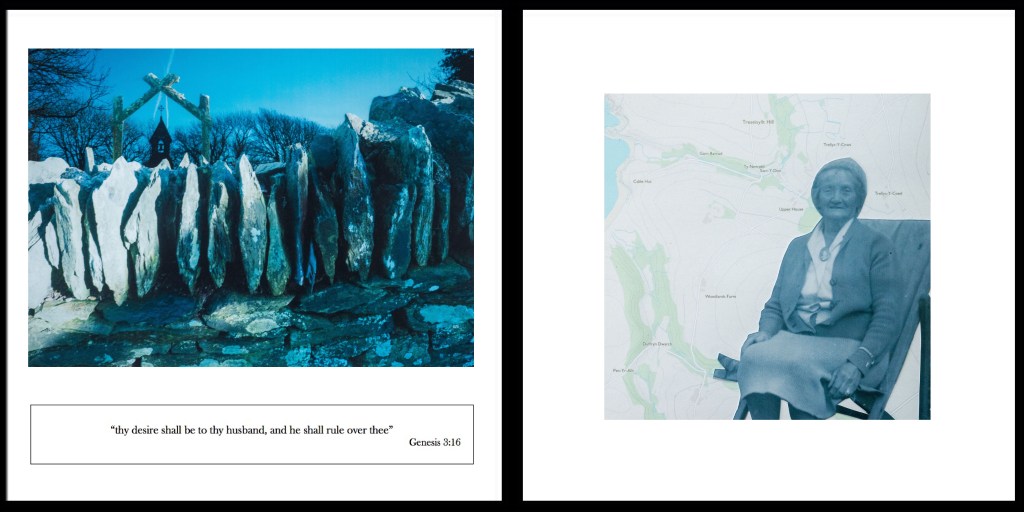
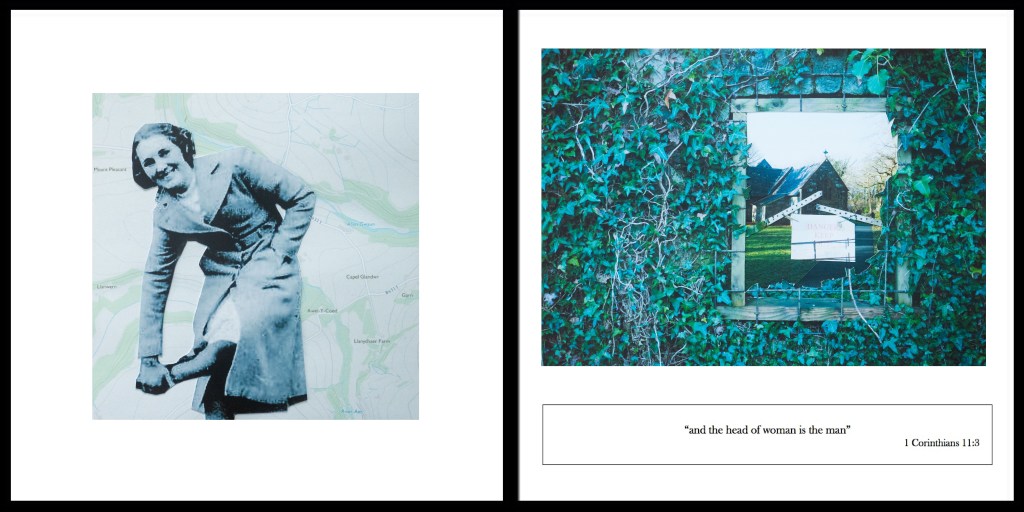
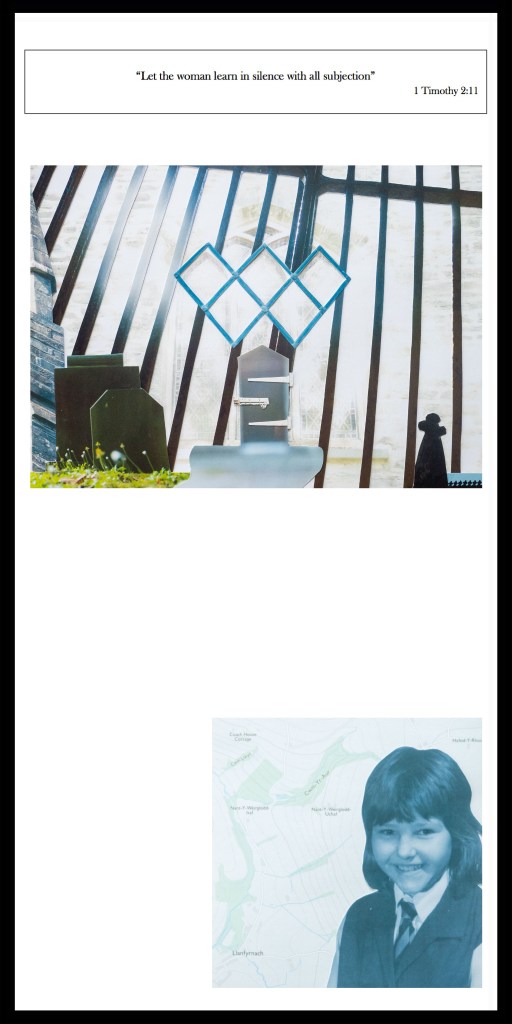
Here are my attempts at a book:
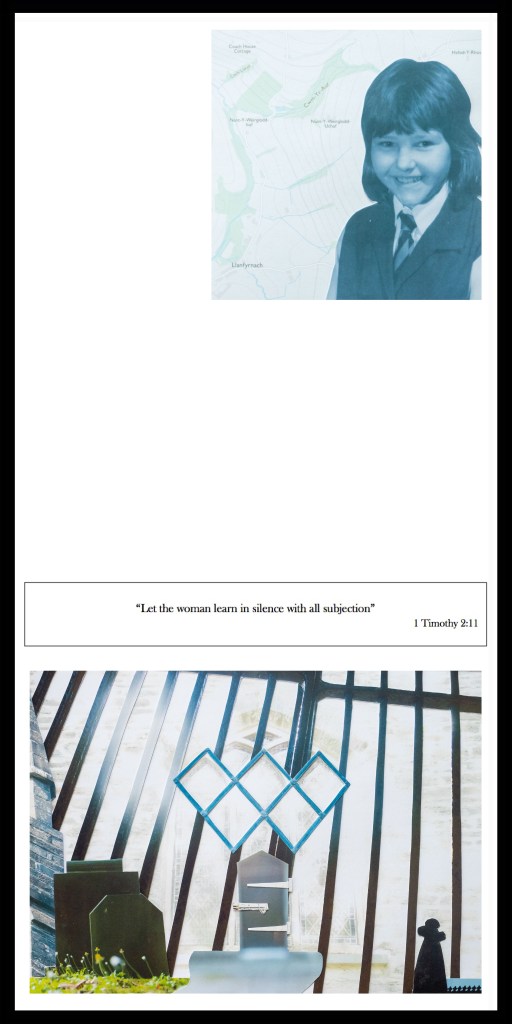
Here is my church newsletter/newspaper:
I think I prefer the newspaper/newsletter format at the moment, there will be text among the images, but there is a lot to develop in Sustaining Your Practice. My ideas might change or need re-developing and exploring further.
I have decided to stick with the newsletter presentation.
Here is the final images:
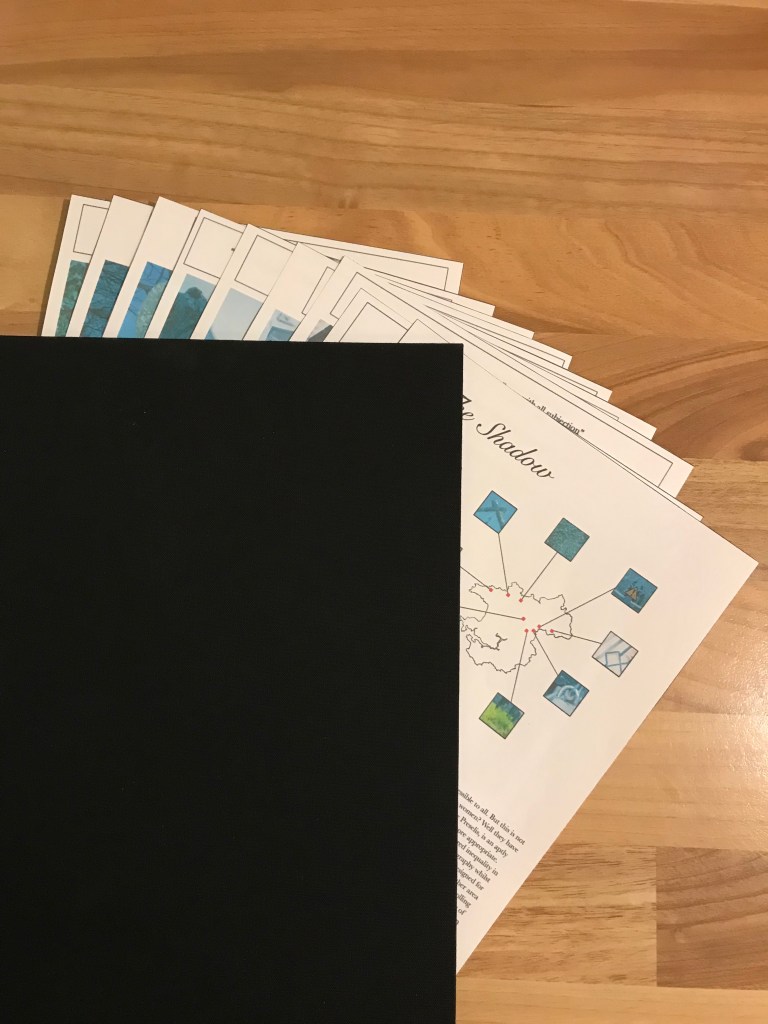
Here an image of the folder with the images. It reminds me of the folders you may get to hold documents. I feel this brings everything together in a neat finished way.
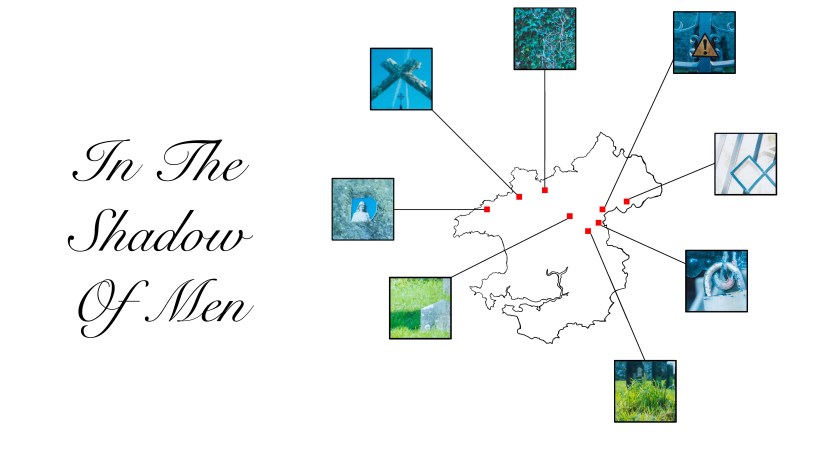
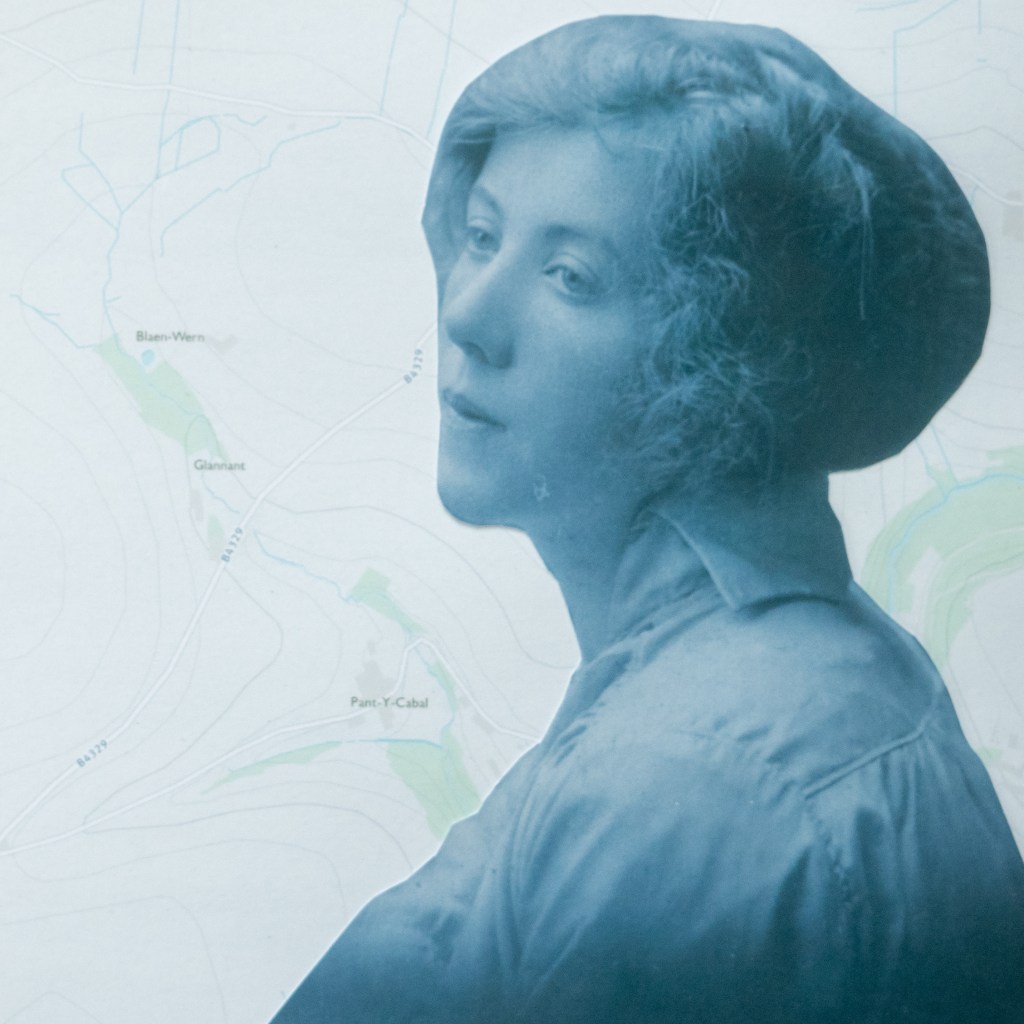
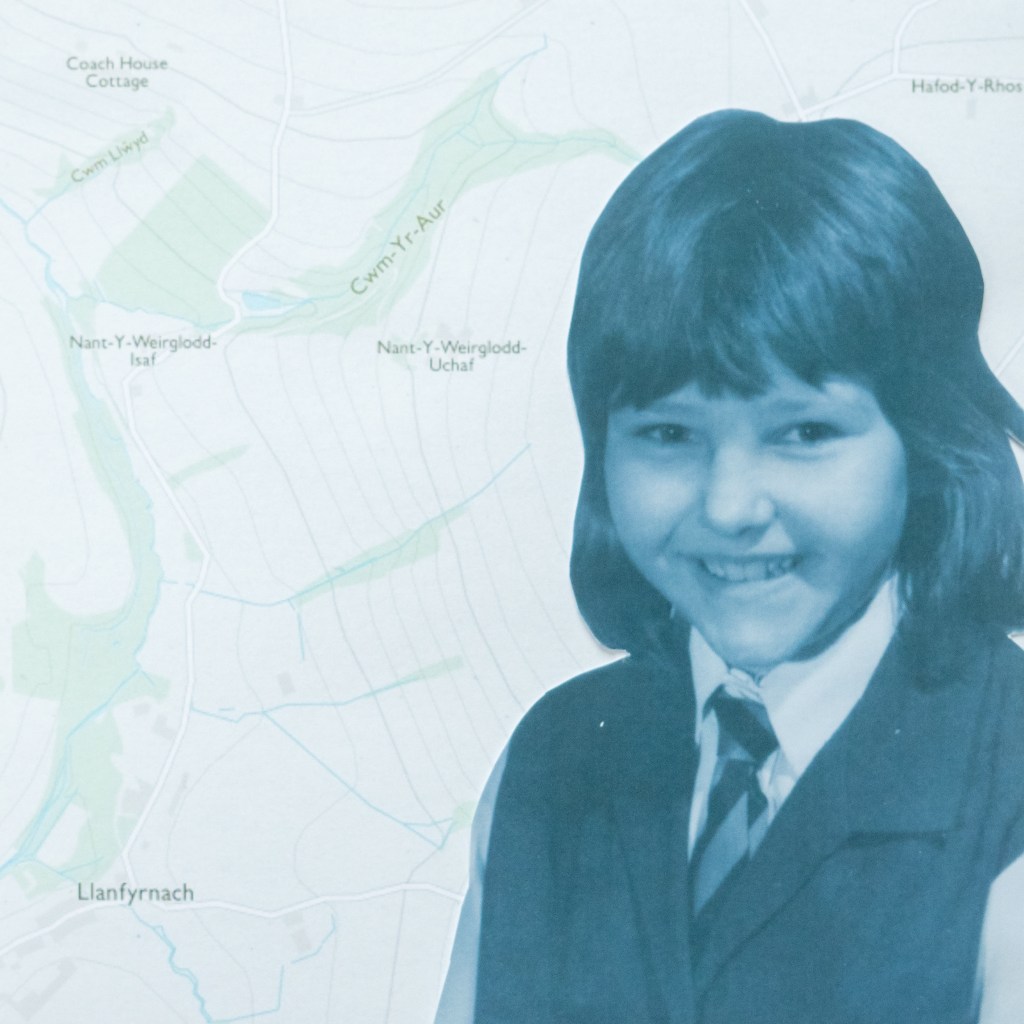
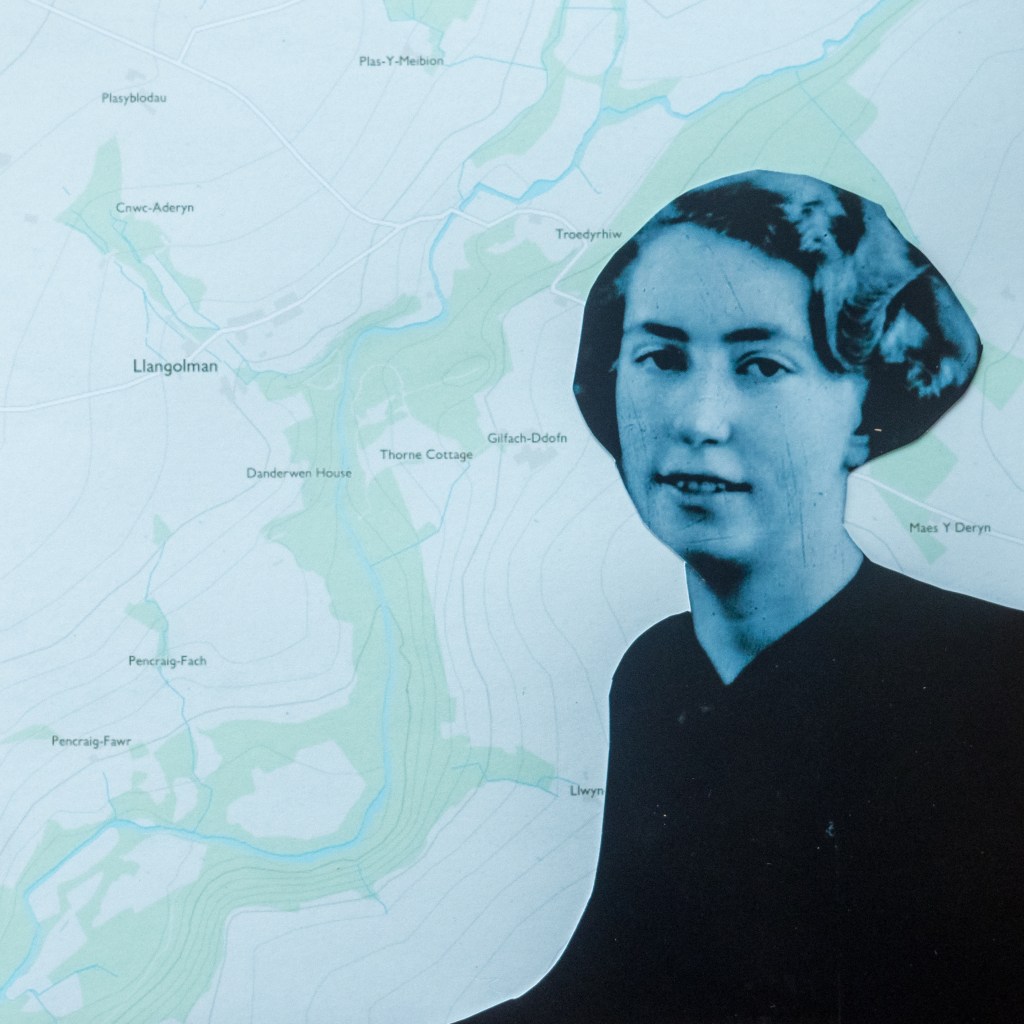
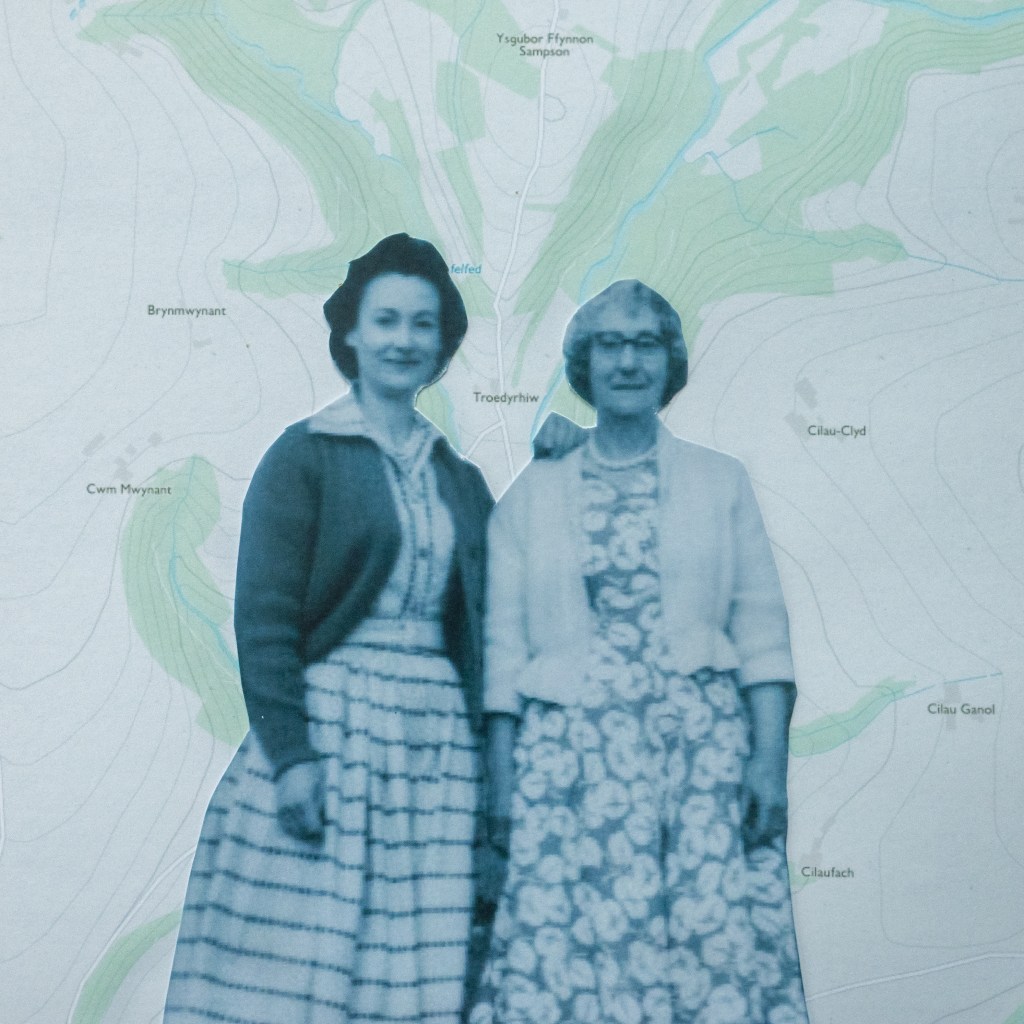
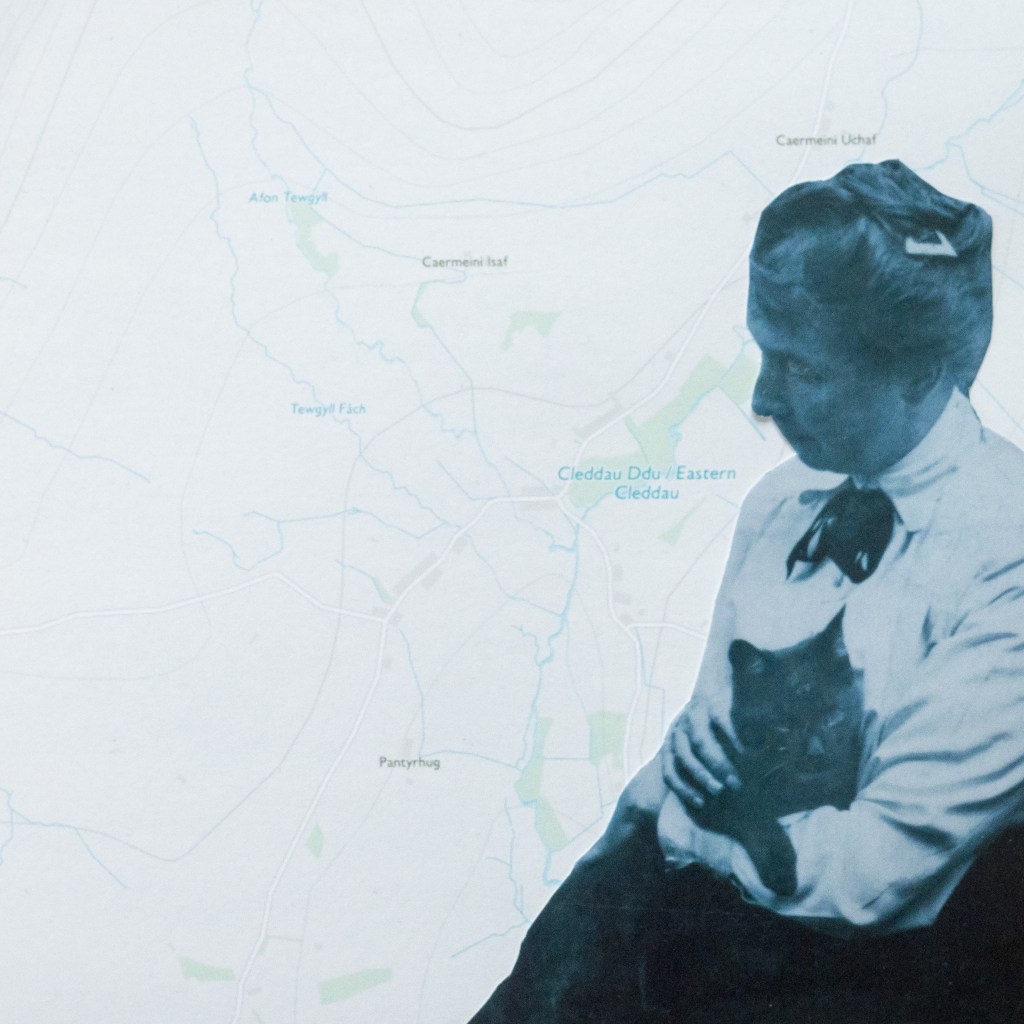
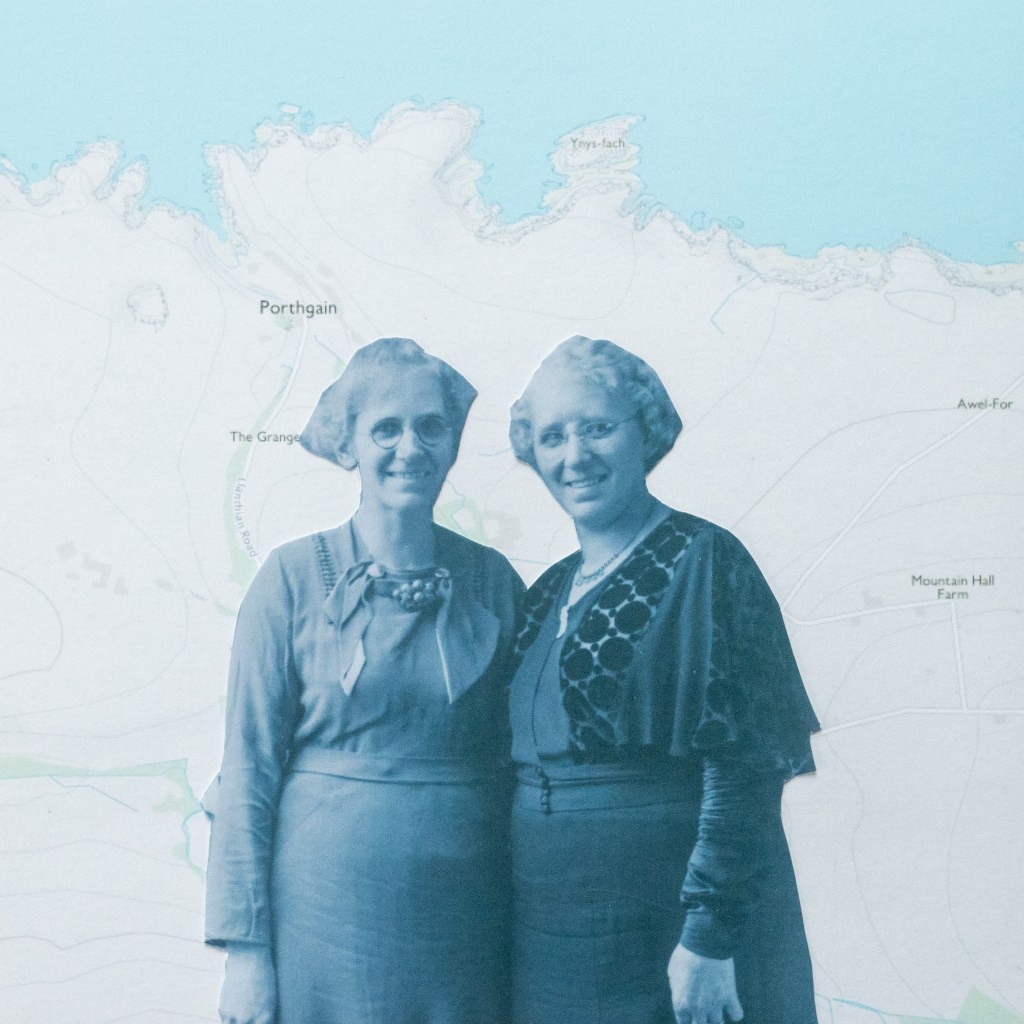
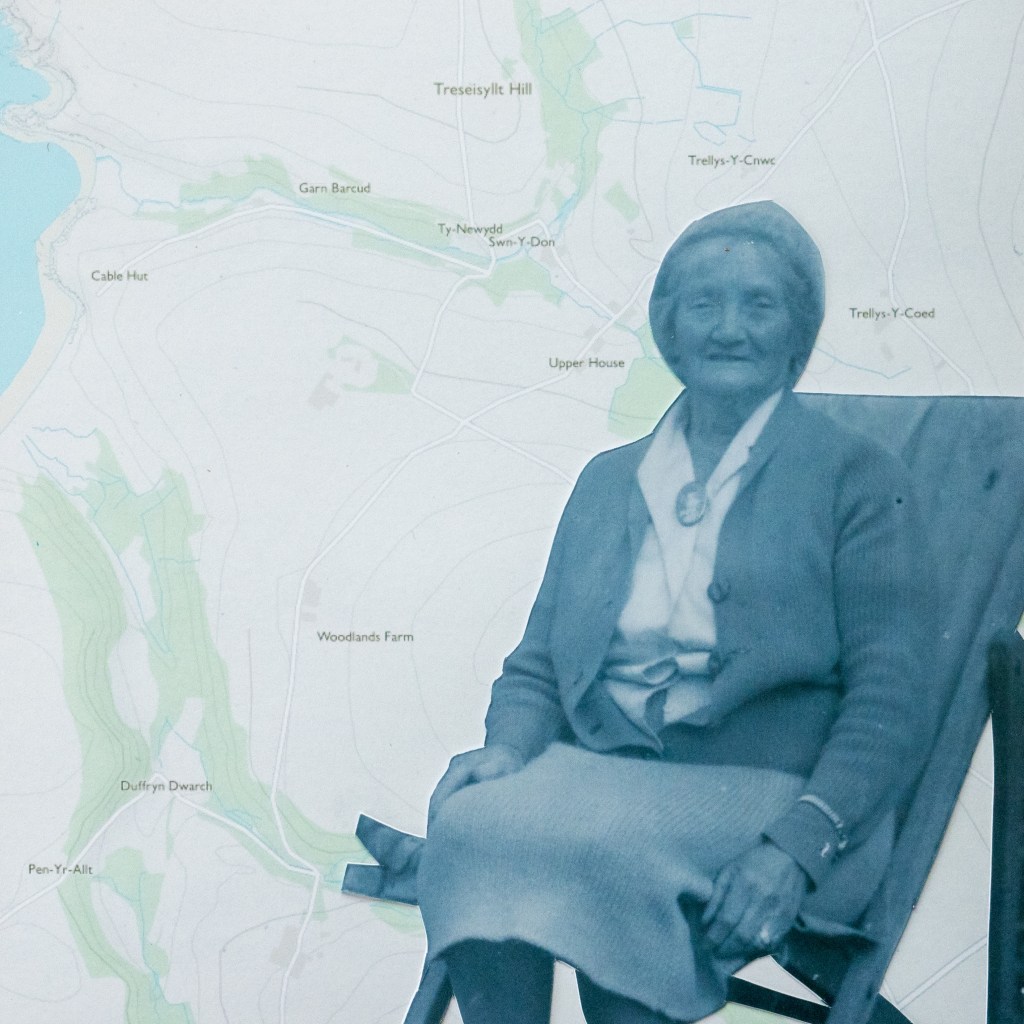
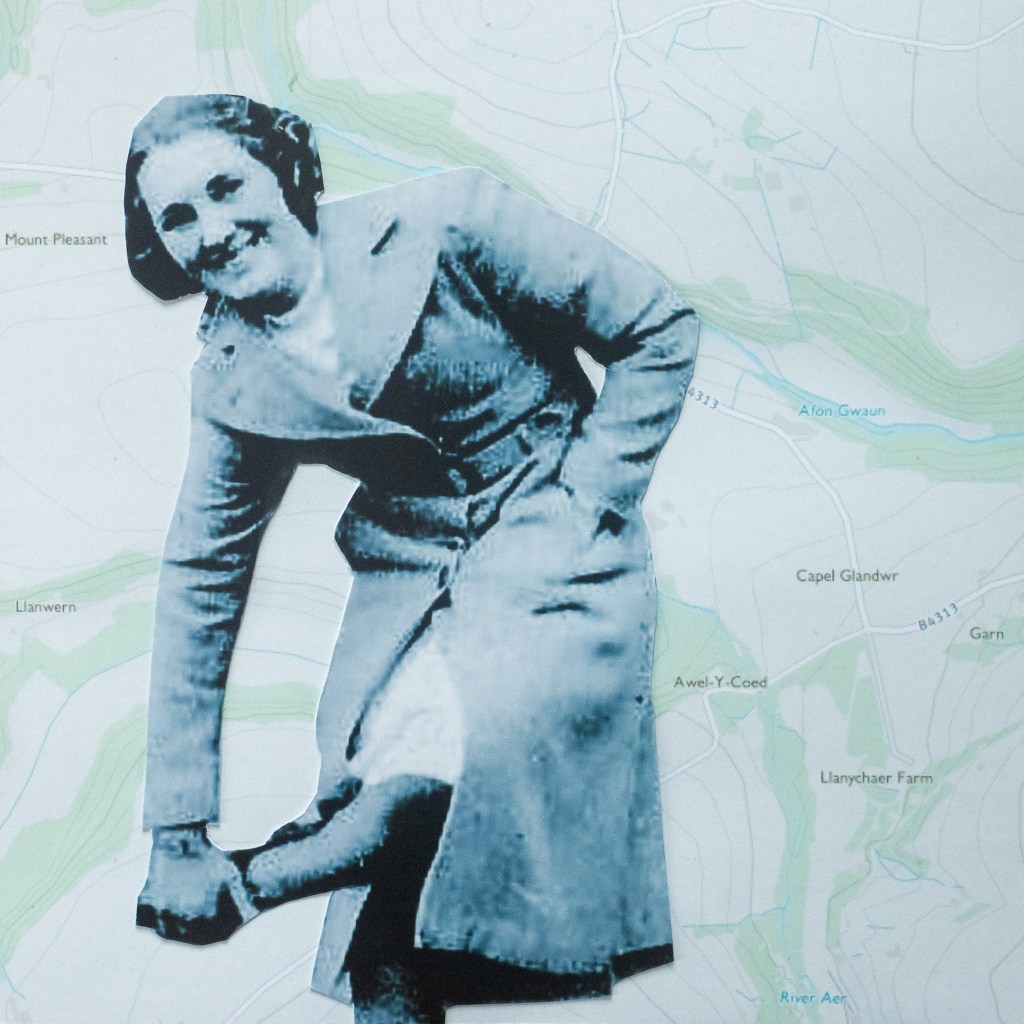
In my last tutorial, my tutor suggested a map to link all the locations to give context. I have experimented and I really like the outcome.
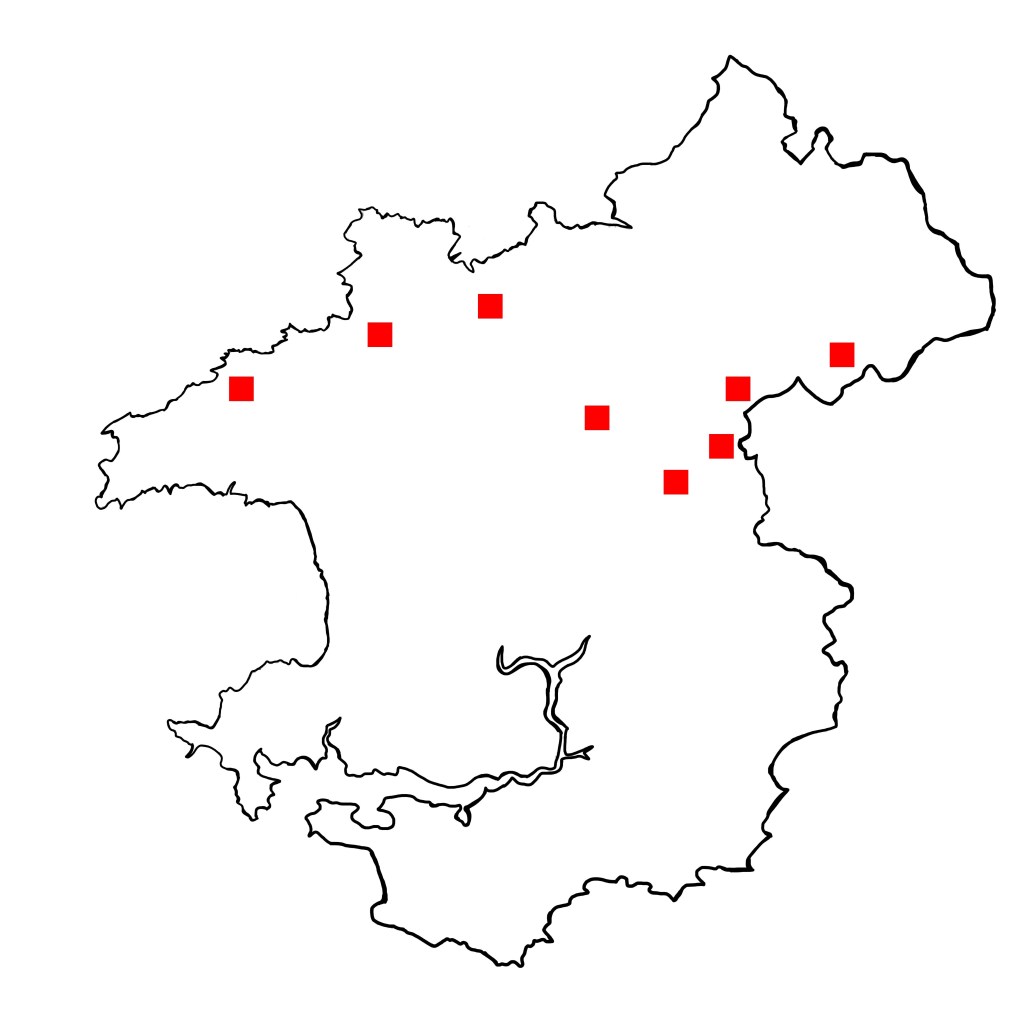
I started by creating a map of Pembrokeshire, where the pilgrimage is located. I decided on using a black and white image, as I found it was clearer and wouldn’t be overly busy. Here is the map:
I marked the locations with a red dot.
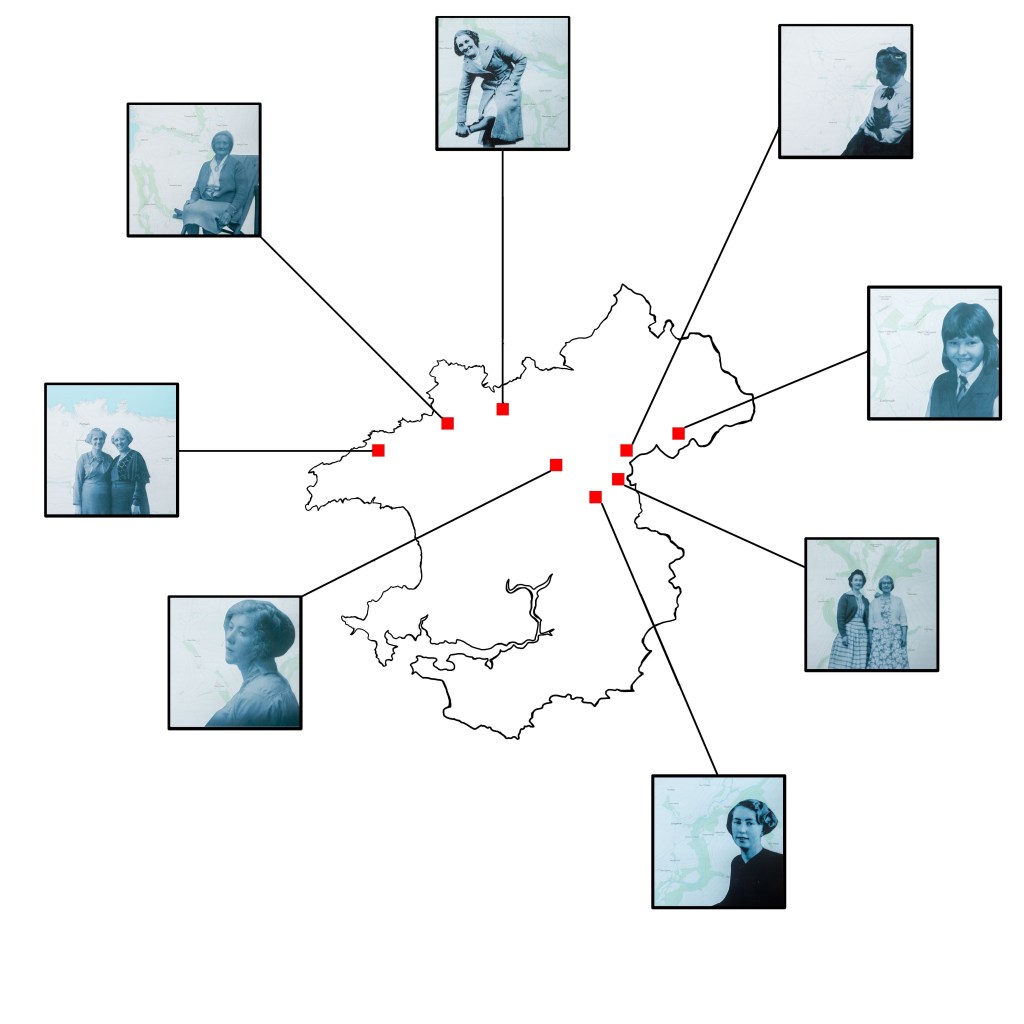
I can either keep the map how it is, but I decided to experiment with featuring the actual location somehow. I tried linking each location with the mapping images I used for them. Which you can see here:
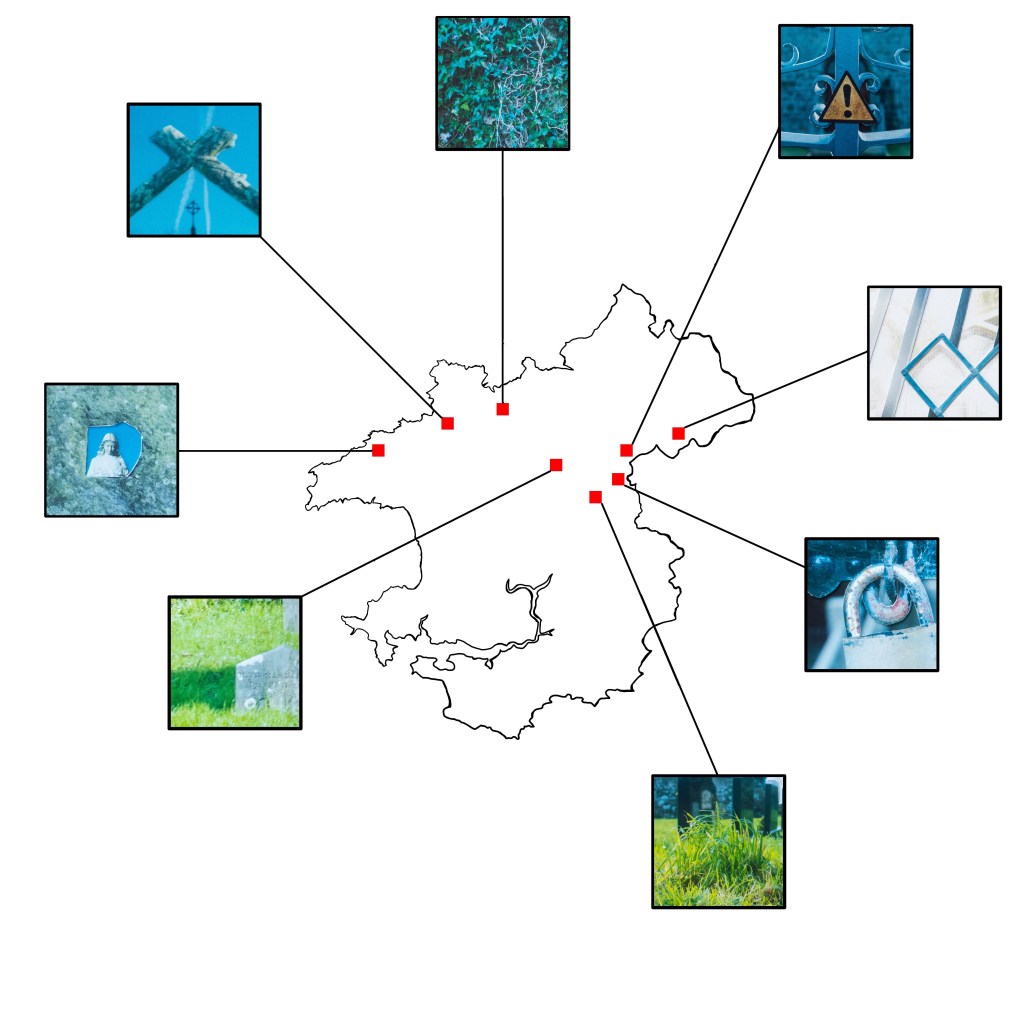
I then decided to try showing a small snippet of the main images to allude to their location, you can see the result here:
Like the map on it’s own but I think it could be better. I have looked at the mapping map and the main image map, to see which I think looks better. I like both, but I am drawn to the one that has the main images. I like that it gives a small snippet of the location without giving to much away.
Ever since I was a child I have always enjoyed photographing landscapes. It had never really occurred to me that there was an obvious divide between the genders here. But when I started to do some research it was obvious. The majority of photographers in this genre are men. I began thinking of ways I could represent, highlight and fight this inequality. With my previous studies being in religion, I decided I would follow a pilgrimage which was designed for men. This would be my landscape images. It also occurred to me that this would also be looking at the inequality within religion and also in a global sense. This pilgrimage became my own journey. A journey of realisation and discovery.
I started my work by intending to follow the pilgrimage and using this as a backbone for my exploration of the gender inequality in landscape photography. I really didn’t know how I was going to do it. But I did want to explore this topic, as I found it is something people either don’t realise or don’t talk about. I started by looking at landscape pictures and the common themes in them. I then decided that I wanted the opposite of the norm, I wanted images that were not perfect, to symbolise the discontent. So my work included blurry, over-exposed and under-exposed. My work has evolved to make a collage from each location. I have kept the basis which is exploring inequality in landscape photography, but also with references to the inequality in religion and in a global sense.
I started my research by looking into gender inequality and the inequality in landscape photography and how artists tackle this issue. I have also looked into pilgrimages. I have tried to find artists who have followed a journey or pilgrimage, but also those who are looking into psychogeography. To aid in my decision about my techniques, I looked into artists who use collage. I looked into how artist use text and how they sequencing their images. As I was researching various different topics and techniques, I had a lot of research. Catherine Opie was one artist who influenced how I photographed my locations. Several male landscape photographers have helped me see how they see the world. Mary Beth Edelson used religion to address gender inequality in the arts, her work has been influential. These are to name a few.
As my work has evolved, I feel my work explores gender inequality but not just in landscape photography, but in a global and religious sense. I followed this pilgrimage which was designated and followed by men, in order to complete my own journey as a woman following in their footsteps. Something which would have been frowned upon in their time. I believe it also raises questions regarding patriarchy and inequality. I am following a man’s journey, but my images now reflect my journey, as a woman.
I do not feel that my images will only resonate with one particular audience. I believe my images are suitable for all, as this is an issue that effects everybody. Despite this inequality being against women and men are favoured, it would require both sexes to raise awareness and to fight it. I hope when the viewer looks at my image, they can bring their own experience or thoughts of gender inequality and religion. I would like my images to get the viewers to think about the gender inequality, not only in this specific journey but also in a global sense. It could perhaps lead to their own journey of discovery surrounding inequality. I would like people to see my images and really think why have I followed a journey that was designed for men. Why as a women, photographing in the landscape genre is this a rarity? Why aren’t the images perfect? What new image does the collage make? Why does these images show oppressive and restricted tendencies? Most importantly, how does the images make the viewer feel? Are they aware of gender inequality and how deeply it is rooted? Do they care?
I want to use images that weren’t perfect, so as to distance my work from the ‘perfect’ landscape images you see, as I hope this shows that there is something wrong, something is not perfect. You can still make the images out but they do not possess the clarity. Hinting at the state of the world with gender equality, everything may seem ok on the surface but it truly isn’t. My technique of following a pilgrimage designed for men is an important aspect as I am following it as a women, something that wouldn’t have been accepted back in the original pilgrims time. I am following in their footsteps, seeing the same landmarks, but experiencing it completely differently. I have learnt that various techniques of art throughout history have been associated with women, these have been valuable to my methodology. Hence when assembling my images, I decided to make a collage. This technique is associated with women, so I believe it is very apt for my work. I ended up taking hundreds of images at each location. I obviously had to be brutal in the editing process. I went through the images quickly initially and took out the ones that I didn’t think would fit. At this point I still had quite a few pictures. I tried to get a feel for the location, and think of an idea for how I would arrange the collage. I then cut out the other images. It was a long process but I felt more connected to the final images I have chosen. I was able to make a new image from the others I took. The different aspects came together to make a new meaningful image. This could be in contrast to how people change their reality to make out gender inequality doesn’t exist, mainly because it doesn’t effect them. I have created a new image, symbolising the inequality not only in landscape photography nor in religion, but in a global sense. I think my technique has enhanced the final outcome. By using collage, I have been able to create a new image. I also took images that were not perfect. They were out of focus, over-exposed and under-exposed. I did this as I wanted to show the uneven ground in landscape photography and symbolise the different views and discontent. I like this effect as it can get the viewer to think. They can question why these images are not perfect, hopefully they can see something is wrong, it is not a perfect world view.
I did make some mistakes along the journey. One mistake I made early on was not to progress my ideas fully. I was stuck at just compiling the images, and not pushing my ideas. I also had low points, for example when I had issues arise in my personal life, it just halted my progress and changed my state of mind; I just didn’t know what to do, but I was determined to carry on. My high point was actually making the collages. It was fun and engaging. I loved the fact that I was actually creating something with my own hands. I really grew to love this technique. I think this work has influenced me, and I think it has made me think of other challenges, other areas people don’t talk about but are obviously there. In essence, I liked the challenge of challenging issues. This is something I would like to try in the future. I enjoyed this topic and found that my personal voice started to show through. I like the fact the I am looking at issues and bringing them to light and addressing them. I also like creating a collage of my work. I like the effect it produces and I like using this technique. I would definitely use this in the future. I like addressing issues and exploring using this method. I will take away the fact that there are issues in the world and art can be a useful tool to bring them to the light and to address them. I have also learn to experiment more, as I found this has gotten me closer to the my work.
I have been thinking about how I will present my work, one idea is presenting as an exhibition at a venue. I have been thinking about where I could present it. In keeping with the religious theme, an exhibition at a local church might be apt. The only issue is as I am addressing inequality in religion, they may not be happy with it in their church. The same could be said for the last stop on the pilgrimage, St. David’s Cathedral. Maybe a local gallery would be suitable or possibly publishing it in a book. For an exhibition, I will need to contact possible venues to see if it would be possible to exhibit with them. Another idea would be for a book publication, I will need to decide on a format and what I will include. I will look into different publishers and self-publishing. I think self-publishing may be the best route.













 Georgina's Body of Work