At the beginning of Part One, we discussed genre as something that creates expectation and, arguably, provides a frame of reference for the viewer. But if the boundaries between genres are blurred, how useful is genre as a concept? Or does it’s usefulness lie in providing something to subvert or react against? Now that you’ve reached the end of this part of the course, spend some time reflecting on the significance of genre in the creation and consumption of photography. You may find it helpful to refer to David Bate’s helpful summary, referred to at the start of Part One.
“A Genre helps to organise and structure particular types of meaning” (Bate, p. 4). Organising by genre is helpful in analysing an image, it helps to understand its path, it’s context and even its narrative. Being able to recognise a genre is useful in many ways. But the problem is that genres are flexible, they mould and evolve over time so become difficult to categorically label. According to Bates, genres each have a function, by noting these we can analyse and understand it, “different genres, have different functions” (Bate, p. 5). To me, genres are important for labelling and analysing the image, not so much when creating it. You don’t really start out to make an image and think ‘what genre should I make this into’, you have an idea and produce, it then fits into a genre or several. Genres are so diverse, and blend into each other, sometimes they are difficult to recognise.
Bibliography
Bate, D. (2016). Photography: The Key Concepts (2nd edn) London: Bloomsbury Academic, pp. 4-7.
Source photographic journal made three films asking photographers, artists. Curators and editors for their response to the question ‘What is Conceptual Photography?’ No-one had any clear-cut answers but there are some interesting opinions being discussed, like alternative views to straight photojournalism by Adam Broomberg and Oliver Chanarin. John Hilliard talks about being known as a conceptual artist in the 1960s and 70s. Hilliard is still taking photographs today. Watch the video and then write a paragraph explaining what you understand by the term ‘Conceptual Photography’. Provide some examples of recent work that you believe falls into this category.
Born in 1887, Marcel Duchamp was a French photographer, who shaped and lead the Dada movement. This movement challenges the belief system surrounding art. What is art, how it should be created. Duchamp was a painter but changed his direction as he wanted to experiment with ideas. In 1917, Duchamp put forward a piece of art into the New York Society of Independent Artists, in the form of a urinal, which he signed ‘R. Mutt’. He began using objects themselves as pieces of art. He choose readily available items and declared they were art. In his series of ‘Readymades’, Duchamp aim was for “an ordinary object [could be] elevated to the dignity of a work of art by the mere choice of an artist” (MOMA). This practice does raise some good points, why can’t an object be art, when designated by an artist. Art is about vision, the vision of the artists, so what does it matter is the artists is showing an mundane item. Duchamps work contributed to the beginnings of Conceptual art.
The videos from Source were interesting. They started talking about the actual term, conceptual. According to critic, Lucy Sautter, it should perhaps be called ‘idea art’ as this would be more fitting. The artists using the conceptual genre don’t care about the long established traditions in photography. Context is also key in conceptual photography as it can dramatically change the meaning, as not everyone will understand the underlying messages. Sautter goes on to say that conceptual art is anti; anti subjective, anti personal and anti emotional. Suzanne Mooney created a piece of work entitled Make love to the Camera, in which she combined diagrams from old photographic books. Her aim was to explore a love hate relationship. Critic Sean O’Hagan conceptual art is open to abusive criticism. Oliver Chaharin doesn’t believe in conceptual art, he believes that “all photography is conceptual…All photography is an abstraction of reality” (Chaharin, cited in Source). Chaharin and Adam Broomberg created a project together which involved travelling with the army to Afghanistan with a roll of photographic paper, unrolling it and exposing it for only 20 second. The faced difficulties, as if they said they were artists they wouldn’t have been allowed to do this, so they said they were photojournalist. When they tried to advertise their work, the editor of the Guardian newspaper thought they were joking (Source).
After watching the videos from Source, I think conceptual photography is quite an open genre. In the art world it took a firm hold during the 1960s and the 1970s. In which the artists looked outside of the traditional photography value, they experimented and created. Many are staged images, which represent the artists vision, an idea if you like. But all photography is born from an idea surely? Conceptual photography seems like a free for all, it allows for expression, experimentation, ideas could be completely out there or quite simple. The true definition is hard to pin point. The video doesn’t really clarify anything as far as a true definition is concerned but it was nice to hear from artists and how they view conceptual art.
In terms of psychogeography, do you think it’s possible to produce an objective depiction of a place or will the outcome always be influenced by the artist? Does this even matter?
Feel free to answer this with reference to the artists discussed in this section – or any other’s you’ve come across.
Bluetown is Pedro Guimaraes project which is a “dream of London about itself, a celebration of the beauty of its own alienation and loneliness” (Guimaraes). Guimaraes imposed an image of the Queen on a map of London, and choice certain locations to visit and photograph. He wanted to travel their journey which was inspired and planned by the ‘symbol of englishness’. The images provide a views which are common in London, but are often overlooked. We see it so often that we forgot or miss what is around us. What I find interesting is how he published this series. It takes the form of a newspaper, which can be brought from his website.
Artists
Jodie Taylor was a student at OCA. For her final year project, she explored childhood memories. Taylor visited locations of her childhood and photographed them. She used a 35mm which she printed out as 6×4” and arranged them in a old family album. She didn’t edit any imperfections, I think this was wise as it echoes the time. The viewer can interpret the images and relate to their own childhood. Personally I don’t feel it reflects my childhood as such, so maybe an location or a generational association.
Francis Alys was born in 1959, he created a series which centred around his walks around London. Seven Walks 2004-2005 was created over six years, Alys managed to created a series which documents London’s customs. It provides a historical, and a social document. It gives an almost anthropological outlook.
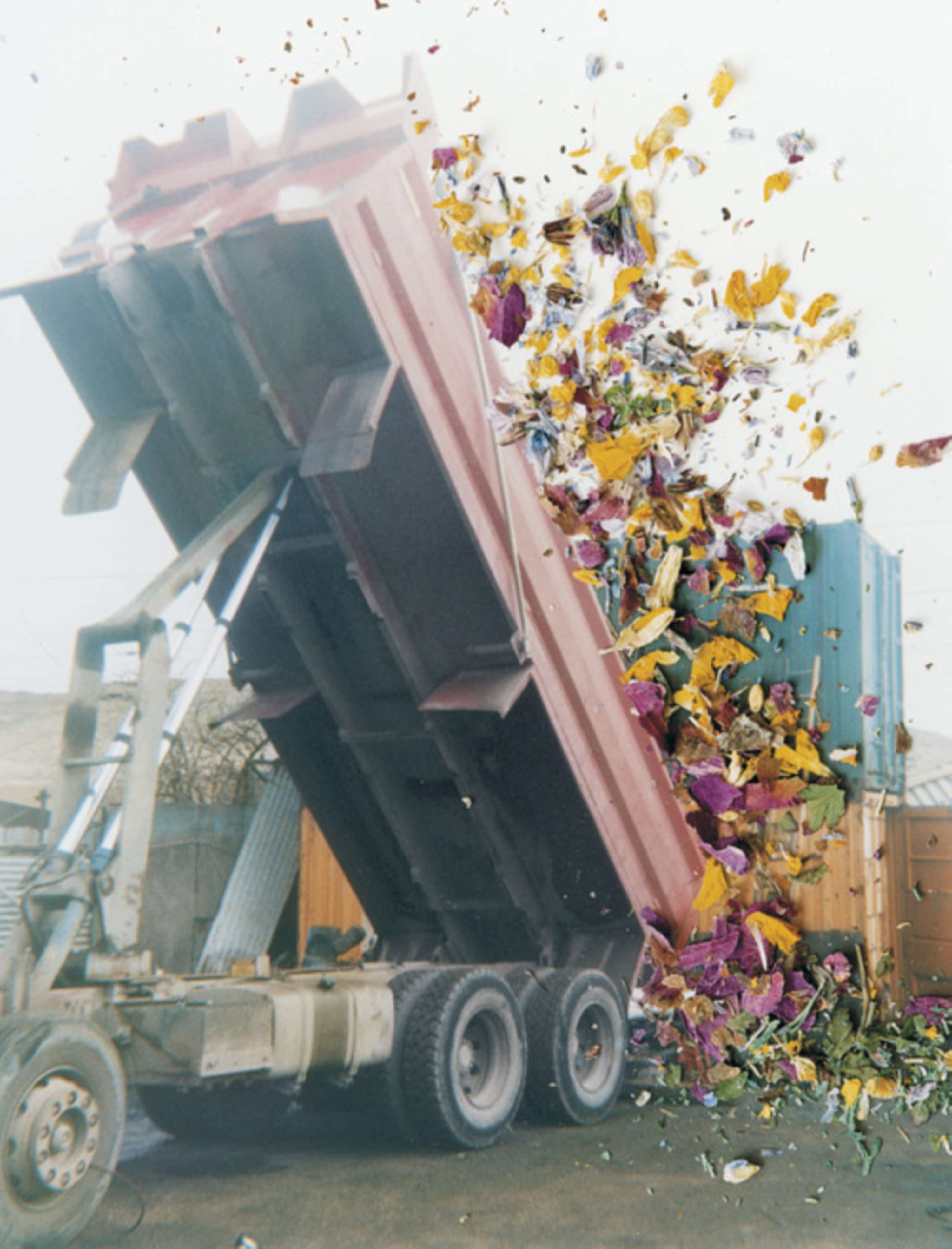
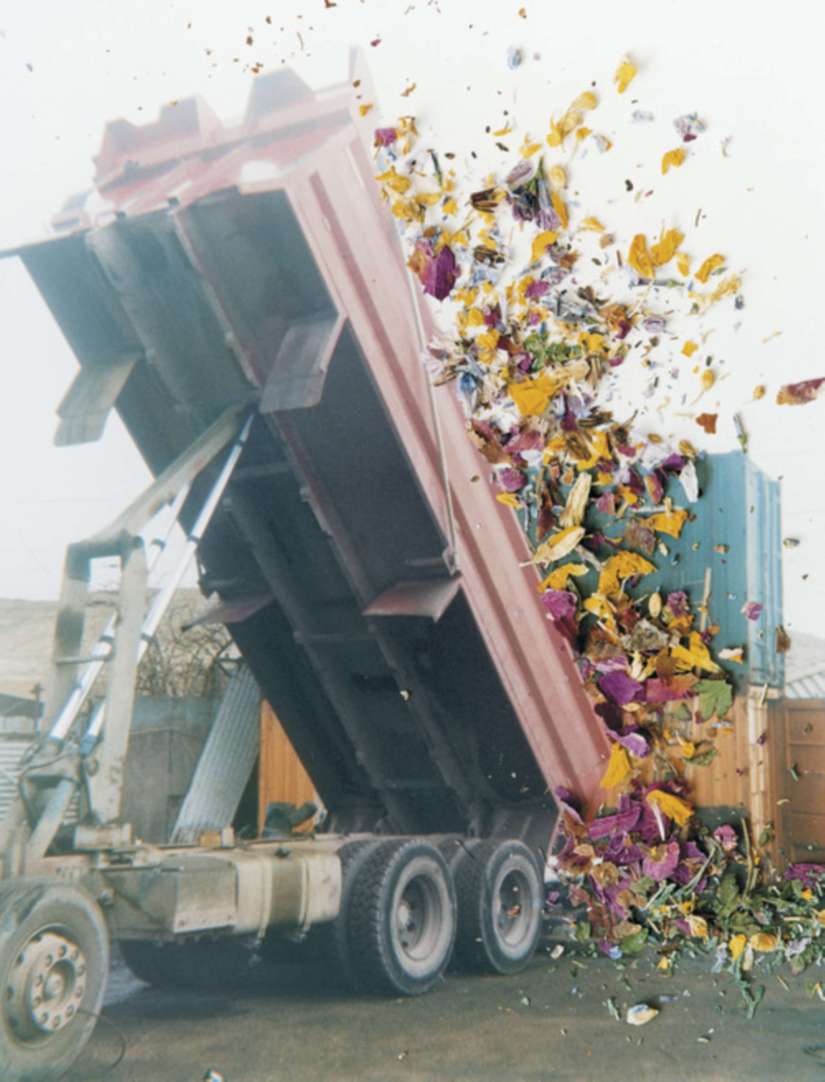
Stephen Gill explored Hackney, by collecting flowers, shrubs and berries from its streets, he took his own older images of Hackney, and positioned the objects on top. He then rephotographed the images. The way he has positioned the objects, really compliments the images. It created an extra dimension to the image, and creates depth. He stated that, “Hackney is constantly changing, as is photography” (Gill, cited in Contreras). One image I like is the dumper truck (see fig. 1), it shows flower pouring out of the back as it is lifted. It gives a alternative vibrant view. The original photograph is not of brilliant quality, and the focus is drawn to the flowers, so that doesn’t really effect the overall finished image, but the difference between the layer is obvious, whether this is Gills intention or not, I am not sure.
(Fig. 1. Hackney Flowers (2005-2007))
Mark Power is a British photographer, born in 1959. He has travelled to America for several projects. Good Morning, America: AZ/UT/NV, examines places that have been effected by climate change. Page, Arizona, shows a golf course is particularly meaningful (see fig. 2).
(Fig. 2. Page, Arizona (2017))
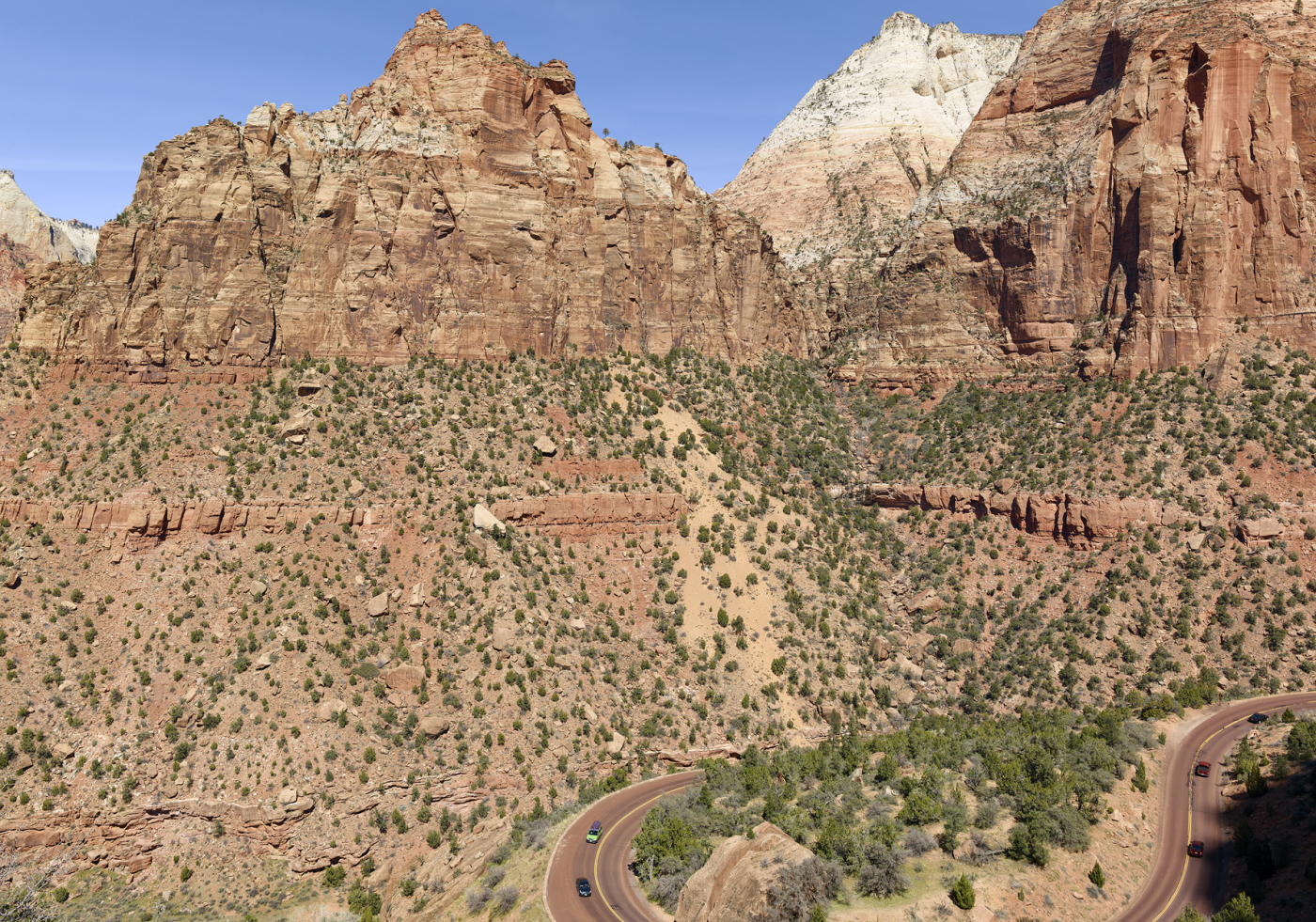
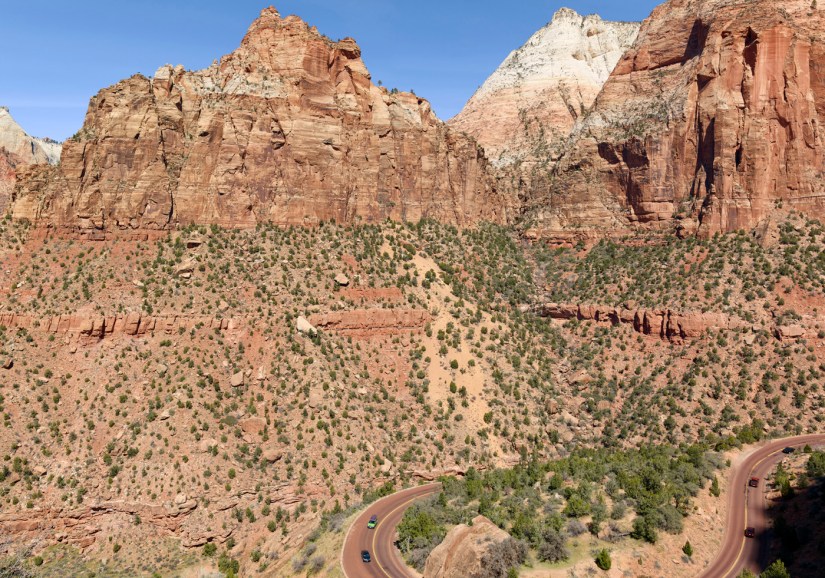
The lush green course is surround by dry arid dessert. There is a person playing golf, oblivious to the resources that went into creating and maintaining that course. Another image from, called Zion National Park, Utah, shows an untouched mountainous dry wasteland, untouched except for a road running around the mountains cutting straight through the scene (see fig. 3).
(Fig. 3. Zion National Park, Utah (2017))
With psychogeography, I believe yes you can take an objective view. All artists will have a goal or a plan when approaching a project. Their aim is important. It influences their methods and view of the place. I don’t think it does matter as such, as a lot of art is about the artists aim and the viewers interpretation.
Psychogeography will play a big role in my Body of Work project, as it involves at its basis following a pilgrimage.
Please refer to Alan Sekula’s ‘Reading an Archive: Photography between Labour and Capital’ In Evans, J. & Hall, S (ed.) (1999) Visual Culture: The Reader, London: Sage which you received with Contextual Studies.
Sekula states that his aims to looking into the relationship between economic life and photographic culture. Archives are important, and their forms are numerous. Archives can be personal or public, their ownership varies too. For photography, the owner of the archive and the actual taker of the picture are not usually the same person or institute. “Archives, then, constitute a territory of images; the unity of an archive is first and foremost that imposed by ownership” (Sekula, p. 182). Meaning and context are important to photographs, an Images meaning is formed due to its text, it’s format, and its presentations. These all contribute to a fuller picture. According to Sekula, “photographic archives suspend meaning and use, the archive meaning exists in a state that is both residual and potential” (Sekula, p. 184). Archives can contradict themselves. This can be through science and art. A dualism exists in photography, which has been around from its birth. These archives preserve the relationship between power and knowledge. “Photography is an art. Photography is a science. Photography is both an art and a science” (Sekula, p. 190).
Taryn Simon created a project called The Innocents, which documented innocents people who were convicted of an alleged crime. Simon photographed them at the locations where the crime were supposed to of taken place. This projects challenges photography’s ability to show reality. Photography can count as evidence. But photography doesn’t always show the truth. The result is a thought-provoking emotion piece of work.
Photographic archives are important and generally vast. For example the New York Public Library has over 1.2 million images, in various formats in their archives. Nowadays the internet is a never-ending archive of information and images. It is easy to access and hence people are more involved now, “and now we have the internet and camera phones and everyone is a curator” (Sharon, cited in OCA).
Artists
Nicky Bird is an artist who investigates the archive. Bird combines archival material with mostly landscapes which have hidden histories. Her aim is to show the personal and social history and connections of these archival items. In her project Wanted-New Custodians, Bird brought hundreds of old family images from eBay. She also took note of the sellers item descriptions and included these in her work. During 2014 and 2015, Bird collaborated with three other female artists who were based in Scotland to created a project together. They were Alicia Bruce, Caroline Douglas and Sylwia Kowalczyk.
Her project, Travelling the Archive, is the one I am most interested in. She was commissioned by Atlas Arts to created a project of the Isle of Skye. She combined her modern day images with Joan Wilcock’s images. Wilcock was a tourist who visited the area between 1959 and 1973, there are over 400 original Kodachrome slides. The resulting images are fascinating. They provide a glimpse into the past whilst remaining in the present. I really like them, they not only give a view in the islands history but also the social atmosphere. You get to see the people who were around, and it is fascinating,
There are many artists who turn to the archive for inspiration, one such is Erik Kessels. Kessels created an installation entitled, 24 hrs in Photos, he printed every image that was published on Flickr in one day. The result was rooms filled with piles and piles of pictures. Kessels has also had several other projects in which he looks to the archives, for example In Almost Every way I turn, in which he collects images where the image is obscured by says finger or is out of focus, and in Album Beauty, he investigates the disappearance of family albums.
Joachim Schmid is an artist I have looked into before, as his work has been an inspiration on several previous assignments. He once collected any discarded images from the streets or in flea markets and created several projects with what he had found. He doesn’t see himself as a photographer but rather a “professional looker” (Schmid, cited in Casper). He now uses the internet, “For the first time in the history of photography we can study the real-time production of snapshot making – globally!” (Schmid, cited in Casper). His projects are very thought provoking, especially the ones where he uses the internet to access the images. It just shows how much we upload all the time.
Sekula, A. (2007). ‘Reading an archive: photography between labour and capital’. In: Evans & Hall (ed.) Visual Culture: A Reader. London: Sage Publications Ltd. pp. 181-192.
Unknown author. (2017). ‘Photobook: The many Lives of Erik Kessels’ In: British Journal of Photography [Online]. At: http://www.bjp-Online.com/20117/05/Kessels-lives/ (Accessed on 12th of June 2019).
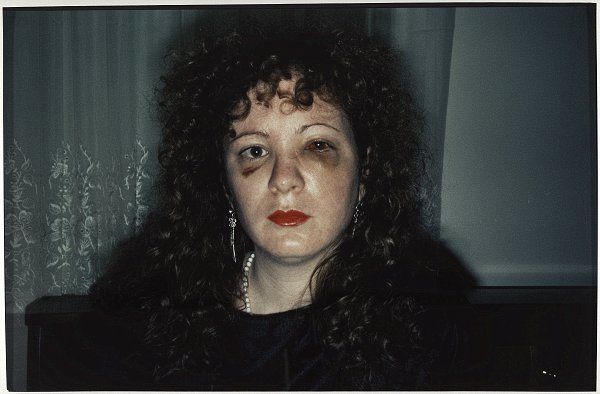
Photography can be used to document a journey, even a personal spiritual one. Photography can document points in our lives. Artists have used their own personal experiences and journeys to create their images. For example, Nan Goldin. Goldin is an American photographer born in 1953, she has explored topics ranging from LGBT to the opioid epidemic. The one that stands out is her image, Nan one month after being battered (see fig. 1). She took this image in 1984, it documents the aftermath of an abusive relationship. Her then partner, had beaten her, she almost lost her sight. This image is such a personal thing, it allows us a small glimpse into her past. It is almost as if we are there seeing it. She is letting the public into her private life. It is a very emotional and thought-provoking image.
(Fig. 1. Nan one month after being battered (1984))
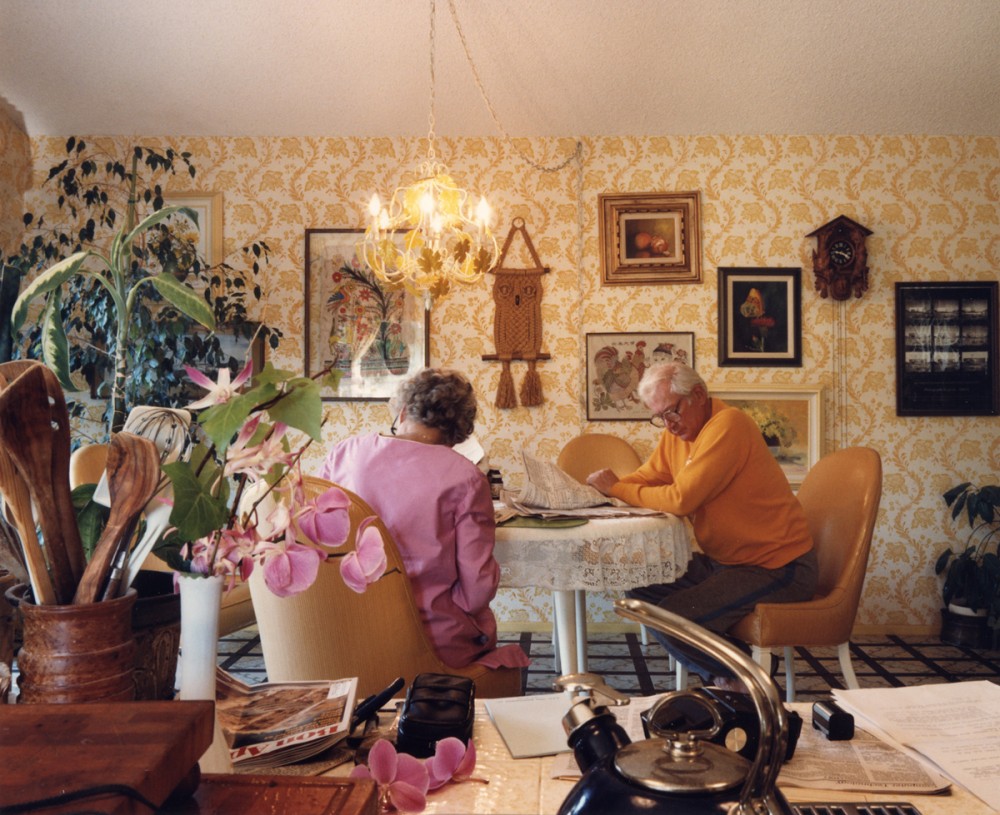
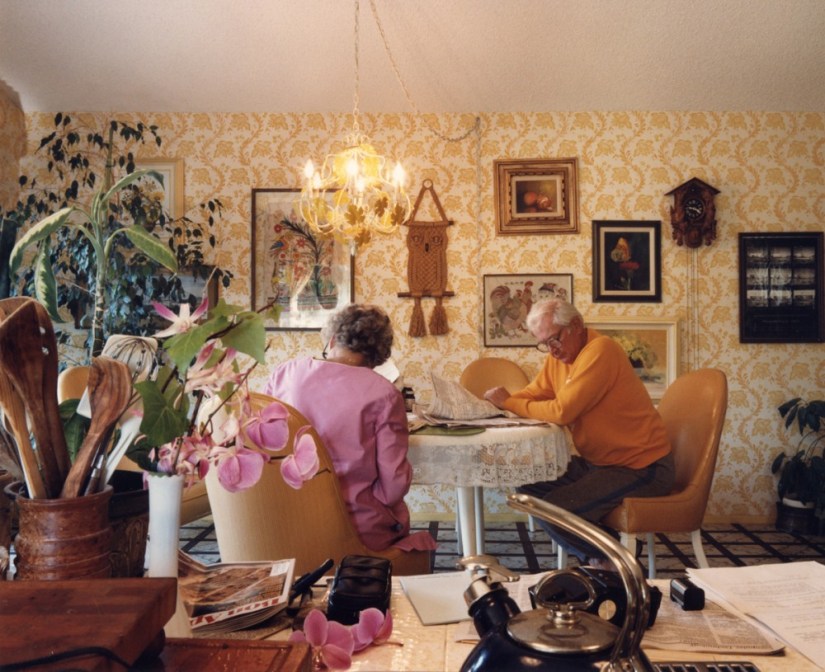
Larry Sultan is a photographer who looks towards his own family for inspiration. In Pictures From Home, Sultan has taken pictures of his parents in their daily routine. This project took around a decade to compile. His aim was to explore the ‘familial mythologies’ and how photography contributes to this. He has stated that looking at these photographs, he wanted “to stop time. I want my parents to live forever” (Sultan). Reading at the kitchen table (see fig. 2), provides a glimpse into his parents life, sitting at a kitchen table is something most do but don’t really think about it. Well I suppose, many won’t sit at a kitchen table nowadays, due to television and technology, people don’t seem to sit and have dinner any more. The scene makes the viewer feel a part of the family, as if we were there. It is a mundane scene but an emotional one too, as these real life occurrences are not going to be happening forever and more importantly they are real. For Sultan, it must be like a life-like Memory.
(Fig. 2. Reading at the kitchen table (1988))
Elinor Carucci is an Israeli photographer born in 1971. In her series, Mother, she documents her journey through pregnancy, birth, and early child years. It is her personal journey. It shows real life, and in my opinion quite daring and refreshing as in general people will not talk about certain parts of the process. So it is good to get it out there. It shows that it is natural and people shouldn’t have to hid it.
Richard Billingham series Ray’s a Laugh, looks at his parents and his experience growing up. He grew up with an alcoholic father in a council tower block. His images are allowing us to see an experience some may recognise whilst others won’t. Robert Mapplethorpe experimented with self-portraits. He explored his own identity and his own mortality. After being diagnosed with AIDS, he brought his mortality into his images. Lena Aliper is a Russian photographer born in 1985. She created a series of images documenting her twenty day silence. His images are all the same, she has the same clothes, the same background, and similar expressions throughout. This seems to allude to a loss of identity she felt. It borders on documentary photography but also has a place in performance. Another artists who looks at her own personal journey is Annie Leibovitz in her series Pilgrimage. She travels and captures her images with no particular agenda, it is interesting as she is usually known for her portraits, but this series doesn’t contain any people.
Research Point – Gregory Crewdson is a photographer who operates with strong directorial control in his image-making. His photographs function like film stills to the point where there is arguably not much ‘reality’ left in the scene. Do some research into Crewdson’s work and in your learning log or blog reflect on how his work relates to film and/or art.
For this research point I am required to look up the work of Gregory Crewdson, I have looked at his work very briefly on a previous course.
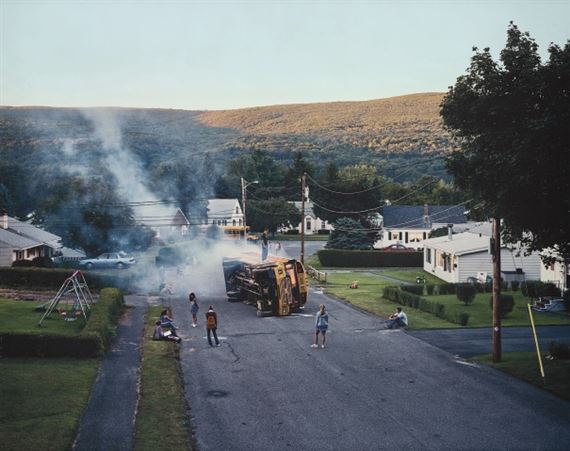
Crewdson is an American artist born in 1962. He is known for his staged images. He often uses American suburbs and develops a scene from there. The majority of his images do show what could be a real scene, but also a scene from a movie. He plans his images to the very last detail and is methodological about their production. His approach is similar to that a movie team would make; he has a huge production team, which help create the scene, and a lot also goes into the postproduction. It is like photography but on a grander stage. His images often have underlying messages, they show drama, tension, emotion, and the viewer if often left wondering what is real and what is not. One image I will look at is the Untitled (overturned Bus) (see fig. 1).
(Fig. 1. Untitled (overturned Bus) (2001-2002) )
This images shows an overturned school bus on a typical suburban road. There is smoke coming from the bus, and there is debris around the road. There are children, probably from the bus standing and sitting around. But there is no emergency services, which could indicate that this event just happened. It looks like a scene you would see on the news. It looks real. It is quite thought-provoking and emotional. As it is showing what could possible happen, I imagine it would hit a nerve with some, especially if they have children travelling to school on a bus. It could almost be mistaken for a documentary photograph. It only seems to be children in the scene, there are no adults visible, I wonder if this is the hidden message, could it allude to problems children are facing or problems at school? This particular image is from his twilight series, in which he creates a simulation of twilight. This image doesn’t seem to fit the ‘twilight’ category, but it might just be my vision of twilight is different.
Crewdson to me isn’t a photographer in the traditional sense, more a cinematic artist. His skill is evident, and the detail and the production that goes into his images are massive. His images are demonstrating the challenge of photography and reality. He ‘makes’ the image, he doesn’t just take it. I believe his images relate to film and they both use a very similar technique. His images could be mistaken for film stills. But I think it also relates to art as he is creating a vision. These images represent his vision, the artist’s vision. They are extremely detailed with hidden meanings. They are beautiful in their own way, why shouldn’t they be seen as art?
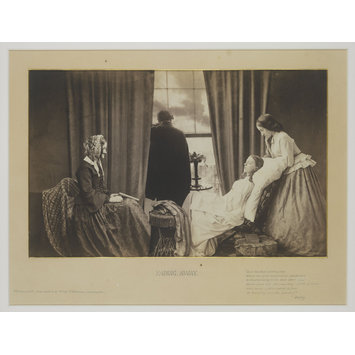
Tableaux is essentially staged photography. The photographer doesn’t just make the technical choices but also makes the choices regarding everything that is visible, from the positioning, to make-up, to clothes. “Rather than capturing the moment, artists make specific choices when staging their images” (Martinique). The actual term was used originally to describe paintings. It was Edouard Manet, who challenged the tableaux. His aim was to create a realistic image, so his decided to challenge the viewer. This developed and int he 1970s and the 1980s photographers started experimenting with tableaux. Henry Peach Robinson is one of the earliest tableaux photographer. His image created in 1858 (see fig. 2), shows a woman’s last living moments. She is surround by her family. Robinson created this image by combining five negatives.
(Fig. 2. Fading Away (1858))
Artists
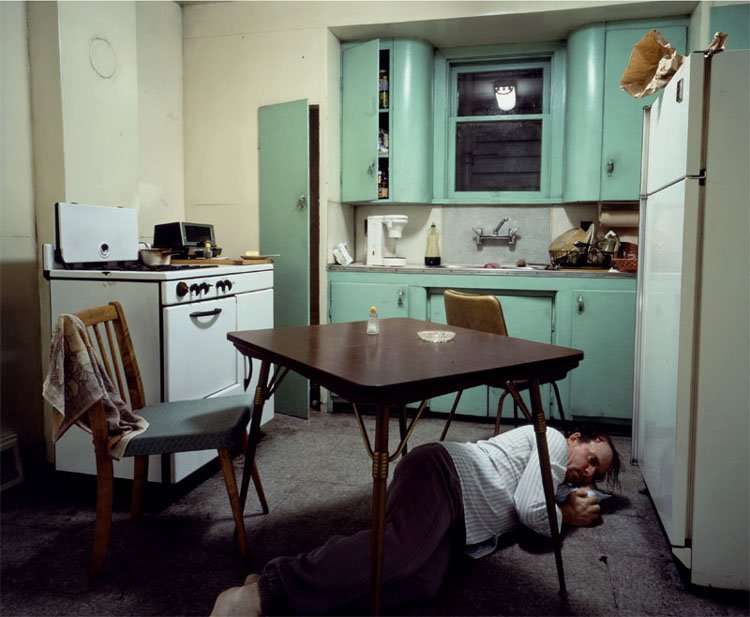
Jeff Wall is a Canadian photographer who is known for his staged images. At university he decided to study art history, but ultimately decided that photography was his best option for visualising his conceptual art. Similar to Crewdson, Walls work looks like a film still, which is interesting as he himself describes his images as “cinematographic” (Wall, cited in O’Hagan). He gets his ideas from his own experiences, things he has seen or lived through. He revisualise what he saw, this process usually take Wall months to complete. The image titled Insomnia is a good example of tableaux (see fig. 3).
(Fig. 3. Insomnia (1994))
It is a staged seen to represent the mans struggle with insomnia, something many can relate to. The scene is set in a kitchen. It is old and worn. The chairs are matched and are scattered around. It is night time, and the kitchen light is very bright. The cupboard doors have been left open, this shows that the man may have searched through in desperation. The whole scene looks sterile. The actual man is positioned on the floor under the table. His expression is one of worry, he looks frantic and disturbed. He is in a form of feat also position, maybe looking for some kind of comfort. The image is quite busy, this could represent how busy the mans mind is, maybe this I why he can’t sleep. This image has a very psychological feel. It is very effective in portraying how wearing and destructive insomnia can be.
Philip-Lorca diCorcia creates images that combine fact and fiction. His combination of genuine places and real people is interesting especially since he puts them together when you necessarily won’t put them together. He is meticulous is his detail of the scene. Again, as with Crewdson and Wall, diCorcia is a cinematic artist. He does not tell us the narrative of his images, so it is mainly up to viewer interpretation. Andreas Gursky is known for his landscape images, especially for the price they reach at auction. Rhine II got a staggering $4.3 million at auction. Gursky himself has stated that he wants to “test the boundaries of photography” (Gursky, cited in Nayeri). He created an image by digital methods. He digitally created the whole scene.
Luc Delahaye was a documentary war photographer, but has now turned to making his art instead of documenting. He challenges the line between what is real and what is made up. When taking about his work and what tableaux is he stated, “It is something that has to have a certain dimension. Size is important: the physical rapport creates a relationship between you and the history of art. There is a harmony, a mystery, that takes you and resists you at the same time” (Delahaye, cited in Lennon). Hannah Starkey explores feminine agendas in her tableaux images. She explores theme like identity, race, class, politics and gender. She believes that her feminine aims only cam about because she is an ammo. Many of her images involve woman engaging in their daily routines.
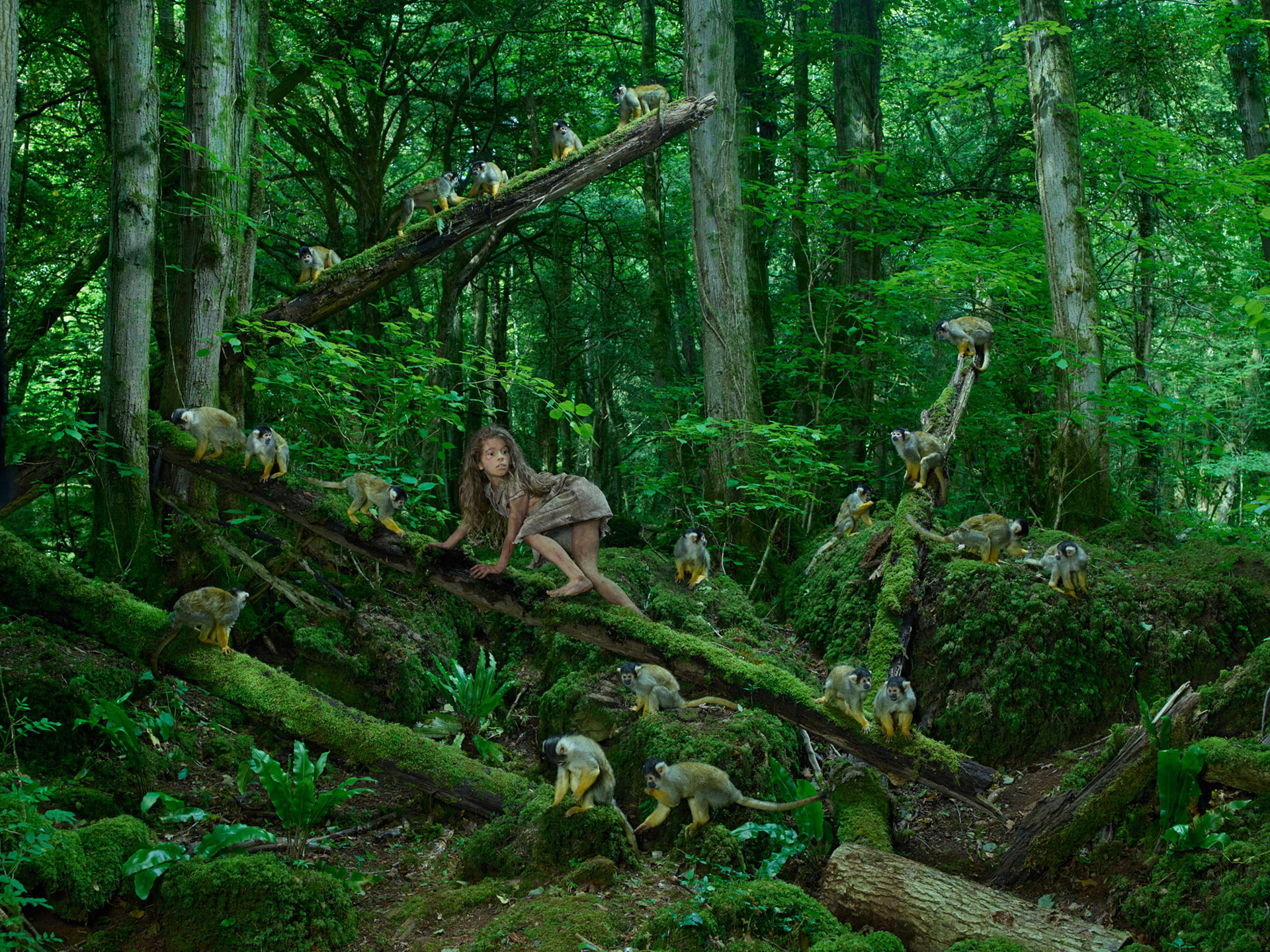
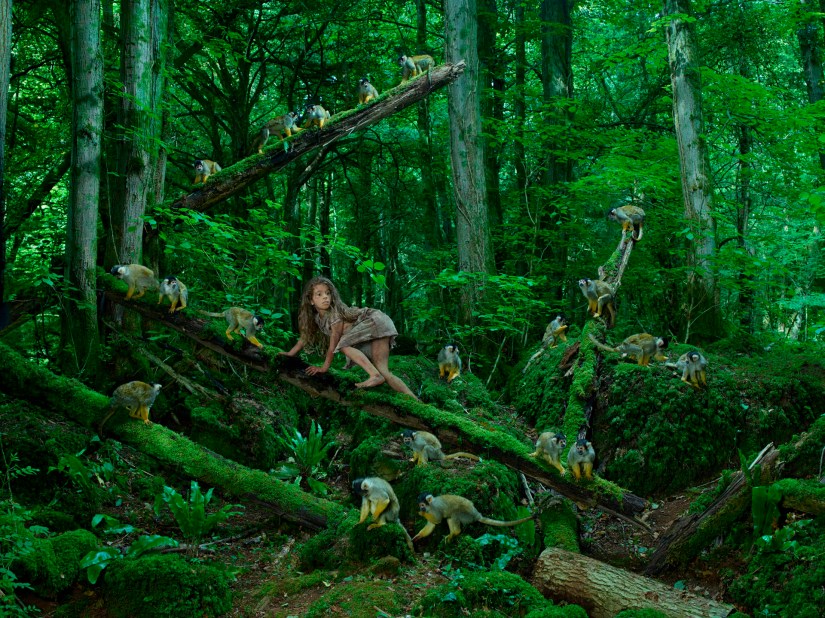
Julia Fullerton-Batten is a German photographer who explores social agendas. Her series, Feral Children, 2015, looks at over a dozen cases of children who were feral. Fullerton-Batten re-enacted these cases by using young actors. Her images are names after the places and the dates where the children were found.
(Fig. 4. Marin Chapman, Columbia, 1959 (2015))
Marina Chapman, Columbia, 1959 (see fig. 4), shows an image of a young girl in the Colombian jungle. The geometric lines of the has fallen trees seem to add height and depth to the image. There are monkeys all over the image, this seems to imply that the girl grew up with them. The girl herself has dirty clothes on, her skin is grubby and her hair is long and unkept. She is walking up a fallen tree, exactly like a monkey would, another indication that she grew up with them. This image does look like a film still. It is an interesting take on reality and really makes the viewer think. We know it happened but can’t quite visualise it.
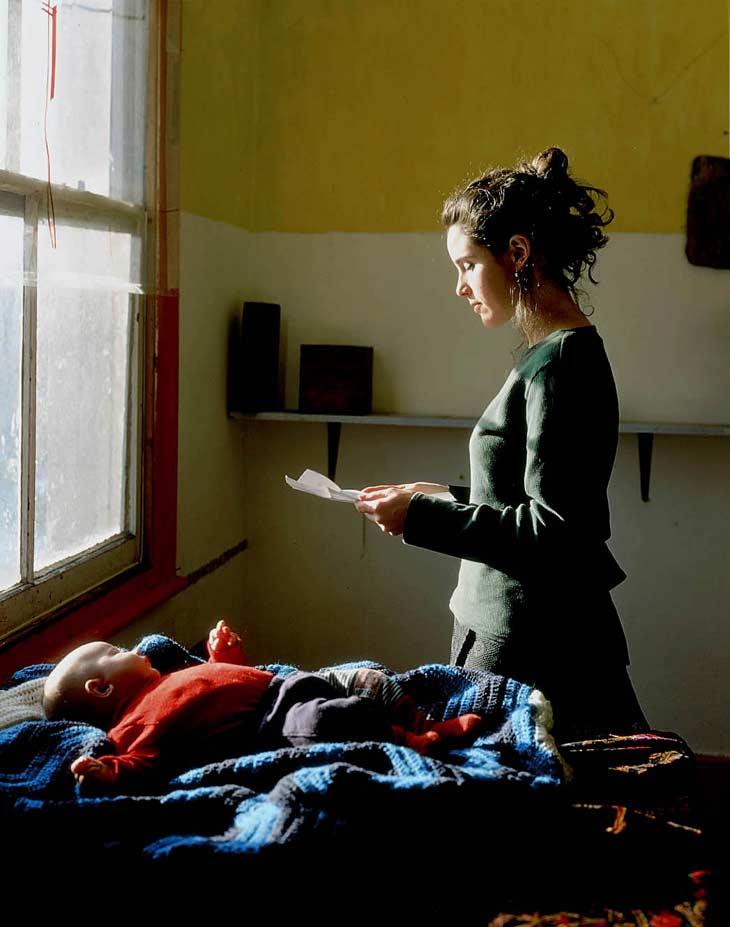
Tom Hunter is a British photographer who uses his local communities for his subjects.
(Fig. 5. Woman Reading Possession Order (1998))
In Woman Reading Possession Order (see fig. 5), shows a women in Hackney reading a possession order. This is from a series of images that shows the squatters. This particular image shows the women as well as her baby. The walls are blank and bare, this indicates that they could be poor, this image evokes a sense of empathy and emotion, especially because she has a baby to think of.
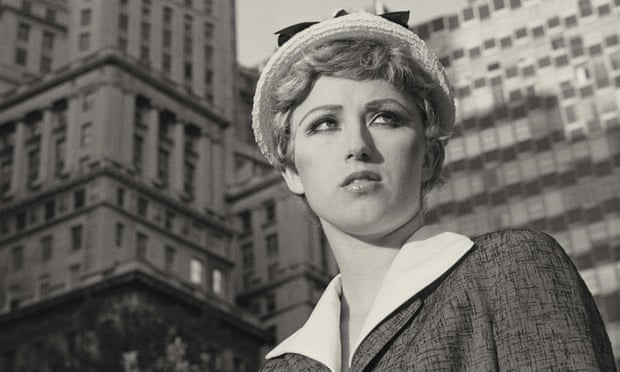
Cindy Sherman is another artist who creates staged images, but hers are mostly self-portraits. Sherman dress up in various costumes and styles from the past. She is able to create striking personalities. Her images are performative. She takes her ideas from popular culture. Her images truly look like old film stills. The image of a woman wearing classic clothing (see fig. 6). She is in a city, and is looking up to the right. This could be seen as a classical film image.
(Fig. 6. Untitled film still #21 (1978))
Tableaux photography is essentially staged photography, which is gaining in popularity, as it is the perfect platform for communicating an artists ideas. The images have been staged for a purpose, sometimes they are not immediately obvious. They have deeper meanings. The majority look like film still. It seems to combine a cinematic approach when photography. But what about magazine images or adverts, surely these would count as tableaux as they are staged with hidden meanings.
Research Point – Gregory Crewdson is a photographer who operates with strong directorial control in his image-making. His photographs function like film stills to the point where there is arguably not much ‘reality’ left in the scene. Do some research into Crewdson’s work and in your learning log or blog reflect on how his work relates to film and/or art.
For this research point I am required to look up the work of Gregory Crewdson, I have looked at his work very briefly on a previous course.
Crewdson is an American artist born in 1962. He is known for his staged images. He often uses American suburbs and develops a scene from there. The majority of his images do show what could be a real scene, but also a scene from a movie. He plans his images to the very last detail and is methodological about their production. His approach is similar to that a movie team would make; he has a huge production team, which help create the scene, and a lot also goes into the postproduction. It is like photography but on a grander stage. His images often have underlying messages, they show drama, tension, emotion, and the viewer if often left wondering what is real and what is not. One image I will look at is the Untitled (overturned Bus) (see fig. 1).
(Fig. 1. Untitled (overturned Bus) (2001-2002) )
This images shows an overturned school bus on a typical suburban road. There is smoke coming from the bus, and there is debris around the road. There are children, probably from the bus standing and sitting around. But there is no emergency services, which could indicate that this event just happened. It looks like a scene you would see on the news. It looks real. It is quite thought-provoking and emotional. As it is showing what could possible happen, I imagine it would hit a nerve with some, especially if they have children travelling to school on a bus. It could almost be mistaken for a documentary photograph. It only seems to be children in the scene, there are no adults visible, I wonder if this is the hidden message, could it allude to problems children are facing or problems at school? This particular image is from his twilight series, in which he creates a simulation of twilight. This image doesn’t seem to fit the ‘twilight’ category, but it might just be my vision of twilight is different.
Crewdson to me isn’t a photographer in the traditional sense, more a cinematic artist. His skill is evident, and the detail and the production that goes into his images are massive. His images are demonstrating the challenge of photography and reality. He ‘makes’ the image, he doesn’t just take it. I believe his images relate to film and they both use a very similar technique. His images could be mistaken for film stills. But I think it also relates to art as he is creating a vision. These images represent his vision, the artist’s vision. They are extremely detailed with hidden meanings. They are beautiful in their own way, why shouldn’t they be seen as art?
Tableaux is essentially staged photography. The photographer doesn’t just make the technical choices but also makes the choices regarding everything that is visible, from the positioning, to make-up, to clothes. “Rather than capturing the moment, artists make specific choices when staging their images” (Martinique). The actual term was used originally to describe paintings. It was Edouard Manet, who challenged the tableaux. His aim was to create a realistic image, so his decided to challenge the viewer. This developed and int he 1970s and the 1980s photographers started experimenting with tableaux. Henry Peach Robinson is one of the earliest tableaux photographer. His image created in 1858 (see fig. 2), shows a woman’s last living moments. She is surround by her family. Robinson created this image by combining five negatives.
(Fig. 2. Fading Away (1858))
Artists
Jeff Wall is a Canadian photographer who is known for his staged images. At university he decided to study art history, but ultimately decided that photography was his best option for visualising his conceptual art. Similar to Crewdson, Walls work looks like a film still, which is interesting as he himself describes his images as “cinematographic” (Wall, cited in O’Hagan). He gets his ideas from his own experiences, things he has seen or lived through. He revisualise what he saw, this process usually take Wall months to complete. The image titled Insomnia is a good example of tableaux (see fig. 3).
(Fig. 3. Insomnia (1994))
It is a staged seen to represent the mans struggle with insomnia, something many can relate to. The scene is set in a kitchen. It is old and worn. The chairs are matched and are scattered around. It is night time, and the kitchen light is very bright. The cupboard doors have been left open, this shows that the man may have searched through in desperation. The whole scene looks sterile. The actual man is positioned on the floor under the table. His expression is one of worry, he looks frantic and disturbed. He is in a form of feat also position, maybe looking for some kind of comfort. The image is quite busy, this could represent how busy the mans mind is, maybe this I why he can’t sleep. This image has a very psychological feel. It is very effective in portraying how wearing and destructive insomnia can be.
Philip-Lorca diCorcia creates images that combine fact and fiction. His combination of genuine places and real people is interesting especially since he puts them together when you necessarily won’t put them together. He is meticulous is his detail of the scene. Again, as with Crewdson and Wall, diCorcia is a cinematic artist. He does not tell us the narrative of his images, so it is mainly up to viewer interpretation. Andreas Gursky is known for his landscape images, especially for the price they reach at auction. Rhine II got a staggering $4.3 million at auction. Gursky himself has stated that he wants to “test the boundaries of photography” (Gursky, cited in Nayeri). He created an image by digital methods. He digitally created the whole scene.
Luc Delahaye was a documentary war photographer, but has now turned to making his art instead of documenting. He challenges the line between what is real and what is made up. When taking about his work and what tableaux is he stated, “It is something that has to have a certain dimension. Size is important: the physical rapport creates a relationship between you and the history of art. There is a harmony, a mystery, that takes you and resists you at the same time” (Delahaye, cited in Lennon). Hannah Starkey explores feminine agendas in her tableaux images. She explores theme like identity, race, class, politics and gender. She believes that her feminine aims only cam about because she is an ammo. Many of her images involve woman engaging in their daily routines.
Julia Fullerton-Batten is a German photographer who explores social agendas. Her series, Feral Children, 2015, looks at over a dozen cases of children who were feral. Fullerton-Batten re-enacted these cases by using young actors. Her images are names after the places and the dates where the children were found.
(Fig. 4. Marin Chapman, Columbia, 1959 (2015))
Marina Chapman, Columbia, 1959 (see fig. 4), shows an image of a young girl in the Colombian jungle. The geometric lines of the has fallen trees seem to add height and depth to the image. There are monkeys all over the image, this seems to imply that the girl grew up with them. The girl herself has dirty clothes on, her skin is grubby and her hair is long and unkept. She is walking up a fallen tree, exactly like a monkey would, another indication that she grew up with them. This image does look like a film still. It is an interesting take on reality and really makes the viewer think. We know it happened but can’t quite visualise it.
Tom Hunter is a British photographer who uses his local communities for his subjects.
(Fig. 5. Woman Reading Possession Order (1998))
In Woman Reading Possession Order (see fig. 5), shows a women in Hackney reading a possession order. This is from a series of images that shows the squatters. This particular image shows the women as well as her baby. The walls are blank and bare, this indicates that they could be poor, this image evokes a sense of empathy and emotion, especially because she has a baby to think of.
Cindy Sherman is another artist who creates staged images, but hers are mostly self-portraits. Sherman dress up in various costumes and styles from the past. She is able to create striking personalities. Her images are performative. She takes her ideas from popular culture. Her images truly look like old film stills. The image of a woman wearing classic clothing (see fig. 6). She is in a city, and is looking up to the right. This could be seen as a classical film image.
(Fig. 6. Untitled film still #21 (1978))
Tableaux photography is essentially staged photography, which is gaining in popularity, as it is the perfect platform for communicating an artists ideas. The images have been staged for a purpose, sometimes they are not immediately obvious. They have deeper meanings. The majority look like film still. It seems to combine a cinematic approach when photography. But what about magazine images or adverts, surely these would count as tableaux as they are staged with hidden meanings.
Photography can be used to document a journey, even a personal spiritual one. Photography can document points in our lives. Artists have used their own personal experiences and journeys to create their images. For example, Nan Goldin. Goldin is an American photographer born in 1953, she has explored topics ranging from LGBT to the opioid epidemic. The one that stands out is her image, Nan one month after being battered (see fig. 1). She took this image in 1984, it documents the aftermath of an abusive relationship. Her then partner, had beaten her, she almost lost her sight. This image is such a personal thing, it allows us a small glimpse into her past. It is almost as if we are there seeing it. She is letting the public into her private life. It is a very emotional and thought-provoking image.
(Fig. 1. Nan one month after being battered (1984))
Larry Sultan is a photographer who looks towards his own family for inspiration. In Pictures From Home, Sultan has taken pictures of his parents in their daily routine. This project took around a decade to compile. His aim was to explore the ‘familial mythologies’ and how photography contributes to this. He has stated that looking at these photographs, he wanted “to stop time. I want my parents to live forever” (Sultan). Reading at the kitchen table (see fig. 2), provides a glimpse into his parents life, sitting at a kitchen table is something most do but don’t really think about it. Well I suppose, many won’t sit at a kitchen table nowadays, due to television and technology, people don’t seem to sit and have dinner any more. The scene makes the viewer feel a part of the family, as if we were there. It is a mundane scene but an emotional one too, as these real life occurrences are not going to be happening forever and more importantly they are real. For Sultan, it must be like a life-like Memory.
(Fig. 2. Reading at the kitchen table (1988))
Elinor Carucci is an Israeli photographer born in 1971. In her series, Mother, she documents her journey through pregnancy, birth, and early child years. It is her personal journey. It shows real life, and in my opinion quite daring and refreshing as in general people will not talk about certain parts of the process. So it is good to get it out there. It shows that it is natural and people shouldn’t have to hid it.
Richard Billingham series Ray’s a Laugh, looks at his parents and his experience growing up. He grew up with an alcoholic father in a council tower block. His images are allowing us to see an experience some may recognise whilst others won’t. Robert Mapplethorpe experimented with self-portraits. He explored his own identity and his own mortality. After being diagnosed with AIDS, he brought his mortality into his images. Lena Aliper is a Russian photographer born in 1985. She created a series of images documenting her twenty day silence. His images are all the same, she has the same clothes, the same background, and similar expressions throughout. This seems to allude to a loss of identity she felt. It borders on documentary photography but also has a place in performance. Another artists who looks at her own personal journey is Annie Leibovitz in her series Pilgrimage. She travels and captures her images with no particular agenda, it is interesting as she is usually known for her portraits, but this series doesn’t contain any people.
Please refer to Alan Sekula’s ‘Reading an Archive: Photography between Labour and Capital’ In Evans, J. & Hall, S (ed.) (1999) Visual Culture: The Reader, London: Sage which you received with Contextual Studies.
Sekula states that his aims to looking into the relationship between economic life and photographic culture. Archives are important, and their forms are numerous. Archives can be personal or public, their ownership varies too. For photography, the owner of the archive and the actual taker of the picture are not usually the same person or institute. “Archives, then, constitute a territory of images; the unity of an archive is first and foremost that imposed by ownership” (Sekula, p. 182). Meaning and context are important to photographs, an Images meaning is formed due to its text, it’s format, and its presentations. These all contribute to a fuller picture. According to Sekula, “photographic archives suspend meaning and use, the archive meaning exists in a state that is both residual and potential” (Sekula, p. 184). Archives can contradict themselves. This can be through science and art. A dualism exists in photography, which has been around from its birth. These archives preserve the relationship between power and knowledge. “Photography is an art. Photography is a science. Photography is both an art and a science” (Sekula, p. 190).
Taryn Simon created a project called The Innocents, which documented innocents people who were convicted of an alleged crime. Simon photographed them at the locations where the crime were supposed to of taken place. This projects challenges photography’s ability to show reality. Photography can count as evidence. But photography doesn’t always show the truth. The result is a thought-provoking emotion piece of work.
Photographic archives are important and generally vast. For example the New York Public Library has over 1.2 million images, in various formats in their archives. Nowadays the internet is a never-ending archive of information and images. It is easy to access and hence people are more involved now, “and now we have the internet and camera phones and everyone is a curator” (Sharon, cited in OCA).
Artists
Nicky Bird is an artist who investigates the archive. Bird combines archival material with mostly landscapes which have hidden histories. Her aim is to show the personal and social history and connections of these archival items. In her project Wanted-New Custodians, Bird brought hundreds of old family images from eBay. She also took note of the sellers item descriptions and included these in her work. During 2014 and 2015, Bird collaborated with three other female artists who were based in Scotland to created a project together. They were Alicia Bruce, Caroline Douglas and Sylwia Kowalczyk.
Her project, Travelling the Archive, is the one I am most interested in. She was commissioned by Atlas Arts to created a project of the Isle of Skye. She combined her modern day images with Joan Wilcock’s images. Wilcock was a tourist who visited the area between 1959 and 1973, there are over 400 original Kodachrome slides. The resulting images are fascinating. They provide a glimpse into the past whilst remaining in the present. I really like them, they not only give a view in the islands history but also the social atmosphere. You get to see the people who were around, and it is fascinating,
There are many artists who turn to the archive for inspiration, one such is Erik Kessels. Kessels created an installation entitled, 24 hrs in Photos, he printed every image that was published on Flickr in one day. The result was rooms filled with piles and piles of pictures. Kessels has also had several other projects in which he looks to the archives, for example In Almost Every way I turn, in which he collects images where the image is obscured by says finger or is out of focus, and in Album Beauty, he investigates the disappearance of family albums.
Joachim Schmid is an artist I have looked into before, as his work has been an inspiration on several previous assignments. He once collected any discarded images from the streets or in flea markets and created several projects with what he had found. He doesn’t see himself as a photographer but rather a “professional looker” (Schmid, cited in Casper). He now uses the internet, “For the first time in the history of photography we can study the real-time production of snapshot making – globally!” (Schmid, cited in Casper). His projects are very thought provoking, especially the ones where he uses the internet to access the images. It just shows how much we upload all the time.
Sekula, A. (2007). ‘Reading an archive: photography between labour and capital’. In: Evans & Hall (ed.) Visual Culture: A Reader. London: Sage Publications Ltd. pp. 181-192.
Unknown author. (2017). ‘Photobook: The many Lives of Erik Kessels’ In: British Journal of Photography [Online]. At: http://www.bjp-Online.com/20117/05/Kessels-lives/ (Accessed on 12th of June 2019).
In terms of psychogeography, do you think it’s possible to produce an objective depiction of a place or will the outcome always be influenced by the artist? Does this even matter?
Feel free to answer this with reference to the artists discussed in this section – or any other’s you’ve come across.
Bluetown is Pedro Guimaraes project which is a “dream of London about itself, a celebration of the beauty of its own alienation and loneliness” (Guimaraes). Guimaraes imposed an image of the Queen on a map of London, and choice certain locations to visit and photograph. He wanted to travel their journey which was inspired and planned by the ‘symbol of englishness’. The images provide a views which are common in London, but are often overlooked. We see it so often that we forgot or miss what is around us. What I find interesting is how he published this series. It takes the form of a newspaper, which can be brought from his website.
Artists
Jodie Taylor was a student at OCA. For her final year project, she explored childhood memories. Taylor visited locations of her childhood and photographed them. She used a 35mm which she printed out as 6×4” and arranged them in a old family album. She didn’t edit any imperfections, I think this was wise as it echoes the time. The viewer can interpret the images and relate to their own childhood. Personally I don’t feel it reflects my childhood as such, so maybe an location or a generational association.
Francis Alys was born in 1959, he created a series which centred around his walks around London. Seven Walks 2004-2005 was created over six years, Alys managed to created a series which documents London’s customs. It provides a historical, and a social document. It gives an almost anthropological outlook.
Stephen Gill explored Hackney, by collecting flowers, shrubs and berries from its streets, he took his own older images of Hackney, and positioned the objects on top. He then rephotographed the images. The way he has positioned the objects, really compliments the images. It created an extra dimension to the image, and creates depth. He stated that, “Hackney is constantly changing, as is photography” (Gill, cited in Contreras). One image I like is the dumper truck (see fig. 1), it shows flower pouring out of the back as it is lifted. It gives a alternative vibrant view. The original photograph is not of brilliant quality, and the focus is drawn to the flowers, so that doesn’t really effect the overall finished image, but the difference between the layer is obvious, whether this is Gills intention or not, I am not sure.
(Fig. 1. Hackney Flowers (2005-2007))
Mark Power is a British photographer, born in 1959. He has travelled to America for several projects. Good Morning, America: AZ/UT/NV, examines places that have been effected by climate change. Page, Arizona, shows a golf course is particularly meaningful (see fig. 2).
(Fig. 2. Page, Arizona (2017))
The lush green course is surround by dry arid dessert. There is a person playing golf, oblivious to the resources that went into creating and maintaining that course. Another image from, called Zion National Park, Utah, shows an untouched mountainous dry wasteland, untouched except for a road running around the mountains cutting straight through the scene (see fig. 3).
(Fig. 3. Zion National Park, Utah (2017))
With psychogeography, I believe yes you can take an objective view. All artists will have a goal or a plan when approaching a project. Their aim is important. It influences their methods and view of the place. I don’t think it does matter as such, as a lot of art is about the artists aim and the viewers interpretation.
Psychogeography will play a big role in my Body of Work project, as it involves at its basis following a pilgrimage.
Source photographic journal made three films asking photographers, artists. Curators and editors for their response to the question ‘What is Conceptual Photography?’ No-one had any clear-cut answers but there are some interesting opinions being discussed, like alternative views to straight photojournalism by Adam Broomberg and Oliver Chanarin. John Hilliard talks about being known as a conceptual artist in the 1960s and 70s. Hilliard is still taking photographs today. Watch the video and then write a paragraph explaining what you understand by the term ‘Conceptual Photography’. Provide some examples of recent work that you believe falls into this category.
Born in 1887, Marcel Duchamp was a French photographer, who shaped and lead the Dada movement. This movement challenges the belief system surrounding art. What is art, how it should be created. Duchamp was a painter but changed his direction as he wanted to experiment with ideas. In 1917, Duchamp put forward a piece of art into the New York Society of Independent Artists, in the form of a urinal, which he signed ‘R. Mutt’. He began using objects themselves as pieces of art. He choose readily available items and declared they were art. In his series of ‘Readymades’, Duchamp aim was for “an ordinary object [could be] elevated to the dignity of a work of art by the mere choice of an artist” (MOMA). This practice does raise some good points, why can’t an object be art, when designated by an artist. Art is about vision, the vision of the artists, so what does it matter is the artists is showing an mundane item. Duchamps work contributed to the beginnings of Conceptual art.
The videos from Source were interesting. They started talking about the actual term, conceptual. According to critic, Lucy Sautter, it should perhaps be called ‘idea art’ as this would be more fitting. The artists using the conceptual genre don’t care about the long established traditions in photography. Context is also key in conceptual photography as it can dramatically change the meaning, as not everyone will understand the underlying messages. Sautter goes on to say that conceptual art is anti; anti subjective, anti personal and anti emotional. Suzanne Mooney created a piece of work entitled Make love to the Camera, in which she combined diagrams from old photographic books. Her aim was to explore a love hate relationship. Critic Sean O’Hagan conceptual art is open to abusive criticism. Oliver Chaharin doesn’t believe in conceptual art, he believes that “all photography is conceptual…All photography is an abstraction of reality” (Chaharin, cited in Source). Chaharin and Adam Broomberg created a project together which involved travelling with the army to Afghanistan with a roll of photographic paper, unrolling it and exposing it for only 20 second. The faced difficulties, as if they said they were artists they wouldn’t have been allowed to do this, so they said they were photojournalist. When they tried to advertise their work, the editor of the Guardian newspaper thought they were joking (Source).
After watching the videos from Source, I think conceptual photography is quite an open genre. In the art world it took a firm hold during the 1960s and the 1970s. In which the artists looked outside of the traditional photography value, they experimented and created. Many are staged images, which represent the artists vision, an idea if you like. But all photography is born from an idea surely? Conceptual photography seems like a free for all, it allows for expression, experimentation, ideas could be completely out there or quite simple. The true definition is hard to pin point. The video doesn’t really clarify anything as far as a true definition is concerned but it was nice to hear from artists and how they view conceptual art.
At the beginning of Part One, we discussed genre as something that creates expectation and, arguably, provides a frame of reference for the viewer. But if the boundaries between genres are blurred, how useful is genre as a concept? Or does it’s usefulness lie in providing something to subvert or react against? Now that you’ve reached the end of this part of the course, spend some time reflecting on the significance of genre in the creation and consumption of photography. You may find it helpful to refer to David Bate’s helpful summary, referred to at the start of Part One.
“A Genre helps to organise and structure particular types of meaning” (Bate, p. 4). Organising by genre is helpful in analysing an image, it helps to understand its path, it’s context and even its narrative. Being able to recognise a genre is useful in many ways. But the problem is that genres are flexible, they mould and evolve over time so become difficult to categorically label. According to Bates, genres each have a function, by noting these we can analyse and understand it, “different genres, have different functions” (Bate, p. 5). To me, genres are important for labelling and analysing the image, not so much when creating it. You don’t really start out to make an image and think ‘what genre should I make this into’, you have an idea and produce, it then fits into a genre or several. Genres are so diverse, and blend into each other, sometimes they are difficult to recognise.
Bibliography
Bate, D. (2016). Photography: The Key Concepts (2nd edn) London: Bloomsbury Academic, pp. 4-7.

 Georgina's Body of Work