I have looked into Joachim Schmids work before on a previous course. Here is a part of my research into his work.
Joachim Schmid is a German artist born in 1955. He is best known for his appropriation of other people’s images to for us in his own work. He use to find his images in flea markets or discarded on the streets but now he uses the internet. He has published over ninety books, and explores the relationship between us and photography.
Sharon Boothroyd conducted an interview with Schmid. Schmid admits he was always curious about snapshots; he sees them as a cultural practice. He saw recurring patterns throughout the images he found. He doesn’t like the word collecting he prefer gathering. He does admit his method can be tedious, but over time he sees inspiration when looking through the images. Schmid has tried two methods of presenting his work, in book form and as a digital slideshow. He stated that slideshows only hold the viewers attention for a very short time, whilst with a book, people take their time. Before the internet, Schmid faced limitations with his work, but now with the internet there is an unlimited supply of images; he finds technology more suitable for his work. When asked by Boothroyd why people take the same photo, he stated because ‘they work’. He believes a problem might occur with the overproduction if photographers, as their are huge limitations on artists and everyone has to fight for their rights.
I watched an interview between Arthur Ou and Joachim Schmid. Despite not actually taking any photograph Schmid sees himself more like a photographer as they go through ‘public spaces’ searching for a photograph. He sees his method as a form of archaeological research. Schmid is very selective in the images he chooses.
In his series Pictures from the Street (1982-2012), Schmid collected discarded images off of the street. By collecting the unwanted images and presenting them in a similar fashion as a museum does, you get a much clearer view on what photography is.
In Photographic Garbage Survey Project (1996-1997) Schmid mapped discarded images in seven cities across the world. He made a statistical analysis, so it wasn’t just a matter of collecting images. He found:
91 objects over 9 days in Paris,
83 objects over 8 days in São Paulo,
43 objects over 6 days in Berlin,
28 objects over 4 days in Rotterdam,
28 objects over 6 days in San Francisco,
23 objects over 5 days, in Vigo, Spain, and
23 objects over 4 days, in Zurich. He also found that:
Rotterdam had 68% of intact photographs,
Vigo had 83% of ripped up photographs,
Zurich had 50% of photobooth of photobooth photography,
San Francisco had 36% of Polaroid’s, and
Paris had 36% of ID photographs.
He decided to exhibit the original images for this series as it gave a more authentic feel as you can see how the images have been destroyed for example many were torn. By exhibiting these discarded images, it does what a museum does but goes against the norm, which a Schmid believes create a nice balance between the two.
Other People’s Photographs (2008-2011) features ninety six images which Schmid organised by topic. He wanted to show how photography has changed. This work demonstrates the patterns in people photography and how similar they are. Schmid used the internet for this project which provide an unlimited supply.
One Day in May (2014) is a series that documented fifty shooting in America on one day in May. Schmid organised these so they featured east to west. This series was produced into a book which featured a map of the US with the shooting marked on it.
In 1990, Schmid created a series entitled Used Photographs, which is where he formed the Institue for the Reprocessing of Used Photographs. He placed adverts in newspapers stating the dangers of old photographs and how he could take them off your hands for free. People believed him, he used these photographs that people sent him for this project.
Schmid sees himself as an artist as he doesn’t believe there is any other way to describe himself. I agree with this as he can’t be called a photographer as he doesn’t take photographs, merely uses them.
What are you thoughts about The Frank Album? Are there any ethical issues here? To what extent is a photograph album like Frank’s private? Make some notes in your learning log/blog.
This project by Alec Soth is interesting. But like Calle, there are some issues. Soth found the images that feature in the album, these images belong to someone, someone who may have lost them and now they are being published in a artists projects. Do the images really belong to Soth? Would this be covered under appropriation or found photography. The project is quite unique, as when you buy a copy, you are given a blank album, with the photographs separate, you also get text in either English or Japanese. This gives you a chance to arrange the album how you want. You get to make up this travellers journey. It is engaging and interactive for the viewer and will be unique and everyone who does it will produce a very different album. But I am not sure about using someone else’s images. It comes under the same problem with appropriated images, is this theft? The artists is using and profiting from someone else’s images, he is intent on keeping them. This is one reason I am dubious with using someone else’s images as they could be copyrighted or the person could go to the police, as people have done to artists in the past.
Have you ever made a ‘mistake’ that has led you in a new direction? Has reading this account of Paul Graham’s work made you less likely to discard ‘mistakes’ or more likely to investigate their potential? If something like this happens to you in the future, here are some questions to consider:
Has something gone wrong that you don’t know how to recover from?
How might you re-frame what happened?
How could it lead to something more exciting?
What might your ‘mistake’ be telling you?
My body of work uses similar techniques to Graham’s work. I am using images that people would discard as mistakes. My images are out-of-focus, underexposed, and overexposed. But they are like this on purpose as I am using this to show the inequality in landscape photography. If I wasn’t, I would usually discard this type of image. But theoretically yes, I could keep them and develop it into a project. It could lead to something completely new. You never know unless you try. Usually I would say my mistakes were telling me that I messed up taking a picture, for example the settings were wrong or the camera moved.
The Day Nobody Died is a project by Adam Broomberg and Oliver Chanarin. In 2008, they travelled with this army to Afghanistan, they took a roll of photographic paper. They were in the middle of a war zone, instead of capturing events with their cameras, they unrolled part of the photographic paper and exposed it for only 20 seconds. To do this the artists lied to the Ministry of Defence in order to get access, they told them that they were photojournalists not artists. In the artists opinion, the MOD were worried about what an artist could create about the war rather than the documentation of a photojournalist. This series is a good example of conceptual photography. Without the background of what the artists did to get their final image, the image doesn’t mean a lot to a viewer, the artists want the viewers interpretations to come to mind. There is nothing to go on, no figures, no landscapes, nothing. It is just paper that have various exposures on it. It is the story behind it, that gives it meaning. I think it is a creative way of showing war photography. As a lot of war images are very similar, they document. This goes that step further, the actual paper has been in the war zone, it has been exposed to it, that’s it’s story. But I do think it is necessary to see the artists aim to really be able to look and get the image. It makes you wonder what was going on at the particular time. It is thought provoking. The artists believed the projects home in a gallery. But when they showed a sample of the project to the editor of the Guardian newspaper, he thought that they were ‘taking the piss’. This comes down to viewer interpretation and expectations. Yes it is very different from the usually war photographs we see, but why does that make Broomberg and Chanarin’s work less valid.
The artists also created a short film to accompany the work. This film follows the box that carried the photographic paper in. It starts off in London, travelling in a car through the streets then n the airport. It shows it being transported by plane, by car, in trucks, in tanks, and in helicopters. It also shows it being carried around by various soldiers in Afghanistan. I believe this video gives context, as it shows the journey they have been on. But your attention is not on the artists, or on the actual paper, it is on the cardboard box. It has it’s function, to carry the paper, but other than that it is a banal object, but centerstage in the film.
Are the projects you’ve been reading about a case of ‘The Emperor’s New Clothes’? Or are the artists using their creativity to make art out of worst-case scenarios? Are they cheating?
Personally I would see this as an artist being creative. If you just took some basic images, yes they may be good but they are going to be very similar to someone elses. These artists have gone beyond the norm and have challenged and explored their topic and have produced some very creative images. I do not think they are cheating, they are being creative, they have successfully produced a unique project. This is creativity in their art.
This project was a collaboration between Alec Soth and his daughter Carmen. Carmen Soth photographed the streets of Brighton. It is interesting to see the world from her prespective. You can see the camera angle is lower, obviously due to her height. But unless you knew that they were taken by a seven year old, I doubt the majority of people would know. I think she did very well. In the exhibition the images are among newspaper headlines, reinforcing the localities of the project.
You can make connections between the headlines and the text. It allows the viewer to interact and come to their own conclusions. There is even a handwritten note form Carmen, written in crayon “To people i Really did take all these pictures…From Carmen Soth”. I find it quite sweet, it contrasts the street photography, which could be seen as being taken by an artists with the fact that she is still a child. The images show a different perspective through the eyes of a child, which is very different from the usual street photography we see.
In her series Traces Weonika Gesicka explores stock images. She recreates classical images from 1950s and 1960s American life. Gesickas images looks at how truthful can they be. She also explores how memories can be altered. “There is no certainty of the past if the present can change it” (Pacciardi (2018). (see fig. 1)
(Fig. 1. Untitled #5)
Bibliography
Pacciardi, G (2018) Traces is a Project by the Polish artist Weronika Gesicka Who questions about the truthfulness of the stock images. At: https://www.collater.al/en/traces-weronika-gesicka/ (Accessed on 4th of September 2019).
Is there anything that you feel compelled to do at This point in your work but can’t figure out exactly how it will fit with your overall project? Talk to your tutor about it or write about it in your blog. It may be time for a change of direction.
Would you be comfortable using opportunistic encounters to create your art? In your view, has Calle been deceitful or intrusive in creating the works discussed here? How would you defend or criticise her approach?
I have been trying to develop my work and trying to see how I can include several themes successfully. I would like a female presence in the actual image, I want to present the inequality but I also want to contrast this with a strong female presence. I am just not sure how to do it. I am thinking my work will be a collage, so maybe I could add the image in. Due to the religious origins, I was thinking maybe adopting a triptych layout, with the main pilgrimage image in the centre and two others either side, one could be the female presence I am looking to include. I am just really not sure how to go about it just yet. I will try experimenting though.
Yes I would use opportunistic encounters in my work. Really this could be street photography, and even decisive moments. I would do it but only to an extent. I have looked at Sophie Calle’s work, and her project Take Care of Yourself, doesn’t seem intrusive to me. She is using her own experience and creating a work of art out of it. She has used the reactions and interpretations of other women for her work. I do not think this is wrong. But I do have an issue with her other works, Please Follow Me and The Hotel. These projects seem to be very intrusive. In Please Follow Me, Calle followed strangers in the street and photographed them, how is that not intrusive. Yes we are surrounded by cameras and CCTVs but to be photographed in the street without your consent and knowledge, is a bit intrusive. I am on the fence for me really as it could be just seen as street photography but where she loses my benefit of doubt is where she actively follows the people. This is wrong to me. How far would it go? What if someone complained to the police? The Hotel, for me definitely crossed the line between right and wrong. She actively went through other peoples possessions when she worked in a hotel, she made notes about what they had, where they slept, what they wrote in their diaries. She photographed their stuff to include in her project. I would not be happy if someone went through my possessions when I was staying at a hotel. You place your trust in the staff that your stuff and privacy is safe, she broke that. I cannot see how this is not intrusive and criminal. This definitely crosses the line. Another project of hers is entitled, The Address Book, Calle found a persons address book and proceeded to call up all the contact to inquire about it’s owner. She then published her findings in a newspaper.
There is another matter to consider, and that is her actions may be criminal in the UK. I spoke to a relative of mine who is a serving police officer. You are allowed to photograph people in the street, there is no law that says you can’t, but if they object, you should delete the images. But the time she posed as a chambermaid puts her on unsteady ground. When you stay in a hotel, your room becomes your home in the eyes of the law. As she was employed as a chambermaid, she was let into the rooms under the premise of being a chambermaid. When she does anything other than her chambermaid duties, in the law, it is counted as Trespass. Not only would she be in breach of her employment contract, she could also be prosecuted under the theft act. To be prosecuted under the theft act, she must have had commercial gain in any manner or form. So by exhibiting, selling, or publishing, she has gained from her photographs. If the victim is identifiable from the images or text, then it is definitely a criminal matter. Even if someone recognised their clothing, or their suitcase, they have been identified. The victims could also take her to County Court for invasion of privacy and seek damages.
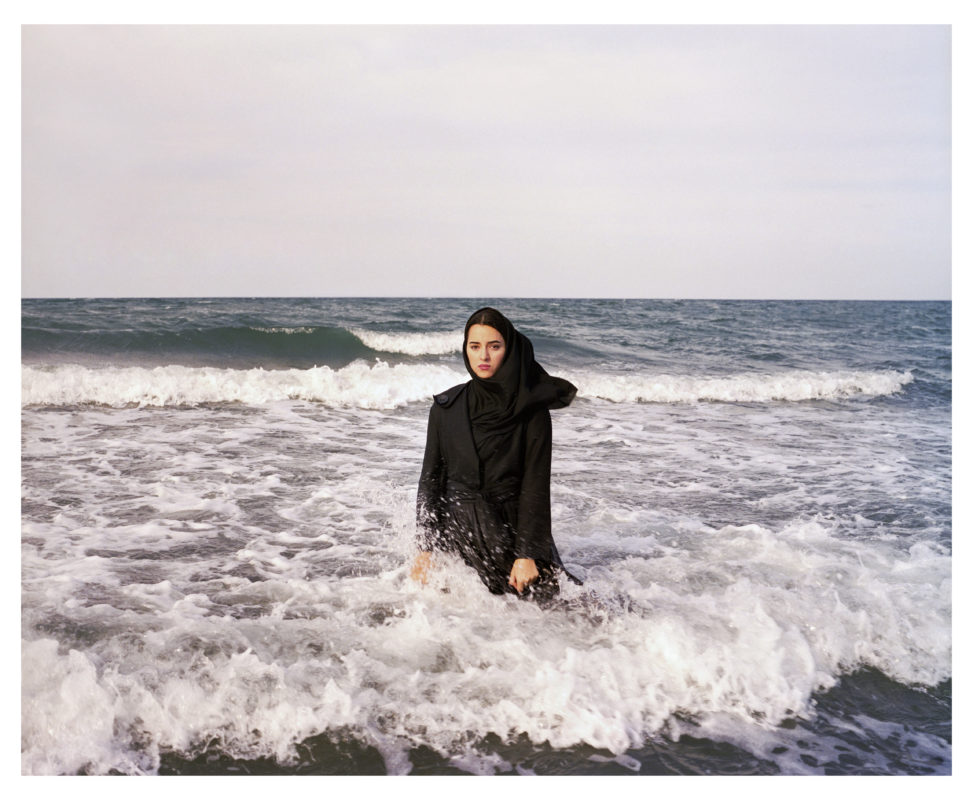
Another photographer who used chance to achieve their images was Newsha Tavakolian. For his series Listen, Tavakolian created a series of CD covers for fictitious female singers. For one image he got his sister to stand in the Caspian Sea (see fig. 1), he rushed to take the images and didn’t know how they would turn out. When reviewing the images, he found one which worked. His sister is looking directly to camera, and the waves are perfectly in time, probably a one in a hundred shot. But to Tavakolian it all fell into place. He took a chance taking the images as he didn’t known what they outcome would be.
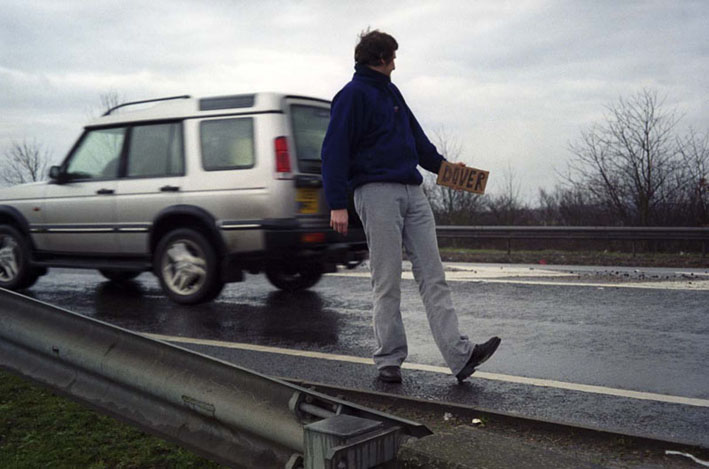
Chris Coekin often looks at his own personal experiences for inspiration. He collaborates with other artists, and often uses archived images, texts and sometimes audio. His series The Hitcher confronts the image of dangerous strangers that is spread by the media. But his experiences shows the opposite where strangers were kind and helped him. His project is spilt into three sections. The first looks at other hitchhikers. His images show the spontaneous nature of their encounter. His images are change encounters. This image shows a man hitchhiking (see fig. 1), the car passing is blurry, showing it is driving past and not stopping. The man holding a sign, looks as it passes. It is real, almost a decisive moment.
(Fig. 1 Untitled)
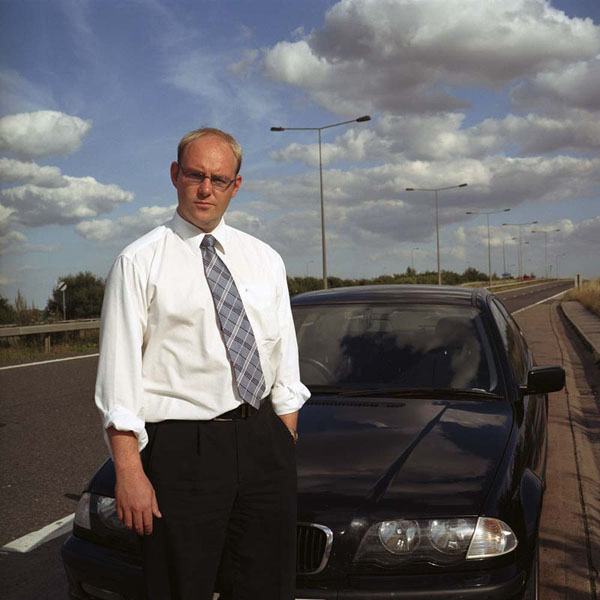
The second series looks at the people who picked him up. He got them to pose outside their car. He is comparing the ‘stranger danger’ with his own experiences of friendly helpful strangers (see fig. 2).
(Fig. 2. Untitled)
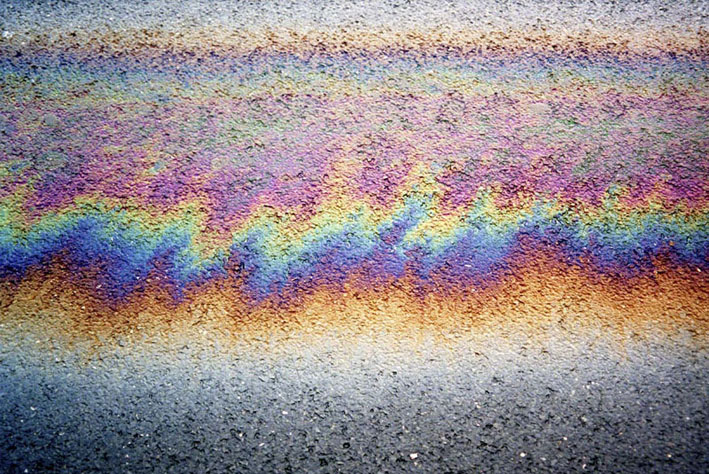
The third part shows things that a hitchhiker might see by the side of their road. Things like banana skins, a dead rabbit, a portable DVD player, an oil slick, and rubbish from McDonald’s make an appearance. The image showing an oil slick (see fig. 3), is a common sight on the road. But drivers might not notice it, but hikers will. They are simple images but explore his own experience with strangers and manages to combat the view that all strangers are to be feared.
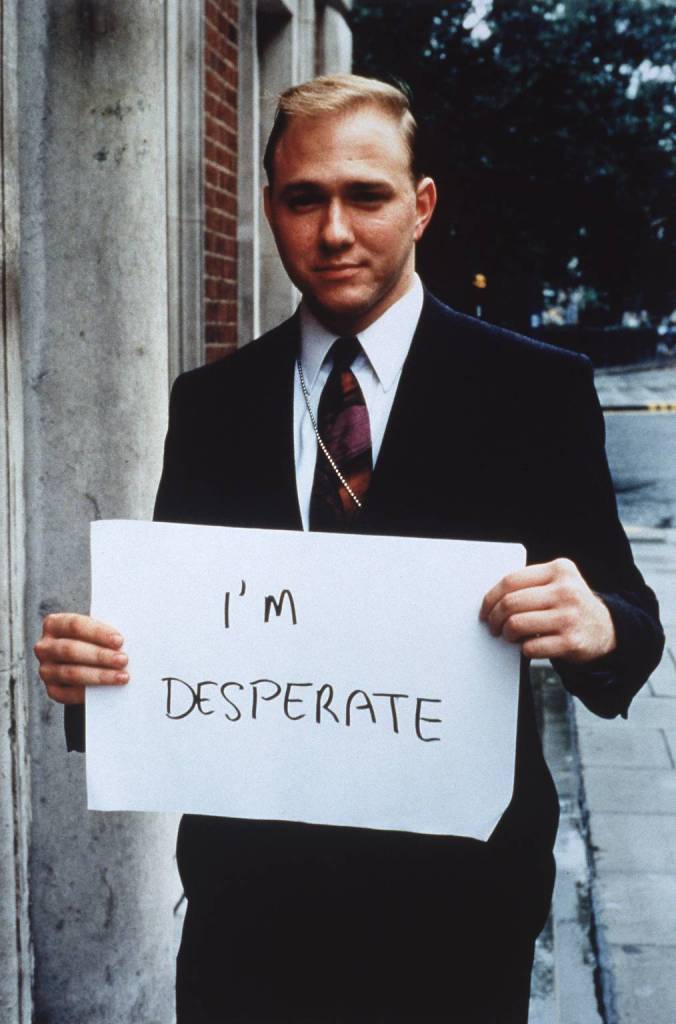
Gillian Wearing created a series entitled Signs. Wearing took to South London, and asked people to write how they were feeling down on a piece of paper. She then got them to hold their sign whilst she photographed them. It is a fascinating series that actually documented the social and economic times during the 1990s. The image that shows a man holding a sign that reads “I’m desperate” (see fig 1), is incredibly emotional and telling of the experiences of uncertainty and difficulty that people went through. Wearing stated that the man was ‘shocked’ that he wrote that, he had his picture taken and then angrily left. He could have been angry because it revealed how he truly felt and was angry at himself for letting his mask fall.
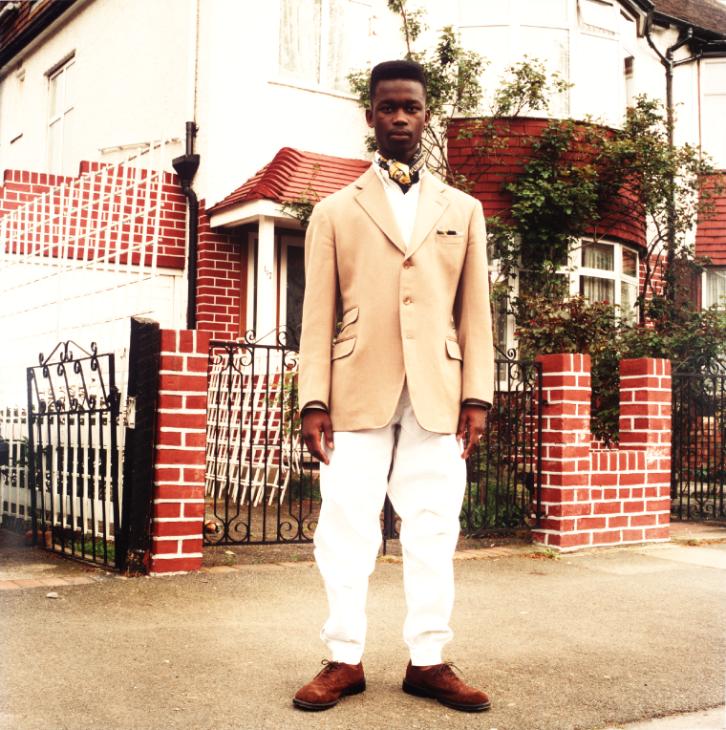
For his series Strictly Jason Evans collaborated with a stylist named Simon Foxton. Together they worked to create a series of images that delve into not only identity and multiculturalism in London but also into the political agendas that accompany it. Each image is taken on a London street, and features a black man dressed in rather distinctive clothing. Their expressions are emotionless and are stood in a stoic positions. The images are taken showing the subject full-length, and are usually taken from a lower position than the camera. It gives the men an advantage, they have an impressive presence. Evans has combined a form of documentary photography with fashion photography. When talking about the clothing, Evans stated “The syntax of the clothes was completely upside down. It was a new vision of Britain. We were trying to break down stereotypes” (Evans quoted in Williams). Evans brought in the fashion of the nineteenth century dandies, which contrasts the contemporary aspect of the men.
Eugene Atget started to photograph ‘old Paris’ in the late 1800s. He did this for around twenty years, he wanted to document the areas character. His aim was to document the streets and buildings before Paris was modernised. His images have a timeless feel. The are interesting and are taken using some interesting angles. They show a different Paris to what we se know. It allows the viewer to step into a part of history and imagine what it would have been like. His images provide a comprehensive study into pre-modernise Paris.
Exhibition – Henri Cartier Breeson: A Question of Colour – 2012 – Somerset House
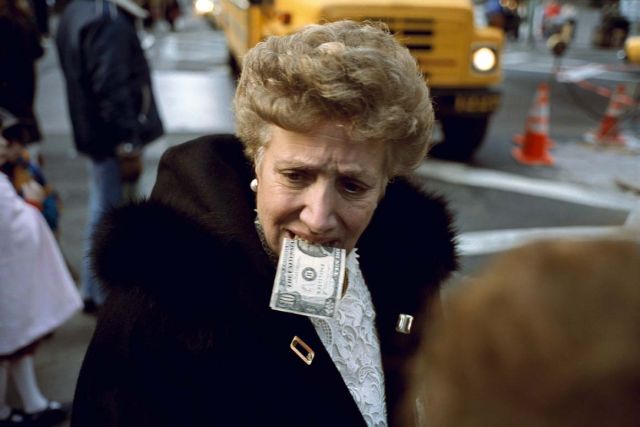
The Henri Cartier Bresson: A Question of Colour was an exhibition held at Somerset House in 2012. Despite being named after Cartier Bresson, the exhibition was dominated by other artists who were experimenting with their own decisive moments. The exhibition does however feature some of Cartier Bressons images which haven’t been exhibited in the UK before. Bresson had an unfavourable view on colour images he saw it as limited, but the images this exhibition are in colour. This image shows a women holding a one dollar bill in her mouth, obviously busy. It is a normal scene that happens to most people. But this scene may be a time of the past as debit and credit cards are becoming the norm.
(Fig. 1. Untitled (10 bill in mouth) (1992))
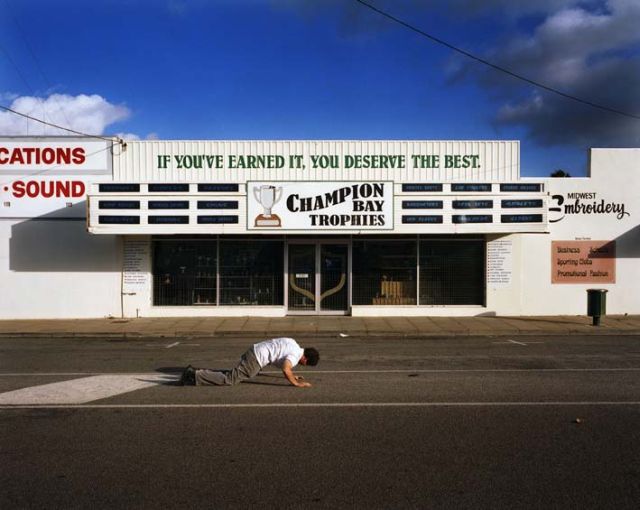
This next image shows a man vomiting the middle of the street. The sign above the shop behind him states, ‘If you’ve earned it, you deserve the best’, the shop is selling Trophies. This images shows a decisive moment, it is a good comparison between the man and the shops signage.
(Fig. 2. Man Vomiting (2006))
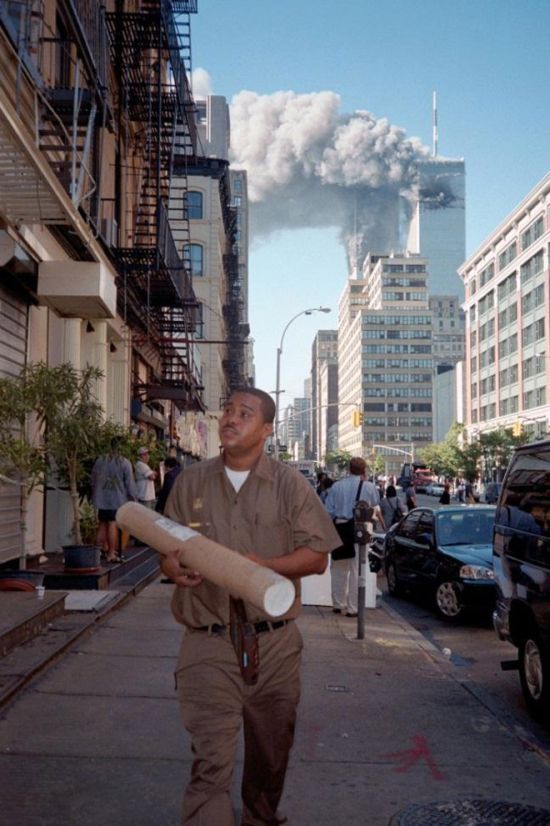
This last image was taken on 9/11. It shows the unfolding disaster in the background, but a courier is still working his rounds whilst it unfolds. It is a good image that shows how the world can carry on and remain obvious when something major is happening at the same time.
Martin Paris images have always stood out. His images are quite recognisable for their bright colours teamed with a form of street photography which seems almost seems unrealistic and excessive. When talking about his images Parr stated, “With photography, I like to create fiction out of reality. I try and do this by taking society’s natural prejudice and giving this a twist” (Parr).
Walker Evans has been involved in numerous projects, the majority address social issues and document various areas. He has documented places in New England, New Orleans, Pennsylvania, Tennessee and Alabama. He has taken images of buildings, coal mines, farming families and the effects of flooding. He then turned his attention to the American industrial landscape.
For his series Strictly Jason Evans collaborated with a stylist named Simon Foxton. Together they worked to create a series of images that delve into not only identity and multiculturalism in London but also into the political agendas that accompany it. Each image is taken on a London street, and features a black man dressed in rather distinctive clothing. Their expressions are emotionless and are stood in a stoic positions. The images are taken showing the subject full-length, and are usually taken from a lower position than the camera. It gives the men an advantage, they have an impressive presence. Evans has combined a form of documentary photography with fashion photography. When talking about the clothing, Evans stated “The syntax of the clothes was completely upside down. It was a new vision of Britain. We were trying to break down stereotypes” (Evans quoted in Williams). Evans brought in the fashion of the nineteenth century dandies, which contrasts the contemporary aspect of the men.
Eugene Atget started to photograph ‘old Paris’ in the late 1800s. He did this for around twenty years, he wanted to document the areas character. His aim was to document the streets and buildings before Paris was modernised. His images have a timeless feel. The are interesting and are taken using some interesting angles. They show a different Paris to what we se know. It allows the viewer to step into a part of history and imagine what it would have been like. His images provide a comprehensive study into pre-modernise Paris.
Exhibition – Henri Cartier Breeson: A Question of Colour – 2012 – Somerset House
The Henri Cartier Bresson: A Question of Colour was an exhibition held at Somerset House in 2012. Despite being named after Cartier Bresson, the exhibition was dominated by other artists who were experimenting with their own decisive moments. The exhibition does however feature some of Cartier Bressons images which haven’t been exhibited in the UK before. Bresson had an unfavourable view on colour images he saw it as limited, but the images this exhibition are in colour. This image shows a women holding a one dollar bill in her mouth, obviously busy. It is a normal scene that happens to most people. But this scene may be a time of the past as debit and credit cards are becoming the norm.
(Fig. 1. Untitled (10 bill in mouth) (1992))
This next image shows a man vomiting the middle of the street. The sign above the shop behind him states, ‘If you’ve earned it, you deserve the best’, the shop is selling Trophies. This images shows a decisive moment, it is a good comparison between the man and the shops signage.
(Fig. 2. Man Vomiting (2006))
This last image was taken on 9/11. It shows the unfolding disaster in the background, but a courier is still working his rounds whilst it unfolds. It is a good image that shows how the world can carry on and remain obvious when something major is happening at the same time.
Martin Paris images have always stood out. His images are quite recognisable for their bright colours teamed with a form of street photography which seems almost seems unrealistic and excessive. When talking about his images Parr stated, “With photography, I like to create fiction out of reality. I try and do this by taking society’s natural prejudice and giving this a twist” (Parr).
Walker Evans has been involved in numerous projects, the majority address social issues and document various areas. He has documented places in New England, New Orleans, Pennsylvania, Tennessee and Alabama. He has taken images of buildings, coal mines, farming families and the effects of flooding. He then turned his attention to the American industrial landscape.
Is there anything that you feel compelled to do at This point in your work but can’t figure out exactly how it will fit with your overall project? Talk to your tutor about it or write about it in your blog. It may be time for a change of direction.
Would you be comfortable using opportunistic encounters to create your art? In your view, has Calle been deceitful or intrusive in creating the works discussed here? How would you defend or criticise her approach?
I have been trying to develop my work and trying to see how I can include several themes successfully. I would like a female presence in the actual image, I want to present the inequality but I also want to contrast this with a strong female presence. I am just not sure how to do it. I am thinking my work will be a collage, so maybe I could add the image in. Due to the religious origins, I was thinking maybe adopting a triptych layout, with the main pilgrimage image in the centre and two others either side, one could be the female presence I am looking to include. I am just really not sure how to go about it just yet. I will try experimenting though.
Yes I would use opportunistic encounters in my work. Really this could be street photography, and even decisive moments. I would do it but only to an extent. I have looked at Sophie Calle’s work, and her project Take Care of Yourself, doesn’t seem intrusive to me. She is using her own experience and creating a work of art out of it. She has used the reactions and interpretations of other women for her work. I do not think this is wrong. But I do have an issue with her other works, Please Follow Me and The Hotel. These projects seem to be very intrusive. In Please Follow Me, Calle followed strangers in the street and photographed them, how is that not intrusive. Yes we are surrounded by cameras and CCTVs but to be photographed in the street without your consent and knowledge, is a bit intrusive. I am on the fence for me really as it could be just seen as street photography but where she loses my benefit of doubt is where she actively follows the people. This is wrong to me. How far would it go? What if someone complained to the police? The Hotel, for me definitely crossed the line between right and wrong. She actively went through other peoples possessions when she worked in a hotel, she made notes about what they had, where they slept, what they wrote in their diaries. She photographed their stuff to include in her project. I would not be happy if someone went through my possessions when I was staying at a hotel. You place your trust in the staff that your stuff and privacy is safe, she broke that. I cannot see how this is not intrusive and criminal. This definitely crosses the line. Another project of hers is entitled, The Address Book, Calle found a persons address book and proceeded to call up all the contact to inquire about it’s owner. She then published her findings in a newspaper.
There is another matter to consider, and that is her actions may be criminal in the UK. I spoke to a relative of mine who is a serving police officer. You are allowed to photograph people in the street, there is no law that says you can’t, but if they object, you should delete the images. But the time she posed as a chambermaid puts her on unsteady ground. When you stay in a hotel, your room becomes your home in the eyes of the law. As she was employed as a chambermaid, she was let into the rooms under the premise of being a chambermaid. When she does anything other than her chambermaid duties, in the law, it is counted as Trespass. Not only would she be in breach of her employment contract, she could also be prosecuted under the theft act. To be prosecuted under the theft act, she must have had commercial gain in any manner or form. So by exhibiting, selling, or publishing, she has gained from her photographs. If the victim is identifiable from the images or text, then it is definitely a criminal matter. Even if someone recognised their clothing, or their suitcase, they have been identified. The victims could also take her to County Court for invasion of privacy and seek damages.
Another photographer who used chance to achieve their images was Newsha Tavakolian. For his series Listen, Tavakolian created a series of CD covers for fictitious female singers. For one image he got his sister to stand in the Caspian Sea (see fig. 1), he rushed to take the images and didn’t know how they would turn out. When reviewing the images, he found one which worked. His sister is looking directly to camera, and the waves are perfectly in time, probably a one in a hundred shot. But to Tavakolian it all fell into place. He took a chance taking the images as he didn’t known what they outcome would be.
Chris Coekin often looks at his own personal experiences for inspiration. He collaborates with other artists, and often uses archived images, texts and sometimes audio. His series The Hitcher confronts the image of dangerous strangers that is spread by the media. But his experiences shows the opposite where strangers were kind and helped him. His project is spilt into three sections. The first looks at other hitchhikers. His images show the spontaneous nature of their encounter. His images are change encounters. This image shows a man hitchhiking (see fig. 1), the car passing is blurry, showing it is driving past and not stopping. The man holding a sign, looks as it passes. It is real, almost a decisive moment.
(Fig. 1 Untitled)
The second series looks at the people who picked him up. He got them to pose outside their car. He is comparing the ‘stranger danger’ with his own experiences of friendly helpful strangers (see fig. 2).
(Fig. 2. Untitled)
The third part shows things that a hitchhiker might see by the side of their road. Things like banana skins, a dead rabbit, a portable DVD player, an oil slick, and rubbish from McDonald’s make an appearance. The image showing an oil slick (see fig. 3), is a common sight on the road. But drivers might not notice it, but hikers will. They are simple images but explore his own experience with strangers and manages to combat the view that all strangers are to be feared.
Gillian Wearing created a series entitled Signs. Wearing took to South London, and asked people to write how they were feeling down on a piece of paper. She then got them to hold their sign whilst she photographed them. It is a fascinating series that actually documented the social and economic times during the 1990s. The image that shows a man holding a sign that reads “I’m desperate” (see fig 1), is incredibly emotional and telling of the experiences of uncertainty and difficulty that people went through. Wearing stated that the man was ‘shocked’ that he wrote that, he had his picture taken and then angrily left. He could have been angry because it revealed how he truly felt and was angry at himself for letting his mask fall.
I have looked into Joachim Schmids work before on a previous course. Here is a part of my research into his work.
Joachim Schmid is a German artist born in 1955. He is best known for his appropriation of other people’s images to for us in his own work. He use to find his images in flea markets or discarded on the streets but now he uses the internet. He has published over ninety books, and explores the relationship between us and photography.
Sharon Boothroyd conducted an interview with Schmid. Schmid admits he was always curious about snapshots; he sees them as a cultural practice. He saw recurring patterns throughout the images he found. He doesn’t like the word collecting he prefer gathering. He does admit his method can be tedious, but over time he sees inspiration when looking through the images. Schmid has tried two methods of presenting his work, in book form and as a digital slideshow. He stated that slideshows only hold the viewers attention for a very short time, whilst with a book, people take their time. Before the internet, Schmid faced limitations with his work, but now with the internet there is an unlimited supply of images; he finds technology more suitable for his work. When asked by Boothroyd why people take the same photo, he stated because ‘they work’. He believes a problem might occur with the overproduction if photographers, as their are huge limitations on artists and everyone has to fight for their rights.
I watched an interview between Arthur Ou and Joachim Schmid. Despite not actually taking any photograph Schmid sees himself more like a photographer as they go through ‘public spaces’ searching for a photograph. He sees his method as a form of archaeological research. Schmid is very selective in the images he chooses.
In his series Pictures from the Street (1982-2012), Schmid collected discarded images off of the street. By collecting the unwanted images and presenting them in a similar fashion as a museum does, you get a much clearer view on what photography is.
In Photographic Garbage Survey Project (1996-1997) Schmid mapped discarded images in seven cities across the world. He made a statistical analysis, so it wasn’t just a matter of collecting images. He found:
91 objects over 9 days in Paris,
83 objects over 8 days in São Paulo,
43 objects over 6 days in Berlin,
28 objects over 4 days in Rotterdam,
28 objects over 6 days in San Francisco,
23 objects over 5 days, in Vigo, Spain, and
23 objects over 4 days, in Zurich. He also found that:
Rotterdam had 68% of intact photographs,
Vigo had 83% of ripped up photographs,
Zurich had 50% of photobooth of photobooth photography,
San Francisco had 36% of Polaroid’s, and
Paris had 36% of ID photographs.
He decided to exhibit the original images for this series as it gave a more authentic feel as you can see how the images have been destroyed for example many were torn. By exhibiting these discarded images, it does what a museum does but goes against the norm, which a Schmid believes create a nice balance between the two.
Other People’s Photographs (2008-2011) features ninety six images which Schmid organised by topic. He wanted to show how photography has changed. This work demonstrates the patterns in people photography and how similar they are. Schmid used the internet for this project which provide an unlimited supply.
One Day in May (2014) is a series that documented fifty shooting in America on one day in May. Schmid organised these so they featured east to west. This series was produced into a book which featured a map of the US with the shooting marked on it.
In 1990, Schmid created a series entitled Used Photographs, which is where he formed the Institue for the Reprocessing of Used Photographs. He placed adverts in newspapers stating the dangers of old photographs and how he could take them off your hands for free. People believed him, he used these photographs that people sent him for this project.
Schmid sees himself as an artist as he doesn’t believe there is any other way to describe himself. I agree with this as he can’t be called a photographer as he doesn’t take photographs, merely uses them.
What are you thoughts about The Frank Album? Are there any ethical issues here? To what extent is a photograph album like Frank’s private? Make some notes in your learning log/blog.
This project by Alec Soth is interesting. But like Calle, there are some issues. Soth found the images that feature in the album, these images belong to someone, someone who may have lost them and now they are being published in a artists projects. Do the images really belong to Soth? Would this be covered under appropriation or found photography. The project is quite unique, as when you buy a copy, you are given a blank album, with the photographs separate, you also get text in either English or Japanese. This gives you a chance to arrange the album how you want. You get to make up this travellers journey. It is engaging and interactive for the viewer and will be unique and everyone who does it will produce a very different album. But I am not sure about using someone else’s images. It comes under the same problem with appropriated images, is this theft? The artists is using and profiting from someone else’s images, he is intent on keeping them. This is one reason I am dubious with using someone else’s images as they could be copyrighted or the person could go to the police, as people have done to artists in the past.
Have you ever made a ‘mistake’ that has led you in a new direction? Has reading this account of Paul Graham’s work made you less likely to discard ‘mistakes’ or more likely to investigate their potential? If something like this happens to you in the future, here are some questions to consider:
Has something gone wrong that you don’t know how to recover from?
How might you re-frame what happened?
How could it lead to something more exciting?
What might your ‘mistake’ be telling you?
My body of work uses similar techniques to Graham’s work. I am using images that people would discard as mistakes. My images are out-of-focus, underexposed, and overexposed. But they are like this on purpose as I am using this to show the inequality in landscape photography. If I wasn’t, I would usually discard this type of image. But theoretically yes, I could keep them and develop it into a project. It could lead to something completely new. You never know unless you try. Usually I would say my mistakes were telling me that I messed up taking a picture, for example the settings were wrong or the camera moved.
The Day Nobody Died is a project by Adam Broomberg and Oliver Chanarin. In 2008, they travelled with this army to Afghanistan, they took a roll of photographic paper. They were in the middle of a war zone, instead of capturing events with their cameras, they unrolled part of the photographic paper and exposed it for only 20 seconds. To do this the artists lied to the Ministry of Defence in order to get access, they told them that they were photojournalists not artists. In the artists opinion, the MOD were worried about what an artist could create about the war rather than the documentation of a photojournalist. This series is a good example of conceptual photography. Without the background of what the artists did to get their final image, the image doesn’t mean a lot to a viewer, the artists want the viewers interpretations to come to mind. There is nothing to go on, no figures, no landscapes, nothing. It is just paper that have various exposures on it. It is the story behind it, that gives it meaning. I think it is a creative way of showing war photography. As a lot of war images are very similar, they document. This goes that step further, the actual paper has been in the war zone, it has been exposed to it, that’s it’s story. But I do think it is necessary to see the artists aim to really be able to look and get the image. It makes you wonder what was going on at the particular time. It is thought provoking. The artists believed the projects home in a gallery. But when they showed a sample of the project to the editor of the Guardian newspaper, he thought that they were ‘taking the piss’. This comes down to viewer interpretation and expectations. Yes it is very different from the usually war photographs we see, but why does that make Broomberg and Chanarin’s work less valid.
The artists also created a short film to accompany the work. This film follows the box that carried the photographic paper in. It starts off in London, travelling in a car through the streets then n the airport. It shows it being transported by plane, by car, in trucks, in tanks, and in helicopters. It also shows it being carried around by various soldiers in Afghanistan. I believe this video gives context, as it shows the journey they have been on. But your attention is not on the artists, or on the actual paper, it is on the cardboard box. It has it’s function, to carry the paper, but other than that it is a banal object, but centerstage in the film.
Are the projects you’ve been reading about a case of ‘The Emperor’s New Clothes’? Or are the artists using their creativity to make art out of worst-case scenarios? Are they cheating?
Personally I would see this as an artist being creative. If you just took some basic images, yes they may be good but they are going to be very similar to someone elses. These artists have gone beyond the norm and have challenged and explored their topic and have produced some very creative images. I do not think they are cheating, they are being creative, they have successfully produced a unique project. This is creativity in their art.
This project was a collaboration between Alec Soth and his daughter Carmen. Carmen Soth photographed the streets of Brighton. It is interesting to see the world from her prespective. You can see the camera angle is lower, obviously due to her height. But unless you knew that they were taken by a seven year old, I doubt the majority of people would know. I think she did very well. In the exhibition the images are among newspaper headlines, reinforcing the localities of the project.
You can make connections between the headlines and the text. It allows the viewer to interact and come to their own conclusions. There is even a handwritten note form Carmen, written in crayon “To people i Really did take all these pictures…From Carmen Soth”. I find it quite sweet, it contrasts the street photography, which could be seen as being taken by an artists with the fact that she is still a child. The images show a different perspective through the eyes of a child, which is very different from the usual street photography we see.
In her series Traces Weonika Gesicka explores stock images. She recreates classical images from 1950s and 1960s American life. Gesickas images looks at how truthful can they be. She also explores how memories can be altered. “There is no certainty of the past if the present can change it” (Pacciardi (2018). (see fig. 1)
(Fig. 1. Untitled #5)
Bibliography
Pacciardi, G (2018) Traces is a Project by the Polish artist Weronika Gesicka Who questions about the truthfulness of the stock images. At: https://www.collater.al/en/traces-weronika-gesicka/ (Accessed on 4th of September 2019).
 Georgina's Body of Work